Pacritinib for Myelofibrosis – A New JAK-2 Inhibitor with a Better Toxicity Profile

SUMMARY: Myelofibrosis is a MyeloProliferative Neoplasm (MPN) characterized by a ineffective hematopoiesis, progressive fibrosis of the bone marrow and potential for leukemic transformation. This stem cell disorder is Philadelphia Chromosome negative and manifestations include anemia, splenomegaly and related symptoms such as abdominal distension and discomfort with early satiety. Cytokine driven debilitating symptoms such as fatigue, fever, night sweats, weight loss, pruritus and bone or muscle pain can further impact an individual’s quality of life. Myelofibrosis can be primary (PMF) or secondary to Polycythemia Vera (PV) or Essential Thrombocythemia (ET). The JAK-STAT signaling pathway has been implicated in the pathogenesis of Myelofibrosis. This pathway normally is responsible for passing information from outside the cell through the cell membrane to the DNA in the nucleus, for gene transcription. Janus Kinase (JAK) family of tyrosine kinases are cytoplasmic proteins and include JAK1, JAK2, JAK3 and TYK2. JAK1 helps propagate the signaling of inflammatory cytokines whereas JAK2 is essential for growth and differentiation of hematopoietic stem cells. These tyrosine kinases mediate cell signaling by recruiting STAT’s (Signal Transducer and Activator of Transcription), with resulting modulation of gene expression. In patients with MPN, the aberrant myeloproliferation is the result of dysregulated JAK2-STAT signaling as well as excess production of inflammatory cytokines associated with this abnormal signaling. These cytokines contribute to the symptoms often reported by patients with MF. JAK2 mutations such as JAK2 V617F are seen in approximately 60% of the patients with PMF and ET and 95% of patients with PV. Unlike CML where the BCR-ABL fusion gene triggers the disease, JAK2 mutations are not initiators of the disease and are not specific for MPN. Further, several other genetic events may contribute to the abnormal JAK2-STAT signaling.
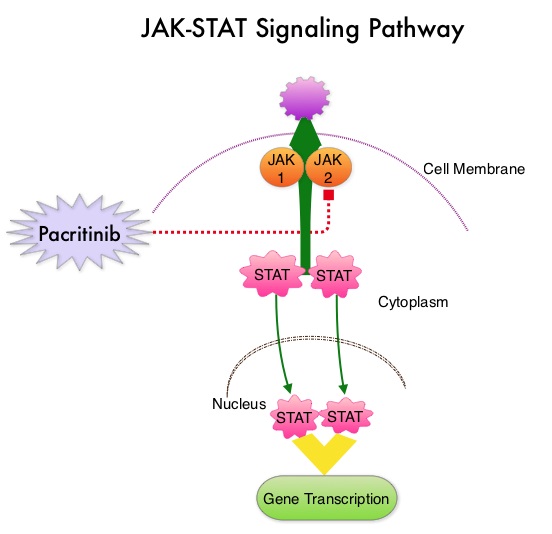
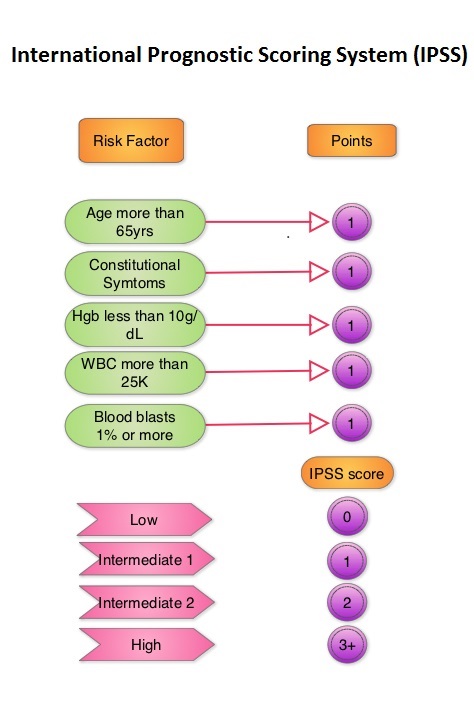
Pacritinib is a potent JAK2 inhibitor, without significant JAK1 inhibition. Preliminary studies have shown minimal myelosuppression with Pacritinib. JAKAFI® (Ruxolitinib) is a potent JAK1 and JAK2 inhibitor and is not safe for patients with low platelet counts. PERSIST-1 is a phase III study in which 327 patients with intermediate or high-risk Primary MyeloFibrosis (PMF), Post–Polycythemia Vera MF or Post–Essential Thrombocythemia MF were enrolled. Patients were randomized in a 2:1 ratio to receive Pacritinib 400 mg once daily (N=220) or Best Available Therapy (BAT) excluding JAKAFI® (N=107). Patients in the BAT group received Erythropoietin Stimulating Agents, Immunomodulatory drugs such as THALOMID® (Thalidomide), REVLIMID® (Lenalidomide) and Hydroxyurea. Because patients with very low platelet counts were enrolled in this study, JAKAFI® therapy was excluded, as JAKAFI® is not considered safe for patients with low platelet count. Approximately 32% of the patients had a platelet count of less than 100,000/µL and 15% had a platelet count of less than 50,000/ µL. About 75% of the patients were JAK2V617F positive. The median duration of treatment was 16.2 months in the Pacritinib group and 5.9 months in the BAT group. The primary endpoint was the proportion of patients achieving 35% or more reduction in the spleen volume at 24 weeks. Secondary endpoints included the proportion achieving 50% or more reduction in MyeloProliferative Neoplasm symptom score at 24 weeks.
At 24 weeks of treatment, 19.1% of patients in the Pacritinib group experienced 35% or more reduction in spleen volume compared to 4.7% in the Best Available Therapy (BAT) group (P=0.0003). This benefit was even more so in the subgroup of patients with the lowest platelet counts (less than 50,000/ µL), with 33.3% in the Pacritinib group demonstrating spleen volume reduction, compared to none in the BAT group. Patients in the Pacritinib arm were much more likely to experience more than a 50% reduction in symptoms, compared to BAT group at 24 weeks (24.5% vs 6.5%; P<0.0001), with significant improvements in fatigue, early satiety, abdominal discomfort, pruritus, night sweats and bone pain. This symptom improvement was noted by 4-8 weeks. Approximately 25% of the patients in the Pacritinib group achieved transfusion independence compared with none in the control group (P=0.043). The most common adverse events associated with Pacritinib were diarrhea, nausea and vomiting.

The authors concluded that Pacritinib significantly reduces spleen volume and Myelofibrosis associated symptoms, and fulfills an unmet need for Myelofibrosis patients with low platelet count, in addition to achieving RBC transfusion independence. Results of the PERSIST-1 phase III study of pacritinib (PAC) versus best available therapy (BAT) in primary myelofibrosis (PMF), post-polycythemia vera myelofibrosis (PPV-MF), or post-essential thrombocythemia-myelofibrosis (PET-MF). Mesa RA, Egyed M, Szoke A, et al. J Clin Oncol 33, 2015 (suppl; abstr LBA7006)
Continuous Therapy Significantly Improves Outcomes compared to Fixed Duration of Therapy in Patients with Newly Diagnosed Multiple Myeloma

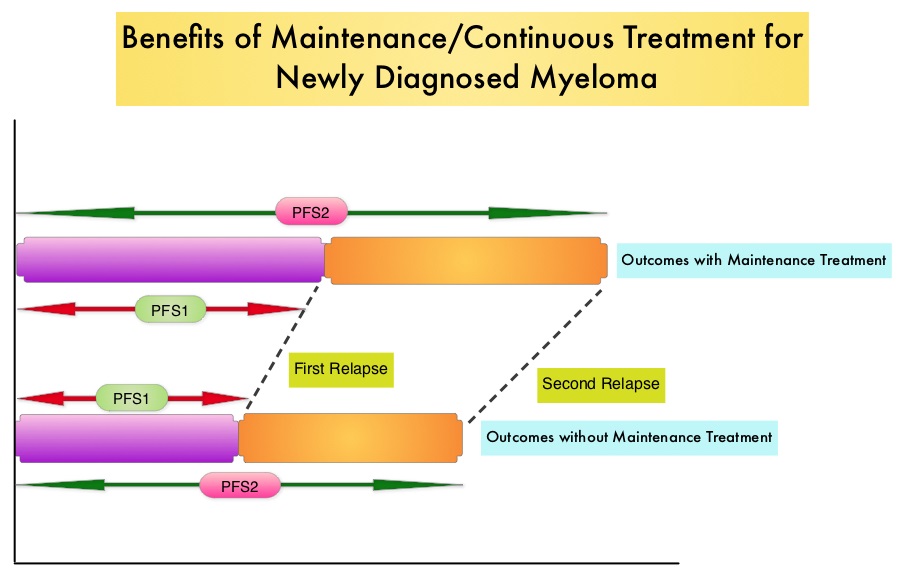
SUMMARY: Multiple Myeloma is a clonal disorder of plasma cells in the bone marrow and the American Cancer Society estimates that in the United States, close to 27,000 new cases will be diagnosed in 2015 and 11,240 will die of the disease. Maintenance or Continuous Treatment in patients with newly diagnosed multiple myeloma following induction and consolidation, can result in significantly longer Progression Free Survival (PFS) and Overall Survival (OS), compared to those patients who receive therapy for a fixed duration of time. Not all studies however, have shown Overall Survival benefit. It has been hypothesized that Continuous Treatment could result in resistance to therapy which in turn could reduce the duration of subsequent remission after first relapse and negatively impact overall survival.To address this controversy, the authors conducted a pooled analysis of the outcomes of three randomized phase III trials, coordinated by the same principal investigator, designed to compare Continuous Treatment to Fixed Duration Therapy, in patients with newly diagnosed multiple myeloma.

In trial RV-MM-209, patients were randomized to either induction with Lenolidomide (REVLIMID®), followed by consolidation and subsequent maintenance with REVLIMID® (Continuous Treatment) or Fixed Duration Therapy which entailed REVLIMID® based induction followed by consolidation but no maintenance therapy. In the GIMEMA0305 trial, the randomization was between Bortezomib (VELCADE®) based induction followed by maintenance treatment (Continuous Treatment) and VELCADE® induction, with no maintenance treatment (Fixed Duration Therapy). In the CC-5013-MM-015 study, the comparison was between REVLIMID® in combination with Melphalan and Prednisone followed by REVLIMID® maintenance until disease progression and placebo given along with Melphalan and Prednisone.

The trial investigators assessed PFS1 as the time from diagnosis to the occurrence of 1st relapse, PFS2 as time from diagnosis to the occurrence of 2nd relapse and Overall Survival as time from diagnosis to death , incorporating the duration of both 1st and 2nd remission. They then evaluated PFS1, PFS2 and OS, in newly diagnosed multiple myeloma patients who received Continuous Therapy or Fixed Duration Therapy. In this pooled analysis of three trials, 604 patients were randomized to Continuous Treatment and 614 patients were randomized to Fixed Duration Therapy. Four hundred and seventeen (N=417) in the Continuous Therapy group and 410 patients in the Fixed Duration Therapy group were eligible for comparative analysis. The median follow up was 52 months.

Patients receiving Continuous Treatment had significantly prolonged PFS1 (median 32 months versus 16 months; HR=0.47; P<0.001), PFS2 (median 55 months versus 40 months; HR=0.61; P=0.001) and OS (4 year OS 69% versus 60%; HR=0.69; P=0.003), when compared with Fixed Dose Therapy. The authors evaluated the PFS and OS from first relapse to second relapse and from first relapse to death respectively, and they noted that the outcomes were similar among patients who received Continuous Treatment or Fixed Dose Therapy following initial diagnosis.

The authors concluded that Continuous Treatment significantly improved PFS1, PFS2, and OS and findings from this pooled analysis suggested that the clinical benefit observed during first remission was not negated by a shorter second remission and Continuous Treatment did not induce tumor resistance. Continuous Treatment may be essential, as patients with multiple myeloma will always have some residual disease. It should be noted that certain institutions including the Mayo Clinic cap Continuous/Maintenance treatment at approximately 2 years, due to the lack of randomized comparative data, on the value of prolonged maintenance beyond 2 years. Continuous Therapy Versus Fixed Duration of Therapy in Patients With Newly Diagnosed Multiple Myeloma. Palumbo A, Gay F, Cavallo F, et al. J Clin Oncol 2015;33:3459-3466

ACP Guidelines for Evaluation of Patients with Acute Pulmonary Embolism

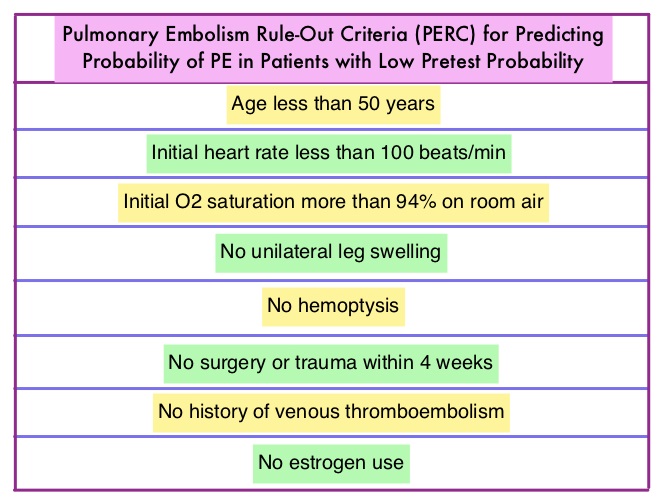
SUMMARY: The Center for Disease Control and Prevention (CDC) estimates that approximately 1-2 per 1000 individuals develop Deep Vein Thrombosis/Pulmonary Embolism (PE) each year in the United States, resulting in 60,000 – 100,000 deaths. VTE is the third leading cause of cardiovascular mortality with a mortality rate of up to 25% in those with untreated acute Pulmonary Embolism. The American College of Physicians in 2015 released pulmonary embolism guidelines after noting that there has been a dramatic increase in the testing for suspected acute Pulmonary Embolism (PE). There has also been an overuse of CT imaging and plasma d-Dimer measurement, without improvement in care, but rather harming the patient and increasing expenditure. The validated clinical decision tools, in addition to physician’s clinical judgment include the Wells and Geneva Scoring System. The PERC (see table) criteria includes 8 elements, which if absent in low risk patients rules out PE. These practice guidelines were developed to provide practical advice, based on the best available evidence.
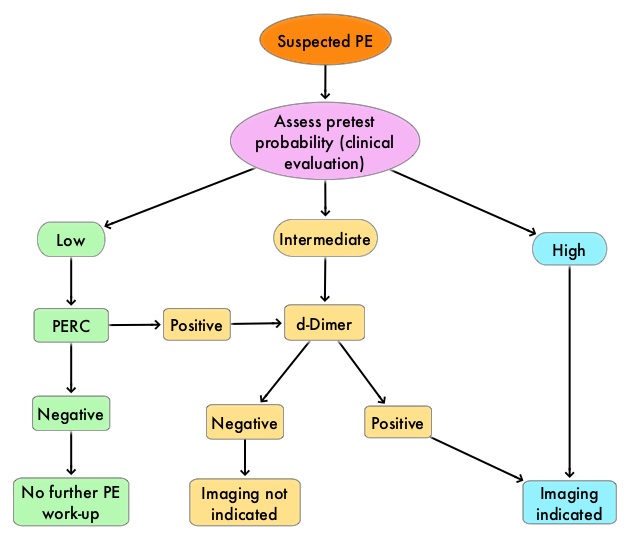
Best Practice Advice 1: Clinicians should use validated clinical prediction tools to estimate pretest probability, in patients in whom acute PE is being considered. These clinical decision tools include physician’s clinical judgment as well as Wells and Geneva Scoring System.

Best Practice Advice 2: The PERC (see table) criteria includes 8 elements. Clinicians should not obtain d-Dimer measurements or imaging studies in patients with a low pretest probability of PE and who meet all Pulmonary Embolism Rule-Out (PERC) Criteria.

Best Practice Advice 3: For patients who have an intermediate pretest probability of PE or in patients with low pretest probability of PE who do not meet all PERC Criteria, clinicians should obtain a high-sensitivity d-Dimer measurement as the initial diagnostic test in patients. Clinicians should not use imaging studies as the initial test in patients who have a low or intermediate pretest probability of PE.

Best Practice Advice 4: Clinicians should use age-adjusted d-Dimer thresholds (age × 10 ng/mL rather than a generic 500 ng/mL) in patients older than 50 years because, normal d-Dimer levels increase with age.

Best Practice Advice 5: Clinicians should not obtain any imaging studies in patients with a d-Dimer level below the age-adjusted cutoff.

Best Practice Advice 6: Clinicians should obtain imaging with CT pulmonary angiography (CTPA) in patients with high pretest probability of PE. Clinicians should reserve ventilation–perfusion scans for patients who have a contraindication to CTPA or if CTPA is not available. Clinicians should not obtain a d-Dimer measurement in patients with a high pretest probability of PE because, a negative d-Dimer test will not preclude the need for imaging.

Evaluation of Patients with Suspected Acute Pulmonary Embolism: Best Practice Advice From the Clinical Guidelines Committee of the American College of Physicians. Raja AS, Greenberg JO, Qaseem A, et al. Ann Intern Med. 2015;163:701-711

Adjuvant PROLIA® Significantly Reduces Fracture Risk for Breast Cancer Patients on Aromatase Inhibitors

SUMMARY: Breast cancer is the most common cancer among women in the US and about 1 in 8 women (12%) will develop invasive breast cancer during their lifetime. Approximately, 231,840 new cases of invasive breast cancer will be diagnosed in 2015 and over 40,000 women will die of the disease. Approximately 75% of patients with breast cancer are hormone receptor positive (Estrogen Receptor/Progesterone Receptor positive) and this is a predictor of response to endocrine therapy. These patients are often treated with anti-estrogen therapy as first line treatment. In premenopausal woman, the ovary is the main source of estrogen production, whereas in postmenopausal women, the primary source of estrogen is the Aromatase enzyme mediated conversion of androstenedione and testosterone to estrone and estradiol in extragonadal/peripheral tissues. Tamoxifen is a nonsteroidal Selective Estrogen Receptor Modulator (SERM) and works mainly by binding to the Estrogen Receptor and thus blocks the proliferative actions of estrogen on the mammary tissue. Anastrozole,Letrozole and Exemestane are Aromatase Inhibitors that bind reversibly to the aromatase enzyme and inhibit the conversion of androgens to estrogens in the extra-gonadal tissues. Aromatase inhibitors are associated with accelerated bone loss, leading to a decrease in Bone Mineral Density (BMD) and can thus cause osteopenia and osteoporosis, thereby increasing fracture risk. According to the WHO definitions, a healthy 30 year old adult (young adult) with the ideal Bone Mineral Density (BMD) is given a T-score of 0. A normal BMD is within 1 Standard Deviation-SD (+1 or −1) of the young adult mean. Osteopenia is between 1 and 2.5 SD below the young adult mean (−1 to −2.5 SD). Osteoporosis is 2.5 SD or more below the young adult mean (−2.5 SD or lower).

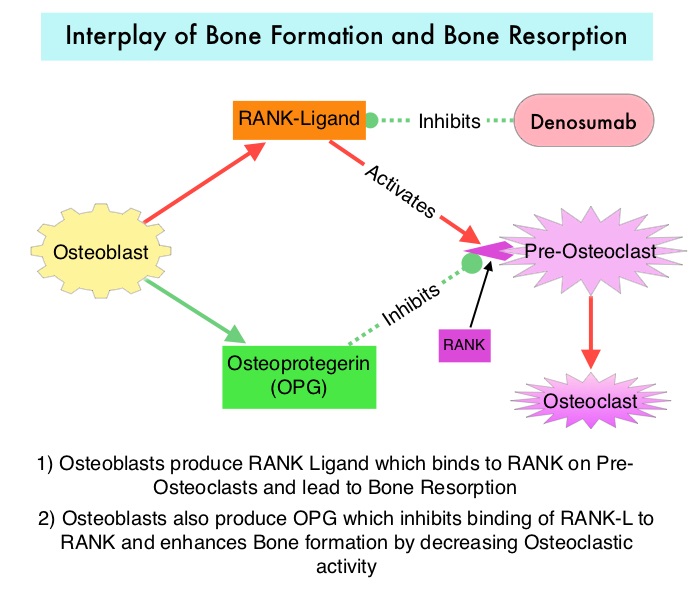
PROLIA® (Denosumab) is a monoclonal antibody that inhibits osteoclast formation, function and survival by selectively targeting the RANK ligand. In this randomized, double-blind, phase III trial, the authors evaluated the benefits of the anti-RANK ligand antibody PROLIA® (Denosumab) on bone health, in postmenopausal patients, with early stage hormone receptor-positive breast cancer, treated with Aromatase Inhibitors. Of the 3425 enrolled patients, 3420 patients were randomly assigned to receive PROLIA® 60 mg (N=1711) or placebo (N=1709) subcutaneously every 6 months. Majority of the patients participating in this study had breast cancer with good prognosis and only 25% of the patients required adjuvant chemotherapy. Patient received a median of 7 doses of PROLIA® . The primary endpoint was time from randomization to first clinical fracture.

Compared with placebo, PROLIA® significantly delayed time to first clinical fracture (HR=0.50; P<0•0001), with the PROLIA® group, half as likely to have a first clinical fracture as the placebo group. This benefit of lowering fracture risk was seen in subgroups of patients with BMD T-score of less than –1 as well as those with BMD T-score of -1 or greater. Further, patients in the PROLIA® group had improvements in BMD from baseline, of the lumbar spine, total hip, and femoral neck, compared to the placebo group, which showed worsening at all sites (P<0.0001). At 3 years, patients in the PROLIA® group had significantly lower risk of both new, or worsening vertebral fractures. No cases of osteonecrosis of the jaw bone were reported.

The authors concluded that PROLIA® administered in an adjuvant setting, significantly reduces the risk of fractures in postmenopausal women with breast cancer receiving Aromatase Inhibitors, without added toxicity. Adjuvant denosumab in breast cancer (ABCSG-18): a multicentre, randomised, double-blind, placebo-controlled trial. Gnant M, Pfeiler G, Dubsky PC, et al. The Lancet 2015;386:433-443

ASCO Recommends Extended RAS Gene Testing in Metastatic Colorectal Cancer

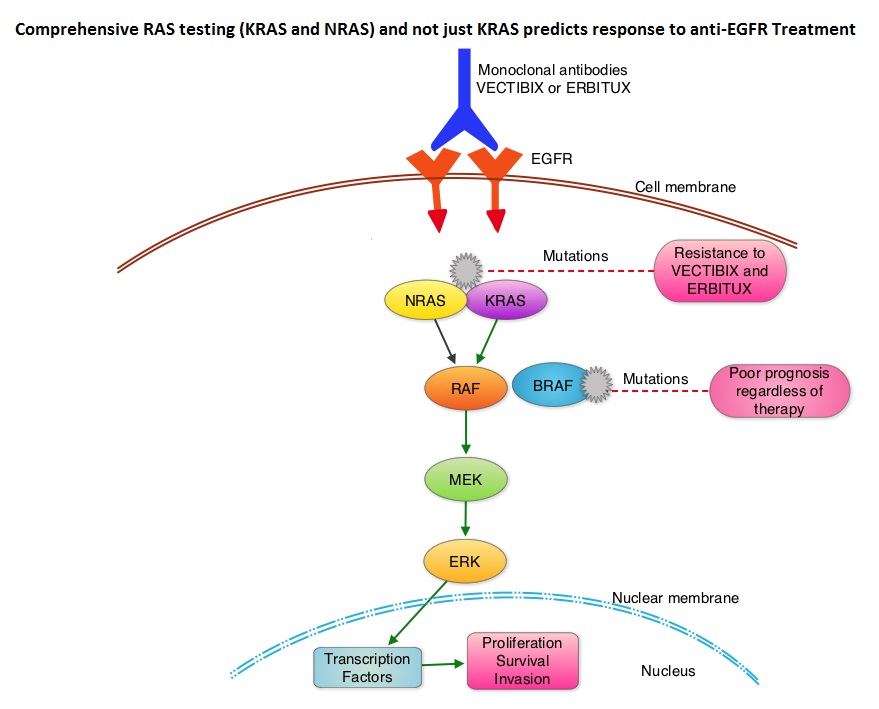
SUMMARY: The American Cancer Society estimates that approximately 133,000 new cases of ColoRectal Cancer (CRC) will be diagnosed in the United States in 2015 and close to 50,000 are expected to die of the disease. Approximately 15-25% of the patients with CRC present with metastatic disease at the time of diagnosis (synchronous metastases) and 50-60% of the patients with CRC will develop metastatic disease during the course of their illness. Patients with metastatic CRC, whose disease has progressed after treatment with standard therapies, have limited therapeutic options available, to treat their disease. Even though the Epidermal Growth Factor Receptor (EGFR) has been reported to be over expressed in 50-85% of the ColoRectal tumors, the intensity of ImmunoHistoChemical staining of EGFR in these tumors is not predictive of treatment response with EGFR directed antibody therapy such as ERBITUX® (Cetuximab) and VECTIBIX® (Panitumumab) and EGFR ImmunoHistoChemical staining should therefore not be a part of testing. The most common RAS oncogenes in human cancer are HRAS, KRAS, and NRAS. Mutations in HRAS are not common in colon cancer whereas KRAS and NRAS mutations are seen in colon cancer and tend to be mutually exclusive. It is also known that mutations in BRAF gene, which is downstream from RAS, may confer poor prognosis in colon cancer, regardless of therapy. It is estimated that approximately 40% of mCRC tumors harbor KRAS mutations and several studies had shown that metastatic ColoRectal Cancer (mCRC) tumors of patients harboring mutations in codon 12 or 13 of exon 2 of the KRAS gene, do not benefit from therapy with monoclonal antibodies directed against EGFR, when used as monotherapy or combined with chemotherapy. More recent studies have shown that KRAS mutations outside of exon 2 and mutations in NRAS are also predictive of lack of benefit with EGFR directed therapy.

The American Society of Clinical Oncology Provisional Clinical Opinion (PCO) offers clinical direction for practicing oncology Health Care Providers, after publication or presentation of potentially practice-changing data from major studies. This 2015 ASCO Provisional Clinical Opinion update is a concerted effort of several organizations together with ASCO and they include the College of American Pathologists (CAP), the American Society for Clinical Pathology (ASCP), and the Association for Molecular Pathology (AMP). The Provisional Clinical Opinion (PCO) was released following inclusion of a systematic review of 11 meta-analyses, two retrospective analyses, and two health technology assessments in patients with mCRC. These studies evaluated the outcomes for patients with mCRC with no mutation detected or presence of mutation in additional exons in KRAS and NRAS. The extended RAS gene testing included

1) KRAS exons 2 (codons 12 and 13) exons 3 (codons 59 and 61) and exons 4 (codons 117 and 146)

2) NRAS exons 2 (codons 12 and 13), exons 3 (codons 59 and 61) and exons 4 (codons 117 and 146)

Two mCRC studies, the PRIME trial and the CRYSTAL trial, in their analysis included both KRAS and NRAS mutation data. In the PRIME study, the median Overall Survival (OS) in patients with wild-type RAS mCRC treated with VECTIBIX® plus FOLFOX was 26.0 months compared with 20.2 months with FOLFOX alone (HR=0.78; P=0.04). The Progression Free Survival (PFS) in patients not harboring RAS mutations was 10.1 months with VECTIBIX® plus FOLFOX, compared with 7.9 months with FOLFOX alone (HR=0.72; P=0.004). In the CRYSTAL trial, the median OS with ERBITUX® plus FOLFIRI was 28.4 months compared to 20.2 months with FOLFIRI alone, in patients with wild-type RAS mCRC (HR=0.69). The PFS in patients without RAS mutations was 11.4 months with ERBITUX® plus FOLFIRI compared with 8.4 months with FOLFIRI alone (HR, 0.56). Both these studies have shown that EGFR directed monoclonal antibody therapy does not benefit patients with KRAS or NRAS mutations and may even have a detrimental effect in these patients.

It was concluded that the current evidence indicates that EGFR directed therapy with monoclonal antibodies, ERBITUX® and VECTIBIX® should only be considered for treatment of patients with mCRC, whose tumors have no mutations detected after extended RAS mutation analysis. It is recommended that KRAS and NRAS genotyping of tumor should be performed at diagnosis of stage IV disease, as anti-EGFR directed therapy has no role in stage I, II or III disease. BRAF V600E mutation has been associated with poor prognosis in mCRC patients and may also predict lack of response to anti-EGFR monclonal antibody therapy, and should be a part of genotyping, at diagnosis of stage IV disease. Extended RAS Gene Mutation Testing in Metastatic Colorectal Carcinoma to Predict Response to Anti–Epidermal Growth Factor Receptor Monoclonal Antibody Therapy: American Society of Clinical Oncology Provisional Clinical Opinion Update 2015. Allegra CJ, Rumble RB, Hamilton SR, et al. Published online October 5, 2015. J Clin Oncol. doi: 10.1200/JCO.2015.63.9674.

FDA Approves DigniCap Cooling System for Prevention of Chemotherapy Induced Alopecia

SUMMARY: The FDA on December 8, 2015 allowed the marketing of the first cooling cap in the US, Dignitana DigniCap Cooling System, to reduce hair loss, in female breast cancer patients undergoing chemotherapy. Alopecia (hair loss) is a common side effect of several chemotherapeutic agents and can be emotionally traumatic. Even though temporary, minimizing or alleviating hair loss, can have a significant impact on patients psychological well being and willingness to pursue necessary treatment. Presently available non-FDA approved cooling devices include Penguin Cold Caps and Paxman Scalp Cooling System, although the later is not available in the US. One of the major concerns with cold caps use has been the risk for scalp metastasis due to decreased chemotherapy access to the scalp tissue from vasoconstriction associated with cooling devices. It is clear now that that the risk of metastases to the scalp is extremely rare and low (1.2%) and even lower as an initial event for advanced disease.

The Dignitana DigniCap computer-controlled cooling system pumps liquid coolant through a head-worn silicone cooling cap during chemotherapy treatment. This cooling cap is covered by an outer insulating cap which holds the cooling cap in place. The circulating coolant inside the cap gradually gets colder. The cold and near freezing temperature constricts the blood vessels in the scalp, which, in turn reduces chemotherapy access in the hair follicles, as well as metabolic activity of the hair follicle cells, thus slowing cell division. This combined action impairs the effect of chemotherapy on hair follicles and reduces chemotherapy induced hair loss.

The FDA approval was based on a multicenter prospective open-label, nonrandomized study in which the efficacy of the cooling system was studied in 122 women with Stage I and Stage II breast cancer who were receiving chemotherapy regimens associated with hair loss. The primary endpoint was patient self-assessment of hair loss using standardized photographs at three to six weeks after the last chemotherapy cycle. A score of 0-2 (50% or less hair loss) was defined as treatment success. Patients who chose not to undergo scalp cooling were enrolled in a control group. It was noted that more than 66 percent of patients treated with the DigniCap reported losing less than half their hair whereas 94% had more than 75% hair loss in the control group. The most common side effects with the scalp cooling system included cold-induced headaches and neck and shoulder discomfort, chills and pain associated with wearing the cooling cap for prolonged period of time.

The authors concluded that the DigniCap System is highly effective in reducing chemotherapy-induced alopecia and the FDA approval of this scientifically proven option will provide a major relief for cancer patients receiving chemotherapy. Clinical performance of the DigniCap system, a scalp hypothermia system, in preventing chemotherapy-induced alopecia. Rugo HS, Klein P, Melin SA, et al. J Clin Oncol 33, 2015 (suppl; abstr 9518)

FDA Approves ALECENSA® for Metastatic ALK-Positive Non Small Cell Lung Cancer

SUMMARY: The FDA on December 11, 2015 granted accelerated approval to Alectinib (ALECENSA®) for the treatment of patients with Anaplastic Lymphoma Kinase (ALK)-positive metastatic Non Small Cell Lung Cancer (NSCLC), who have progressed on or are intolerant to XALKORI® (Crizotinib). Lung cancer is the second most common cancer in both men and women and accounts for about 13% of all new cancers and 27% of all cancer deaths. It is the leading cause of cancer death among both men and women. The American Cancer Society estimates that over 221,200 new cases of lung cancer will be diagnosed in the United States in 2015 and over 158,000 patients will die of the disease. Non Small Cell Lung Cancer (NSCLC) accounts for approximately 85% of all lung cancers. Of the three main subtypes of Non Small Cell Lung Cancer (NSCLC), 25% are Squamous cell carcinomas, 40% are Adenocarcinomas and 10% are Large cell carcinomas. The discovery of rearrangements of the Anaplastic Lymphoma Kinase (ALK) gene in some patients with advanced NSCLC and adenocarcinoma histology, led to the development of agents such as XALKORI® (Crizotinib) and ZYKADIA® (Ceritinib), with promising results. It has become clear that appropriate, molecularly targeted therapy for tumors with a molecular abnormality, results in the best outcomes. According to the US Lung Cancer Mutation Consortium (LCMC), two thirds of patients with advanced adenocarcinoma of the lung, have a molecular driver abnormality. The most common oncogenic drivers in patients with advanced adenocarcinoma of the lung are, KRAS in 25%, EGFR in 21% and ALK in 8% as well as other mutations in BRAF, HER2, AKT1 and fusions involving RET and ROS oncogenes. These mutations are mutually exclusive and the presence of two simultaneous mutations, are rare.

The approval of ALECENSA®) was based on two multicenter, single arm, open label, clinical trials (Study 1 and 2) in which enrolled patients received ALECENSA® 600 mg twice daily. The primary end point was Objective Response Rate (ORR). Secondary end points included Duration of Response (DoR), Objective Response Rate in the Central Nervous System (CNS) in those with measurable lesions in the CNS, and CNS Duration of Response. In Study 1 (N=87), the ORR was 38% and the Duration of Response was 7.5 months. In Study 2 (N=138), the ORR was 44% and the Duration of Response was 11.2 months. In a pooled analysis of patients from both Study 1 and Study 2 with measurable CNS lesions, the CNS Objective Response Rate was 61% and the median CNS Duration of Response was 9.1 months. The most common grade 1-2 adverse events were fatigue, constipation, edema, myalgia, anemia and elevation in liver function tests. The most common but rare grade 3-4 adverse reaction was dyspnea. It should be noted that ZYKADIA® (Ceritinib) is already approved for a similar patient population. A global phase III trial comparing ALECENSA® with XALKORI® as first line treatment, is presently underway.

A phase II, open-label, multicenter study of the ALK inhibitor alectinib in an ALK+ non-small-cell lung cancer (NSCLC) U.S./Canadian population who had progressed on crizotinib (NP28761). Gandhi L, Shaw A, Gadgeel SM, et al. J Clin Oncol 33, 2015 (suppl; abstr 8019)

Alectinib in Crizotinib-Refractory ALK-Rearranged Non–Small-Cell Lung Cancer: A Phase II Global Study. Ou SI, Ahn JS, Petris LD, et al. Published online before print November 23, 2015, doi: 10.1200/JCO.2015.63.9443

FDA Approves Antidote PRAXBIND® to Reverse the Anticoagulant Effects of PRADAXA®

SUMMARY: The FDA on October 16, 2015, granted accelerated approval to Idarucizumab (PRAXBIND®) for the treatment of patients treated with Dabigatran (PRADAXA®), when reversal of the anticoagulant effects of PRADAXA® is needed for emergency surgery/urgent procedures, or in life-threatening or uncontrolled bleeding. There are presently four New Oral Anticoagulants approved in the United States for the treatment of Venous ThromboEmbolism. They include PRADAXA® (Dabigatran), which is a direct thrombin inhibitor and XARELTO® (Rivaroxaban), ELIQUIS® (Apixaban), SAVAYSA® (Endoxaban), which are Factor Xa inhibitors. Compared to COUMADIN® (Warfarin), the New Oral Anticoagulants have a rapid onset of action, wider therapeutic window, shorter half-lives (7-14 hours in healthy individuals), no laboratory monitoring and fixed dosing schedule. The half life of these agents can however be prolonged in those with renal insufficiency. In several clinical studies, these New Oral Anticoagulants have been shown to reduce the rate of major bleeding by 28% and the rates of intracranial and fatal hemorrhage by 50%, when compared to COUMADIN®. Unlike bleeding caused by COUMADIN®, which can be reversed using Vitamin K or Fresh Frozen Plasma, there are no specific agents presently available, for reversing bleeding caused by the New Oral Anticoagulants or for stopping the anticoagulant effects of these drugs, in patients who need urgent surgical intervention.

To address this concern, the RE-VERSE AD study was conducted to evaluate the efficacy and safety of Idarucizumab, to reverse the anticoagulant effects of PRADAXA®, in patients who had serious bleeding (Group A) or required an urgent surgical procedure (Group B). PRAXBIND® (Idarucizumab) is a humanized monoclonal antibody fragment with high affinity for both free and thrombin-bound PRADAXA® and neutralizes the anticoagulant activity of PRADAXA®. In this prospective cohort study, results from the first 90 patients enrolled in the study were presented (Interim analysis). Group A included 51 patients and Group B included 39 patients and PRAXBIND® 5 grams IV was administered, to reverse the anticoagulant effects of PRADAXA®. The median age was 76 years and the median creatinine clearance was 58 ml/minute. The primary end point was the maximum percentage reversal of the anticoagulant effect of PRADAXA® within 4 hours after the administration of PRADAXA®, based on the dilute thrombin time or ecarin clotting time. An important secondary end point was the restoration of hemostasis. Among the patients with an elevated dilute thrombin time and ecarin clotting time at baseline, the median maximum percentage reversal was 100% and this benefit was seen within minutes after the first infusion with PRAXBIND®. The median time to restoration of hemostasis in Group A was 11.4 hours. In Group B, normal intraoperative hemostasis was reported in more than 90% of the patients who underwent procedures after the administration of PRAXBIND®.

The authors concluded that PRAXBIND® was, within minutes, able to completely reverse the anticoagulant effect of PRADAXA®. This reversal agent will fulfill an unmet need and with the availability soon of Factor Xa inhibitor antidotes, it is anticipated that Health Care Providers will be more willing to replace COUMADIN® with the Newer Oral Anticoagulants. Idarucizumab for Dabigatran Reversal. Pollack CV, Reilly PA, Eikelboom J, et al. N Engl J Med 2015; 373:511-520

FDA Approves COTELLIC® in Combination with ZELBORAF® for Advanced Melanoma

SUMMARY: The U.S. FDA on November 10, 2015, approved COTELLIC® (Cobimetinib) for the treatment of patients with unresectable or metastatic melanoma, with a BRAF V600E or V600K mutation, in combination with ZELBORAF® (Vemurafenib). The American Cancer Society estimates that for 2015, approximately 74,000 new melanomas will be diagnosed in the United States and about 10,000 people are expected to die of the disease. The Mitogen-Activated Protein Kinase pathway (MAPK pathway) is an important signaling pathway, which enables the cell to respond to external stimuli. This pathway plays a dual role regulating cytokine production and participating in cytokine dependent signaling cascade. The MAPK pathway of interest is the RAS-RAF-MEK-ERK pathway. The RAF family of kinases includes ARAF, BRAF and CRAF signaling molecules. BRAF is a very important intermediary of the RAS-RAF-MEK-ERK pathway. The most common BRAF mutation in melanoma is at the V600E/K site and is detected in approximately 50% of melanomas. In the BRIM 3 randomized, phase III study, ZELBORAF® (Vemurafenib), a selective oral inhibitor of mutated BRAF demonstrated significant improvement in Progression Free Survival and Overall Survival compared to Dacarbazine. Squamous cell carcinoma’s were seen in about 6% of the patients treated with BRAF inhibitors. Paradoxical activation of the MAPK pathway in cells without a BRAF mutation has been implicated in the emergence of drug resistance and increased incidence of BRAF-inhibitor induced skin tumors. MEK gene is downstream from RAF in the MAPK pathway. The addition of a selective inhibitor of MEK gene such as COTELLIC® (Cobimetinib) to a BRAF inhibitor such as ZELBORAF®, has addressed some of these limitations, in previously published studies, with improvement in Objective Response rates and decrease in the incidence of cutaneous secondary cancers.

coBRIM is an international, multicenter, randomized, phase III study in which the efficacy and safety of COTELLIC® combined with ZELBORAF®, was evaluated in previously untreated patients, with advanced BRAF-mutated melanoma. Four hundred and ninety five (N=495) patients were randomly assigned in a 1:1 ratio to receive ZELBORAF® 960 mg orally twice daily along with either COTELLIC® 60 mg orally once daily on days 1-21 (N=247) or matching placebo (N=248), of a 28 day cycle. BRAF V600 mutation-positive status was detected using the cobas 4800 BRAF V600 mutation test. The median age of the study group was 55 years and patient demographics in both treatment groups were well balanced. About 60% of the patients, had stage IV disease. The primary endpoint for the study was Progression Free Survival (PFS) and secondary endpoints included Overall Survival (OS), Objective Response Rate (ORR), and duration of response.

The primary analysis published in NEJM demonstrated a significant improvement in the median PFS (9.9 months vs 6.2 months) as well as ORR (68% vs 45%) with the combination of ZELBORAF® and COTELLIC® compared to ZELBORAF® and placebo respectively. In this updated analysis submitted to the FDA, the median PFS with the combination of ZELBORAF® and COTELLIC® was 12.3 versus 7.2 months for ZELBORAF® alone (HR= 0.56; P <0.001). There was also a statistically significant improvement in OS based on an interim analysis, with the median OS not reached (NR) in the combination group versus 17 months in the single agent ZELBORAF® group (HR=0.63; P=0.0019). The ORR were 70% and 50% in the ZELBORAF® and COTELLIC® and single agent ZELBORAF® groups, respectively (P<0.001).

The most common adverse reactions were diarrhea, photosensitivity reaction, nausea, pyrexia and vomiting. Treatment-related discontinuation rates in the combination and single agent groups were similar at 13% and 12%, respectively. It was concluded that in patients with unresectable or metastatic melanoma, with a BRAF V600E or V600K mutation, a combination of COTELLIC® and ZELBORAF® delays disease progression and improves survival compared to single agent ZELBORAF®. Update of progression-free survival (PFS) and correlative biomarker analysis from coBRIM: Phase III study of cobimetinib (cobi) plus vemurafenib (vem) in advanced BRAF-mutated melanoma. Larkin JMG, Yan Y, McArthur GA, et al. J Clin Oncol. 2015;33 (suppl; abstr 9006).

The 2015 ASH CHOOSING WISELY® Campaign Five Hematologic Tests and Treatments to Question

SUMMARY: CHOOSING WISELY® is a quality improvement initiative led by the American Board of Internal Medicine Foundation in collaboration with leading medical societies in the United States such as the American Society of Hematology (ASH). This organization was established to improve quality of medical care, after it was noted that about 25% of the tests ordered at the time of hospital admission and 65% of the tests ordered on subsequent days were avoidable. Further, there is ample evidence to suggest that, reducing unneeded investigations can decrease costs, increase patient satisfaction and quality of care. CHOOSING WISELY® has challenged 70 medical societies to identify 5 tests, procedures or treatments, within each specialty’s clinical domain, that are offered to patients, despite the lack of evidence demonstrating its benefit. The goal is to make positive changes in the actual delivery of patient care without harming the patient. The ASH CHOOSING WISELY® Task Force comprised of 13 individuals, represents a broad spectrum of hematologic expertise including malignant, benign, adult, and pediatric specialists. The five final recommendations of the 2015 ASH Choosing Wisely Campaign is an addition to the 10 prior recommendations made by ASH over the past 2 years. These top 5 recommendations were presented on December 7, 2015, at the 57th annual meeting of ASH, in Orlando, Florida. Practicing hematologists should give due consideration to these recommendations which are evidence based and cost effective.

Don’t image for suspected Pulmonary Embolism (PE) without moderate or high pre-test probability of PE

The American College of Radiology has recommended that assessment of the risk-benefit ratio is important especially with pulmonary embolism and imaging can be avoided for suspected PE, without moderate to high pre-test probability.

Don’t routinely order thrombophilia testing on patients undergoing a routine infertility evaluation

With Nearly 15% couples of patients receiving an infertility evaluation, the American Society for Reproductive Medicine has recommended that even though several population-based studies have found association of infertility or failure of assisted reproduction with thrombophilia, 2 large cohort studies have shown no association between thrombophilias such as Factor V Leiden or Prothrombin gene mutations and assisted reproduction failure or infertility. Further, thrombophilia is not a predictor of who will benefit from Low Molecular Weight Heparin (LMWH) treatment with respect to assisted reproduction and LMWH can be associated with adverse events.

Don’t perform repetitive Complete Blood Count (CBC) and chemistry testing in the face of clinical and lab stability

The Society for Hospital Medicine and Adult Hospital Medicine noted that ordering routine complete blood counts (CBCs) during hospitalization is common practice and is unnecessary. Critically ill patients do not have the bone marrow reserve or erythropoietin stimulus to compensate for iatrogenic blood loss. Reducing the frequency of CBC’s does not result in inferior outcomes and several studies have shown that there is no difference in readmission rates, length of hospital stay and rates of adverse events. In addition to the risks of phlebotomy, this practice is economically disadvantageous, as they may not be reimbursable and will be an additional avoidable cost to dispose the biohazard waste of the blood samples.

Don’t transfuse red blood cells for iron deficiency without hemodynamic instability

The American Association of Blood Banks has recommended against PRBC transfusions for patients with hemodynamically stable iron deficiency anemia. These patients when evaluated in the Emergency Department (ED) can be prescribed oral or IV iron with similar responses noted at 6-8 weeks. The compliance rate in those receiving oral iron may only be 50% due to GI side effects. Therefore parenteral iron may be a better treatment option for certain groups of patients seen in the ED.

Avoid using positron emission tomography (PET) or PET-CT scanning as part of routine follow-up care to monitor for a cancer recurrence in asymptomatic patients who have finished initial treatment to eliminate the cancer unless there is high-level evidence that such imaging will change the outcome

Professional organizations like ASCO, ESMO and NCCN do not include surveillance PET in disease-specific guidelines because, routine use of intensive surveillance does not improve survival or enhance quality of life. Besides cost implications, CT scans may in fact expose patients to small doses of radiation.

The ASH Choosing Wisely® Campaign: Top 5 Non-ASH Choosing Wisely® Recommendations of Relevance to Hematology. Presented on December 7, 2015, at the 57th annual meeting of ASH, in Orlando, Florida.