CABOMETYX® Superior to SUTENT® in Metastatic Renal Cell Carcinoma

SUMMARY: The American Cancer Society estimates that about 63,990 new cases of kidney cancer will be diagnosed in the United States in 2017 and about 14,400 patients will die from this disease. The VHL (Von Hippel-Lindau) protein is a tumor suppressor gene which is frequently mutated and inactivated in approximately 90% of clear cell Renal Cell Carcinomas (RCC). The VHL gene under normal conditions binds to Hypoxia-Inducible Factor (HIF-1 alpha) and facilitates degradation of this factor. Under hypoxic conditions and in patients having biallelic loss of function and mutation of VHL genes, HIF-1alpha is not degraded. Build up of HIF-1 alpha results in increased angiogenesis, increased tumor cell proliferation and survival, as well as metastasis.

SUTENT® (Sunitinib) is the standard first-line intervention for treatment naïve patients with advanced Renal Cell Carcinoma. VOTRIENT® (Pazopanib) another VEGFR-targeted therapy, is an alternative choice, as it was found to be non-inferior to SUTENT® in the COMPARZ trial. CABOMETYX® (Cabozantinib) is an oral, small-molecule Tyrosine Kinase Inhibitor (TKI) but, unlike SUTENT® which targets the Vascular Endothelial Growth Factor Receptors (VEGFR), CABOMETYX® additionally inhibits the action of tyrosine kinases MET and AXL. Both MET and AXL are up-regulated in Renal Cell Carcinoma as a consequence of VHL inactivation and increased expression of MET and AXL is associated with tumor progression and development of resistance to VEGFR inhibitors. CABOMETYX® was approved by the FDA in 2016 for the treatment of advanced Renal Cell Carcinoma (RCC), in patients who have received prior anti-angiogenic therapy.
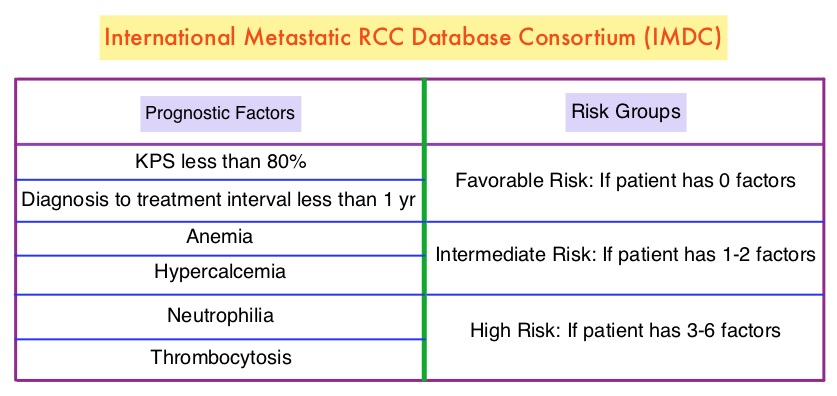
The Alliance for Clinical Trials in Oncology reported the results of a randomized, multicenter, open-label phase II CABOSUN trial, which compared CABOMETYX® with standard-of-care SUTENT®, in IMDC intermediate and poor-risk untreated patients with locally advanced or metastatic clear-cell RCC. The study population had a high rate of bone metastases, a known negative prognostic factor in RCC. This study enrolled 157 patients who were randomized in a 1:1 ratio to receive CABOMETYX® 60 mg orally daily (N=79) or SUTENT® 50 mg orally 4 weeks on, 2 weeks off (N=78). A treatment cycle was defined as 6 weeks in both study groups and treatment was continued until disease progression or intolerance to therapy. Patients were stratified by IMDC risk category (intermediate or poor) and presence of bone metastases. Crossover between treatment groups was not allowed. The median age was 63 years and 81% of the enrolled patients were classified as IMDC intermediate risk and 19% as poor risk, 36% of patients had bone metastases and 75% of the patients had prior nephrectomy. The Primary end point was Progression Free Survival (PFS) and Secondary end points included Objective Response Rate (ORR), Overall Survival (OS) and safety.

It was noted that the treatment with CABOMETYX® significantly increased median PFS compared with SUTENT® (8.2 versus 5.6 months) and was associated with a 34% reduction in rate of disease progression or death (HR=0.66; P=0.012). The ORR was 46% in the CABOMETYXreg; group compared with 18% in the SUTENT® group. The median OS with CABOMETYX® was 30.3 months versus 21.8 months with SUTENT® (HR=0.80), with this preliminary data showing a 20% decrease in the risk of death with CABOMETYX®. Grade 3 or 4 adverse events were similar in both treatment groups with more hypertension and Palmar-Plantar Erythrodysesthesia in the CABOMETYX® group whereas the SUTENT® group experienced more fatigue and hematologic toxicities. Discontinuation rates related to adverse events were similar in both treatment groups.

The authors concluded that CABOMETYX® significantly improved PFS and ORR compared to SUTENT®, in the initial treatment of patients with intermediate or poor-risk clear cell metastatic Renal Cell Carcinoma. CABOMETYX® is the first agent to demonstrate clinical superiority over SUTENT®, which has been the established standard of care for more than 10 years. The authors attributed the superiority of CABOMETYX® over SUTENT® due to its mechanism of action, which targets MET and AXL, in addition to VEGFR. Cabozantinib Versus Sunitinib As Initial Targeted Therapy for Patients With Metastatic Renal Cell Carcinoma of Poor or Intermediate Risk: The Alliance A031203 CABOSUN Trial. Choueiri TK, Halabi S, Sanford BL, et al. DOI: 10.1200/JCO.2016.70.7398 Journal of Clinical Oncology 35, no. 6 (February 2017) 591-597.
Adjuvant Therapy with SUTENT® in High-Risk Renal Cell Carcinoma after Nephrectomy

SUMMARY: The American Cancer Society estimates that about 62,700 new cases of kidney cancer will be diagnosed in the United States in 2016 and over 14,000 patients will die from this disease. The prognosis for patients with Renal Cell Carcinoma (RCC) is dependent on the stage of disease and risk factors. Two validated models, the University of California Los Angeles Integrated Staging System (UISS) and the Stage, Size, Grade, and Necrosis (SSIGN) score were developed, to assess the risk for relapse. UISS is based on ECOG Performance Status, Fuhrman nuclear grading and TNM pathological stage, whereas the SSIGN score takes Stage, Size, Grade and Necrosis into consideration. Approximately 16% of patients with RCC present with Locoregional disease, and up to 40% of these patients relapse with metastatic disease, following nephrectomy. The 5-year survival for locoregional (stage III) disease is 53%, and 8% for metastatic disease. The standard management of high risk patients following nephrectomy has been surveillance, as there has been limited data demonstrating the benefit of adjuvant therapy in reducing the risk of relapse.

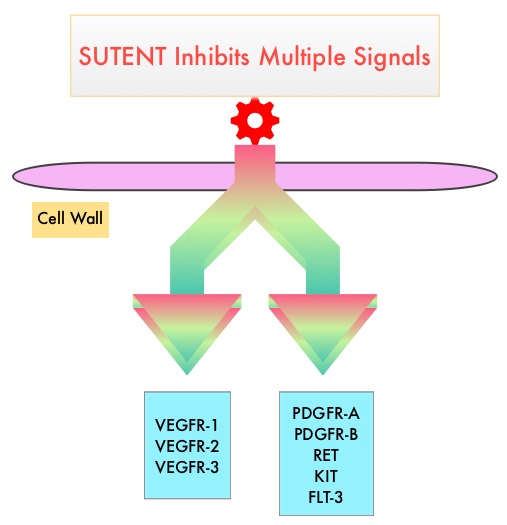
SUTENT® (Sunitinib) is a MultiKinase Inhibitor (MKI) which simultaneously targets the tumor cell wall, vascular endothelial cell wall as well as the pericyte/fibroblast/vascular/ smooth vessel cell wall and is capable of specifically binding to tyrosine kinases, inhibiting the earlier signaling events and thereby inhibits phosphorylation of VEGF receptor, PDGF receptor, FLT-3 and c-KIT. SUTENT® is indicated for the treatment of advanced renal cell carcinoma and in a multi-center, randomized study, demonstrated superior Progression Free Survival and Objective Response Rate, when compared with Interferon Alfa, in patients with treatment-naïve Renal Cell Carcinoma. The authors in this study examined the efficacy and safety of SUTENT® in patients with locally advanced RCC, at high risk for tumor recurrence, following nephrectomy.

Sunitinib as Adjuvant Treatment for Patients at High Risk of Recurrence of Renal Cell Carcinoma Following Nephrectomy (S-TRAC) is a randomized, double blind, phase III trial in which 615 patients with locoregional, high risk, clear cell Renal Cell Carcinoma were randomly assigned to receive SUTENT® (N=309) or placebo (N=306). Treatment consisted of either SUTENT® 50 mg PO daily or placebo, on a 4-weeks-on, 2-weeks-off schedule, for 1 year or until disease recurrence or unacceptable toxicity. Eligible patients had tumor Stage III or higher, regional lymph node metastasis, or both and were required to have absence of macroscopic residual or metastatic disease after nephrectomy, as confirmed by a CT scan. The primary end point was Disease Free Survival and secondary end points included Overall Survival, and Safety.

It was noted that the median duration of Disease Free Survival was 6.8 years in the SUTENT® group and 5.6 years in the placebo group (HR=0.76; P=0.03). Overall Survival data were not mature at the time of this analysis. Grade 3 or 4 adverse events were more frequent in the SUTENT® group compared to the placebo group and dose reductions, dose interruptions and discontinuations were more frequent in the SUTENT® group as well. The most commonly reported adverse events were skin toxicity (palmar-plantar erythrodysesthesia), hypertension, and fatigue, with declines in quality of life while on active therapy. In a previously published adjuvant trial (ASSURE trial), there was no improvement in Disease Free Survival in patients receiving Sunitinib or Sorafenib as compared with placebo. This has been attributed to the ASSURE trial including many patients with early (Stage 1) tumors as well as those with non-clear cell histology. Additionally, the dosing schedule in the ASSURE trial was lower than this present study.

It was concluded that adjuvant treatment with SUTENT® following nephrectomy in patients with high risk disease, results in significantly improved Disease Free Survival but this benefit may be associated with higher rate of toxicities during treatment. Adjuvant Sunitinib in High-Risk Renal-Cell Carcinoma after Nephrectomy. Ravaud A, Motzer RJ, Pandha HS, et al. for the S-TRAC Investigators. October 10, 2016DOI: 10.1056/NEJMoa1611406

OPDIVO® (Nivolumab)

The FDA on September 13, 2016 modified the dosage regimen for OPDIVO®, which is currently approved for Renal Cell Carcinoma, metastatic Melanoma, and Non Small Cell Lung Cancer. The currently approved recommended dosage regimens were modified to 240 mg intravenously (IV) every two weeks. OPDIVO® is marketed by Bristol-Myers Squibb company.

Long Term Survival in Advanced Renal Cell Carcinoma with OPDIVO®

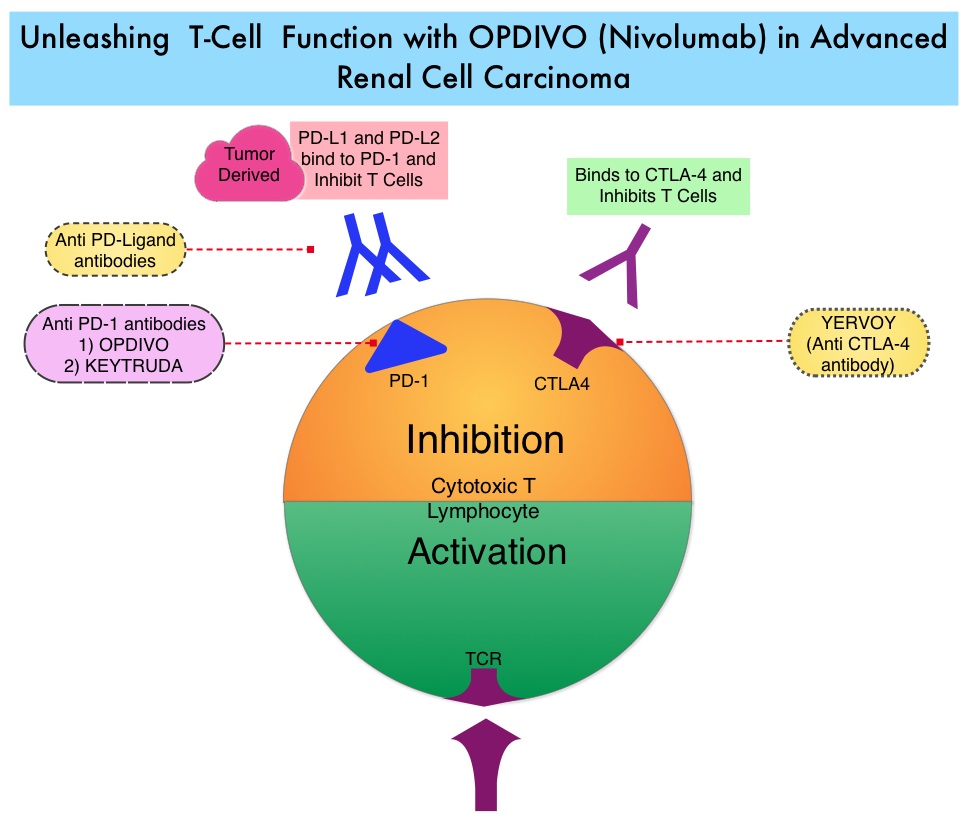
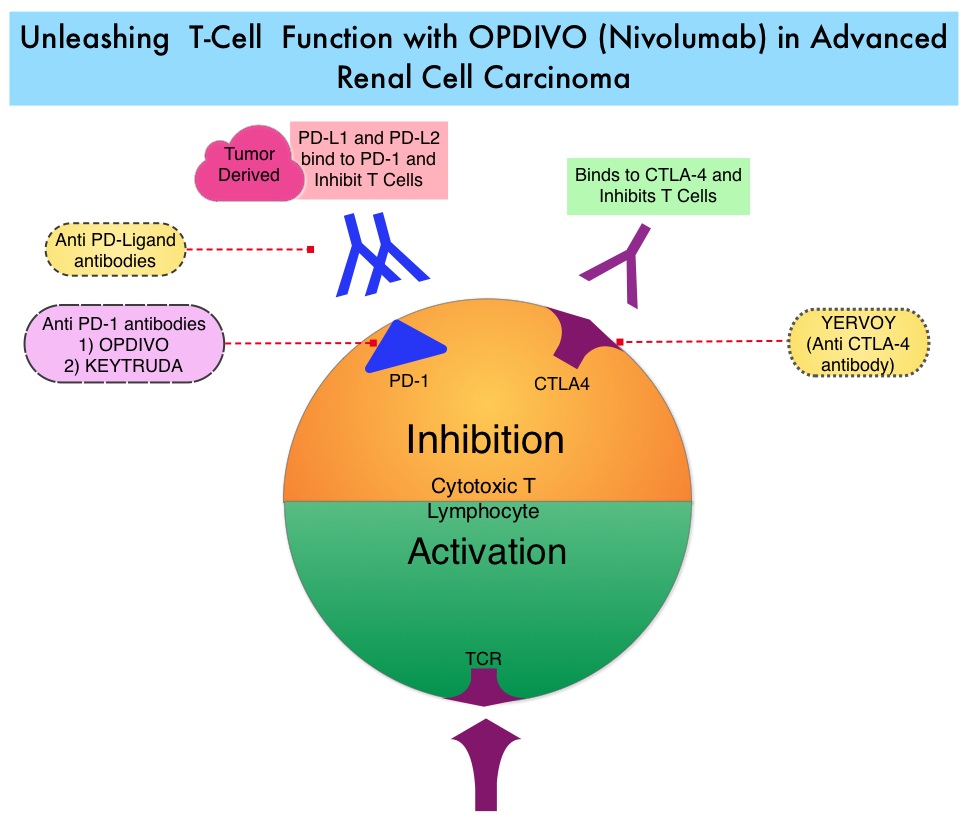
SUMMARY: The American Cancer Society estimates that about 62,700 new cases of kidney cancer will be diagnosed in the United States in 2016 and over 14,000 patients will die from this disease. The understanding of the Immune checkpoints has lead to the development of novel immunotherapies. Immune checkpoints or gate keepers are cell surface inhibitory proteins/receptors that are expressed on activated T cells. They harness the immune system and prevent uncontrolled immune reactions. Survival of cancer cells may be related to their ability to escape immune surveillance, by inhibiting T lymphocyte activation. With the recognition of Immune checkpoint proteins and their role in suppressing antitumor immunity, antibodies have been developed that target the membrane bound inhibitory Immune checkpoint proteins/receptors such as PD-1(Programmed cell Death-1), etc. Following inhibition of PD-1 by specific antibodies, T cells are unleashed, resulting in T cell proliferation and activation with subsequent therapeutic responses. OPDIVO® (Nivolumab) is a fully human, immunoglobulin G4 monoclonal antibody that binds to the PD-1 receptor and blocks its interaction with PD-L1 and PD-L2, thereby undoing PD-1 pathway-mediated inhibition of the immune response and unleashing the T cells.

OPDIVO® was approved by the FDA in November 2015, for the treatment of advanced Renal Cell Carcinoma in patients who have received prior anti-angiogenic therapy. This approval was based on a randomized, open-label, phase III study (CheckMate 025), in which previously treated patients with advanced clear cell RCC, were randomly assigned to receive either OPDIVO® or AFINITOR® (N Engl J Med 2015; 373:1803-1813). It was noted that the median Overall Survival (OS) in the OPDIVO® group was 25 months and 19.6 months in the AFINITOR® group, and this meant a 27% reduction in the risk of death with OPDIVO® (HR=0.73; P=0.002). This survival benefit was seen with a minimum follow up of 14 months.

The authors in this publication reported the long term OS results from phase I and II OPDIVO® studies, leading to CheckMate 025 phase III study. In the phase I open-label study, 34 patients with advanced Renal Cell Carcinoma, with ECOG Performance Status of 2 or less and who had prior systemic treatment with 1-5 regimens, received OPDIVO® at a dose of 1 or 10 mg/kg every 2 weeks (J Clin Oncol 2015;33:2013-2020). At a minimum follow up of 50.5 months, the Objective Response Rate (ORR) was 29% and the median Duration of Response was 12.9 months. The 3 and 5 year OS rates were 41% and 34% respectively. In the phase II study, 167 patients with advanced Renal Cell Carcinoma with KPS of 70% or more and who had prior treatment with 1-3 regimens in the metastatic setting, received OPDIVO® at a dose of 0.3, 2, or 10 mg/kg every 3 weeks (J Clin Oncol 2015;33:1430–37). At a minimum follow up of 38 months, ORR was 21% and the median Duration of Response was 22 months. The 3 year OS rate was 35% and 4 year OS rate was 29%. Long-term survival was observed in MSKCC good, intermediate and poor-risk patients, as well as in patients with excellent or reduced Karnofsky Performance Status.
The authors concluded that with this longest follow up data reported to date with any anti-PD-1/PD-L1 agent in advanced Renal Cell Carcinoma, about 33% of patients treated with OPDIVO® are alive at 5 years in the phase I study and at 3 years in the phase II study. Potential predictors of long term survival with OPDIVO® are being explored, in this previously treated patient population. Long-term overall survival (OS) with nivolumab in previously treated patients with advanced renal cell carcinoma (aRCC) from phase I and II studies. McDermott DF, Motzer RJ, Atkins MB, et al. J Clin Oncol 34, 2016 (suppl; abstr 4507)

LENVIMA® (Lenvatinib)

The FDA on May 13, 2016 approved LENVIMA® capsules in combination with AFINITOR® (Everolimus), for the treatment of advanced Renal Cell Carcinoma following one prior anti-angiogenic therapy. LENVIMA® was first approved in 2015 for the treatment of locally recurrent or metastatic, progressive, RadioActive Iodine-refractory Differentiated Thyroid Cancer. LENVIMA® is a product of Eisai, Inc.

OPDIVO® (Nivolumab)

The FDA on November 23, 2015 approved OPDIVO® Injection, for the treatment of advanced renal cell carcinoma, in patients who have received prior anti-angiogenic therapy. OPDIVO® is a product of Bristol-Myers Squibb Company.

FDA Approves Combination of LENVIMA® and AFINITOR® for Advanced Renal Cell Carcinoma

SUMMARY: The FDA on May 13, 2016 approved LENVIMA® (Lenvatinib) in combination with AFINITOR® (Everolimus), for the treatment of advanced Renal Cell Carcinoma, following one prior anti-angiogenic therapy. LENVIMA® was first approved in 2015 for the treatment of locally recurrent or metastatic, progressive, radioactive iodine-refractory differentiated thyroid cancer. The American Cancer Society estimates that about 62,700 new cases of kidney cancer will be diagnosed in the United States in 2016 and over 14,000 patients will die from this disease.

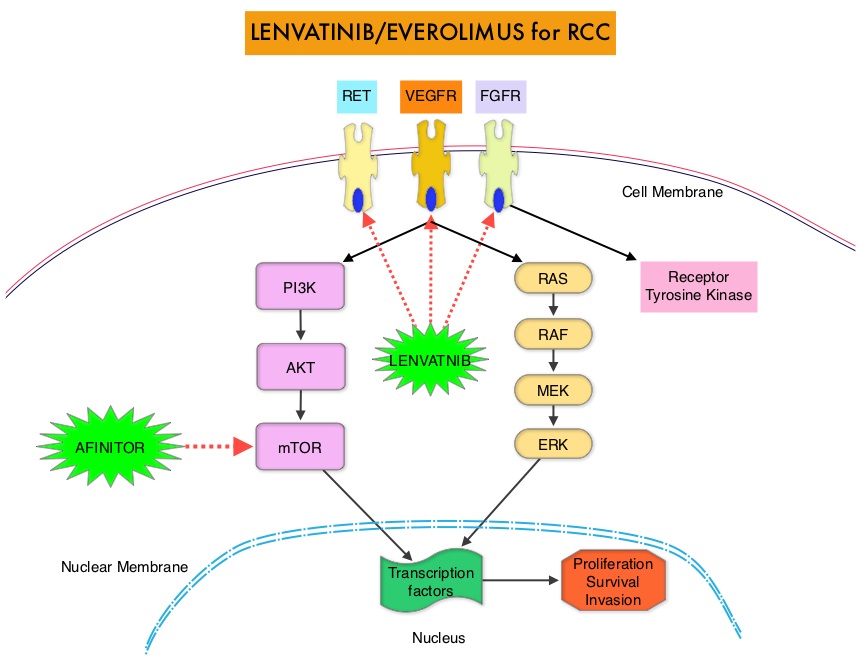
LENVIMA® is an oral multitargeted TKI (Tyrosine Kinase Inhibitor), which targets Vascular Endothelial Growth Factor Receptor (VEGFR)1-3, Fibroblast Growth Factor Receptor (FGFR)1-4, REarranged during Transfection tyrosine kinase receptor (RET), c-KIT, and Platelet Derived Growth Factor Receptor (PDGFR). LENVIMA® differs from other TKIs with anti-angiogenesis properties by its ability to inhibit FGFR-1, thereby blocking the mechanisms of resistance to VEGF/VEGFR inhibitors. In addition, it controls tumor cell growth by inhibiting RET, c-KIT, and PDGFR beta and influences tumor microenvironment by inhibiting by FGFR and PDGFR beta. AFINITOR® (Everolimus) does not inhibit tyrosine kinases, but is a specific inhibitor of mTOR (Mammalian Target of Rapamycin), which is a serine/threonine kinase, normally activated further downstream in the signaling cascade. With the inhibition of mTOR, protein synthesis is inhibited resulting in decreased angiogenesis, cell proliferation and survival as well as decreased levels of HIF-1 alpha.

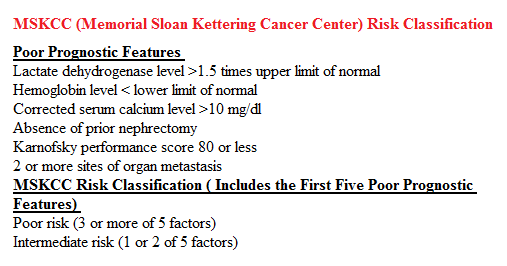
Metastatic Renal Cell Carcinoma is currently treated with sequential therapy using single agent VEGF or mTOR inhibitors. The current FDA approval was based on a multicenter open-label phase II study in which 153 patients were randomized in a 1:1:1 ratio to receive LENVIMA® plus AFINITOR® (N=51), LENVIMA® monotherapy (N=52), or AFINITOR® monotherapy (N=50). Enrolled patients had advanced or metastatic Renal Cell Carcinoma and had previously received anti-angiogenic therapy. Patients in the combination group received LENVIMA® 18 mg QD along with AFINITOR® 5 mg QD, orally, whereas patients in the single agent groups received either LENVIMA® 24 mg QD or AFINITOR® 10 mg QD. Patients were not allowed to crossover in this study. Using the MSKCC (Memorial Sloan Kettering Cancer Center) risk classification, patients were well balanced between the treatment groups. The primary endpoint was Progression Free Survival. Secondary endpoints included Objective Response Rate (ORR) and Overall Survival (OS).

It was noted that the median PFS in the combination group was 14.6 months compared with 5.5 months in the AFINITOR® alone group (HR=0.37; P=0.0005). This meant a 63% reduction in the risk of disease progression. The median OS with the combination treatment was 25.5 months compared to 15.4 months with AFINTOR® alone (HR=0.67) and this meant a 33% reduction in the risk of death. The ORR with the LENVIMA® and AFINITOR® combination was 37% compared with 6% in the AFINITOR® alone group. The PFS at one year was 31% with the combination treatment versus 14% with single agent AFINITOR® and at 2 years 51% of patients remained alive in the combination treatment group compared with 26% in the single-agent AFINITOR® group. The most common grade 3-4 toxicities in the combination group included diarrhea, fatigue, arthralgia, hypertension and anemia.

The authors concluded that a combination of LENVIMA® and AFINITOR® significantly improves Progression Free Survival, in patients with metastatic Renal Cell Carcinoma, who had progressed on previous VEGF targeted therapy and this combination therapy may change the treatment paradigm for this patient population. Lenvatinib, everolimus, and the combination in patients with metastatic renal cell carcinoma: a randomised, phase 2, open-label, multicentre trial. Motzer RJ, Hutson TE, Glen H, et al. Lancet Oncol. 2015;16:1473-1482.

COMETRIQ® Benefits All Patient Subgroups with Advanced Renal Cell Carcinoma

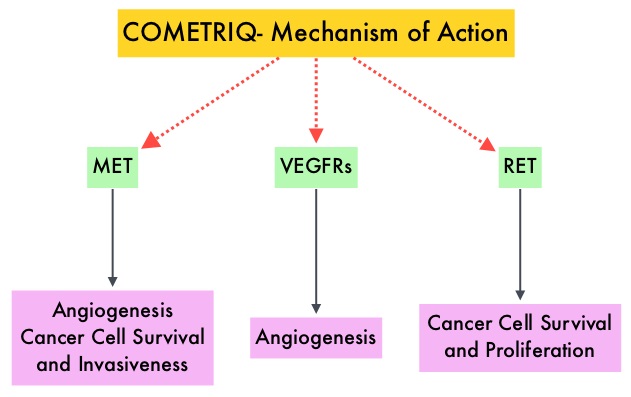
SUMMARY: The American Cancer Society estimates that about 62,700 new cases of kidney cancer will be diagnosed in the United States in 2016 and over 14,000 patients will die from this disease. The VHL (Von Hippel-Lindau) protein is a tumor suppressor gene which is frequently mutated and inactivated in approximately 90% of clear cell Renal Cell Carcinomas (ccRCC). The VHL gene under normal conditions binds to Hypoxia-Inducible Factor (HIF-1 alpha) and facilitates degradation of this factor. Under hypoxic conditions and in patients having biallelic loss of function and mutation of VHL genes, HIF-1alpha is not degraded. Build up of HIF-1 alpha results in increased angiogenesis, increased tumor cell proliferation and survival, as well as metastasis. COMETRIQ® (Cabozantinib) is an oral, small-molecule Tyrosine Kinase Inhibitor (TKI) and inhibits tyrosine kinases including MET, VEGF receptors (VEGFRs), and AXL. Both MET and AXL are up-regulated in Renal Cell Carcinoma as a consequence of VHL inactivation and increased expression of MET and AXL is associated with poor prognosis and development of resistance to VEGFR inhibitors. COMETRIQ® in previous studies has shown objective responses and prolonged disease control in patients with Renal Cell Carcinoma, resistant to VEGFR and mTOR inhibitors. The FDA initially approved COMETRIQ® in 2012, for treatment of patients with metastatic Medullary Thyroid Cancer. AFINITOR® (Everolimus) is a specific inhibitor of mTOR (Mammalian Target of Rapamycin), which is a serine/threonine kinase, and is a standard treatment for patients who progress on a VEGFR-targeted therapy.

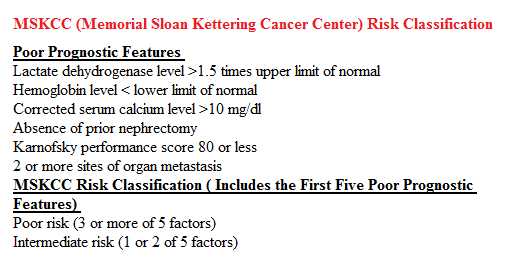
The METEOR is a phase III trial in which 658 patients were randomized 1:1 to receive COMETRIQ® 60 mg PO daily or AFINITOR® 10 mg PO daily. Treatment was continued until disease progression or unacceptable toxicities. Enrolled patients had advanced clear cell Renal Cell Carcinoma and were stratified by MSKCC (Memorial Sloan Kettering Cancer Center) prognostic criteria and number of prior therapies with VEGFR TKIs. Of the enrolled patients in the COMETRIQ® group, 43% of the patients were considered favorable, 43% intermediate and 14% poor risk, by MSKCC criteria. Seventy three percent (73%) of the patients had one prior therapy with VEGFR TKIs and 27% of the patients had 2 or more prior therapies with VEGFR TKIs. To be eligible, patients must have progressed during treatment or within 6 months of the last dose of their most recent VEGFR TKI. Prior therapies included cytokines, chemotherapy, and monoclonal antibodies, including those targeting VEGF, the Programmed Death 1 (PD-1) receptor or its ligand PD-L1. The primary endpoint was Progression Free Survival (PFS) and secondary endpoints included Overall Survival (OS) and Objective Response Rate (ORR). At the time of preplanned interim analysis which included the first 375 patient who underwent randomization, the primary end point of PFS was met, with a significant improvement in PFS with COMETRIQ® compared to AFINITOR® (7.4 months vs 3.8 months; HR=0.58; P< 0.001). In addition, there was a significant improvement in ORR with COMETRIQ® (21% vs 5%; P<0.001) and a trend for improved OS. (N Engl J Med 2015; 373:1814-1823).

In this updated analysis, the authors provided a detailed analysis of the clinical activity of COMETRIQ compared to AFINITOR® across the various patient subgroups. For all 658 patients enrolled, the PFS data was comparable to the interim analysis data, favoring COMETRIQ® (7.4 months versus 3.9 months (HR=0.52; P<0.001). When subgroup analysis was performed in patients with 3 or more metastases sites, the median PFS was 7.3 months versus 3.7 months for COMETRIQ® vs AFINITOR® respectively (HR=0.38). The risk of disease progression was reduced with COMETRIQ® by 74% in patients with visceral and bone metastases compared to AFINITOR® (5.6 vs 1.9 months; HR=0.26). The PFS benefit with COMETRIQ® was not impacted by prior therapy with VEGFR TKIs. However, patients who received prior VEGFR TKI therapy with SUTENT® (Sunitinib) benefited the most with COMETRIQ® (median PFS 9.1 vs 3.7 months (HR=0.43), whereas the PFS benefit with COMETRIQ® for those who received prior VOTRIENT® (Pazopanib) was 7.4 vs 5.1 months (HR=0.67). The PFS benefit was also significantly better in the COMETRIQ® group, for patients previously treated with an anti–PD-1/PD-L1 agents, compared to AFINITOR® (HR=0.22). In the MSKCC poor risk group, the benefit with COMETRIQ® was 5.4 versus 3.5 months with AFINITOR® (HR=0.70). The most common serious toxicities AEs in the COMETRIQ® group were abdominal pain, pleural effusion and diarrhea, whereas in the AFINITOR® arm, the most common serious toxicities were anemia, dyspnea and pneumonia.

The authors concluded that COMETRIQ® is associated with longer Progression Free Survival compared with AFINITOR®, in patients with Renal Cell Carcinoma, following progression on prior VEGFR inhibitor therapy. COMETRIQ® may help overcome treatment resistance and benefits all subgroups of patients with advanced Renal Cell Carcinoma. Studies are underway combining COMETRIQ® with Immune checkpoint inhibitors. Subgroup analyses of METEOR, a randomized phase 3 trial of cabozantinib versus everolimus in patients (pts) with advanced renal cell carcinoma (RCC). Escudier BJ, Motzer RJ, Powles T, et al. J Clin Oncol 34, 2016 (suppl 2S; abstr 499)

FDA Approves OPDIVO® for Renal Cell Carcinoma

SUMMARY: The FDA on November 23, 2015 approved OPDIVO® (Nivolumab) for the treatment of advanced Renal Cell Carcinoma in patients who have received prior anti-angiogenic therapy. The American Cancer Society estimates that about 61,560 new cases of kidney cancer will be diagnosed in the United States in 2015 and over 14,000 patients will die from this disease. The understanding of the Immune checkpoints has lead to the development of novel immunotherapies. Immune checkpoints or gate keepers are cell surface inhibitory proteins/receptors that are expressed on activated T cells. They harness the immune system and prevent uncontrolled immune reactions. Survival of cancer cells may be related to their ability to escape immune surveillance, by inhibiting T lymphocyte activation. With the recognition of Immune checkpoint proteins and their role in suppressing antitumor immunity, antibodies have been developed that target the membrane bound inhibitory Immune checkpoint proteins/receptors such as PD-1(Programmed cell Death-1), etc. Following inhibition of PD-1 by specific antibodies, T cells are unleashed, resulting in T cell proliferation and activation with subsequent therapeutic responses. OPDIVO® (Nivolumab) is a fully human, immunoglobulin G4 monoclonal antibody that binds to the PD-1 receptor and blocks its interaction with PD-L1 and PD-L2, thereby undoing PD-1 pathway-mediated inhibition of the immune response and unleashing the T cells. OPDIVO® in previously reported studies demonstrated an Objective Response Rate (ORR) of 20-22% and an Overall Survival (OS) of 18-25 months in previously treated patient with metastatic Renal Cell Carcinoma. AFINITOR® (Everolimus) is an inhibitor of mTOR (Mammalian Target of Rapamycin), which is a serine/threonine kinase. With the inhibition of mTOR, protein synthesis is down regulated resulting in decreased angiogenesis, cell proliferation and survival. AFINITOR® is presently indicated for the treatment of patients with advanced Renal Cell Carcinoma after failure, following treatment with SUTENT® (Sunitinib) or NEXAVAR® (Sorafenib) and has demonstrated improved median Progression Free Survival compared to placebo.

The FDA approval of OPDIVO® for Renal Cell Carcinoma (RCC), was based on a randomized, open-label, phase III study, in which 821 previously treated patients with advanced clear cell RCC, were randomly assigned in a 1:1 ratio to receive either OPDIVO® (N=410) or AFINITOR® (N=411). Treatment consisted of OPDIVO® 3 mg/kg IV every 2 weeks or AFINITOR® 10 mg PO daily. Enrolled patients had received prior treatment with one or two regimens of anti-angiogenic therapy which included SUTENT® (Sunitinib), VOTRIENT® (Pazopanib) and INLYTA® (Axitinib). The median age was 62 years. The primary end point was Overall Survival and secondary end points included Objective Response Rate and safety.

It was noted that the median Overall Survival in the OPDIVO® group was 25 months and 19.6 months in the AFINITOR® group, and this meant a 27% reduction in the risk of death with OPDIVO® (HR=0.73; P=0.002). This survival benefit was noted regardless of the PD-L1 expression level of the patient’s kidney tumors. The Objective Response Rate was greater with OPDIVO® compared with AFINITOR® (25% vs 5%; P<0.001) and the median Progression Free Survival was 4.6 months with OPDIVO® and 4.4 months with AFINITOR® (HR=0.88; P=0.11). Treatment related grade 3 or 4 adverse events occurred in 19% of the patients receiving OPDIVO® and in 37% of the patients receiving AFINITOR®.

The authors concluded that OPDIVO® significantly improved Overall Survival in patients with previously treated metastatic Renal Cell Carcinoma and is one of the few therapies with survival benefit, in this patient population. Nivolumab versus Everolimus in Advanced Renal-Cell Carcinoma. Motzer RJ, Escudier B, Dermott DF, et al. for the CheckMate 025 Investigators. N Engl J Med 2015; 373:1803-1813