SUMMARY: The American Cancer Society estimates that approximately 133,000 new cases of ColoRectal Cancer (CRC) will be diagnosed in the United States in 2015 and close to 50,000 are expected to die of the disease. Adjuvant chemotherapy for patients with resected locally advanced, node-positive (stage III) colon cancer has been the standard of care since 1990s with improved Overall Survival noted after 6 months of bolus schedule of 5-Fluouracil (5-FU) and Leucovorin. Subsequently, the Multicenter International Study of Oxaliplatin/5-Fluorouracil/Leucovorin in the Adjuvant Treatment of Colon Cancer (MOSAIC) and National Surgical Adjuvant Breast and Bowel Project (NSABP) C-07 trials showed that the addition of ELOXATIN® (Oxaliplatin) to infusional 5- FU and Leucovorin (FOLFOX) or bolus 5-FU and Leucovorin (FLOX) significantly prolonged 3 year Disease Free Survival (DFS) when given in an adjuvant setting, in patients with stage II or III colon cancer. However, there was no significant Overall Survival (OS) benefit noted in the NSABP C-07 study.
XELOXA or NO16968 is a multinational, open-label, randomized phase III study, which only enrolled patients with stage III disease. Patients (N=1886) were randomly assigned to receive a more convenient XELOX regimen (N=944) or 5-FU and Leucovorin (N=942). The later regimen was considered the standard therapy when this trial was designed.The XELOX regimen consisted of a ELOXATIN® 130 mg/m2 given as a 2-hour IV infusion on day 1 and XELODA® (Capecitabine) 1,000 mg/m2 PO twice daily on days 1 to 14, of a 3 week cycle, for a total of eight cycles. The 5-FU/Leucovorin regimens could be either the Mayo Clinic or Roswell Park regimens. The Mayo Clinic regimen consisted of Leucovorin 20 mg/m2 and 5-FU 425 mg/m2 IV push on days 1-5, repeated every 4 weeks, for a total of six cycles. The Roswell Park regimen consisted of Leucovorin 500 mg/m2 given as a 2-hour infusion and 5-FU 500 mg/m2 IV push at 1 hour after the start of the Leucovorin infusion, repeated every week for six weeks, followed by a 2 week rest period, for a total of four 8-week cycles. The primary end point of this study was Disease Free Survival (DFS). Secondary end points were Overall Survival (OS), Relapse Free Survival (RFS) and safety.
The 3 year DFS data was published in 2011 and it was then noted that the addition of ELOXATIN® to oral Fluoropyrimidine, XELODA® improved DFS (HR=0.80; P=0.0045), similar to the previously published MOSAIC and NSABP C-07 trials. The authors in this publication reported the final efficacy data and biomarker analysis from the NO16968 trial comparing bolus 5-FU and Leucovorin with XELODA® plus ELOXATIN® (XELOX) in resected stage III colon cancer. The 7 year DFS rates were 63% and 56% in the XELOX and 5-FU/Leucovorin groups respectively (HR=0.80; P=0.004). The Overall Survival rates after a median follow up of 7 years were 73% and 67% in the XELOX and 5-FU/Leucovorin groups respectively (HR=0.83; P=0.04). It was noted that in the 498 patients who consented to the biomarker analysis, low tumor expression of DihydroPyrimidine Dehydrogenase was predictive for efficacy with XELOX regimen. There was however no statistically significant associations noted between any tumor biomarker and outcomes in the 5-FU/Leucovorin groups.
The authors concluded that in patients with resected stage III colon cancer, XELOX significantly improved Overall Survival compared to 5-FU/Leucovorin regimens and should be considered a standard adjuvant treatment option for patients with stage III disease. Tumor DihydroPyrimidine Dehydrogenase expression may be a clinically relevant biomarker for XELOX efficacy, but will require further evaluation. Capecitabine Plus Oxaliplatin Compared With Fluorouracil/Folinic Acid As Adjuvant Therapy for Stage III Colon Cancer: Final Results of the NO16968 Randomized Controlled Phase III Trial.Schmoll HJ, Tabernero J, Maroun J, et al. J Clin Oncol. 2015;33:3733-3740
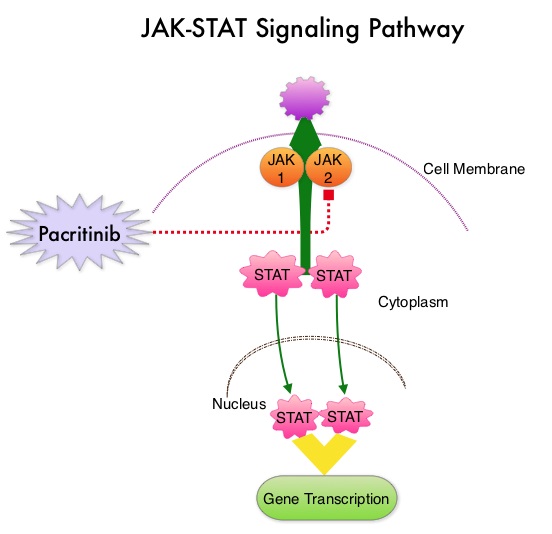 The JAK-STAT signaling pathway has been implicated in the pathogenesis of Myelofibrosis. This pathway normally is responsible for passing information from outside the cell through the cell membrane to the DNA in the nucleus, for gene transcription. Janus Kinase (JAK) family of tyrosine kinases are cytoplasmic proteins and include JAK1, JAK2, JAK3 and TYK2. JAK1 helps propagate the signaling of inflammatory cytokines whereas JAK2 is essential for growth and differentiation of hematopoietic stem cells. These tyrosine kinases mediate cell signaling by recruiting STAT’s (Signal Transducer and Activator of Transcription), with resulting modulation of gene expression. In patients with MPN, the aberrant myeloproliferation is the result of dysregulated JAK2-STAT signaling as well as excess production of inflammatory cytokines associated with this abnormal signaling. These cytokines contribute to the symptoms often reported by patients with MF. JAK2 mutations such as JAK2 V617F are seen in approximately 60% of the patients with PMF and ET and 95% of patients with PV. Unlike CML where the BCR-ABL fusion gene triggers the disease, JAK2 mutations are not initiators of the disease and are not specific for MPN. Further, several other genetic events may contribute to the abnormal JAK2-STAT signaling.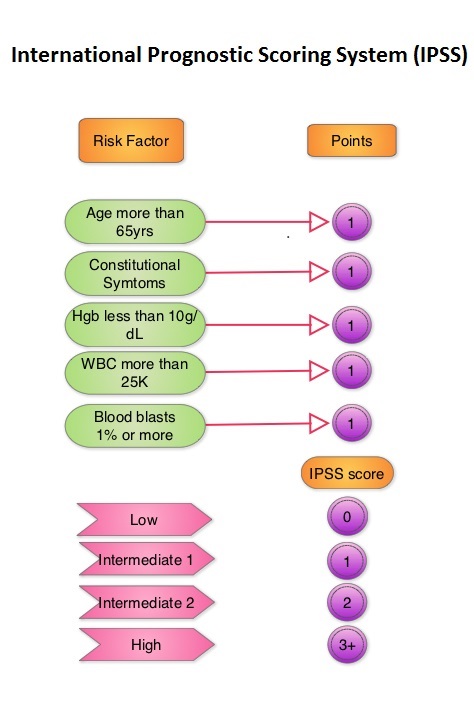
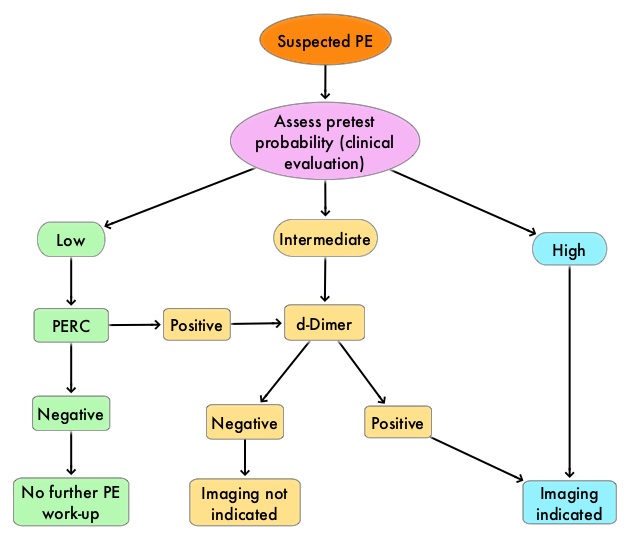
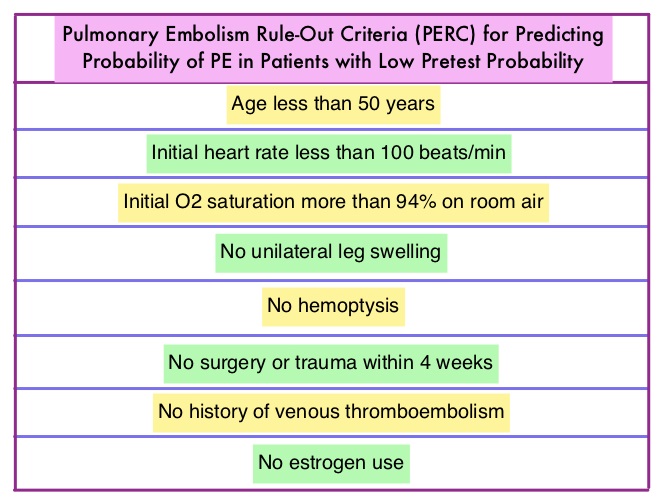 There has also been an overuse of CT imaging and plasma d-Dimer measurement, without improvement in care, but rather harming the patient and increasing expenditure. The validated clinical decision tools, in addition to physician’s clinical judgment include the Wells and Geneva Scoring System. The PERC (see table) criteria includes 8 elements, which if absent in low risk patients rules out PE. These practice guidelines were developed to provide practical advice, based on the best available evidence.