FDA Approves DARZALEX® in Combination with POMALYST® and Dexamethasone for Relapsed or Refractory Multiple Myeloma

SUMMARY: The FDA on June 16, 2017 approved the use of DARZALEX® (Daratumumab) in combination with POMALYST® (Pomalidomide) and Dexamethasone for the treatment of patients with Multiple Myeloma who have received at least two prior therapies including REVLIMID® (Lenalidomide) and a Proteasome Inhibitor. Multiple Myeloma is a clonal disorder of plasma cells in the bone marrow and the American Cancer Society estimates that in the United States, about 30,280 new cases will be diagnosed in 2017 and 12,590 patients will die of the disease. Multiple Myeloma is a disease of the elderly, with a median age at diagnosis of 69 years and characterized by intrinsic clonal heterogeneity. With a record number of regulatory approvals for Myeloma treatment over the past 12 years, the median survival for patients with Myeloma is over 10 years.
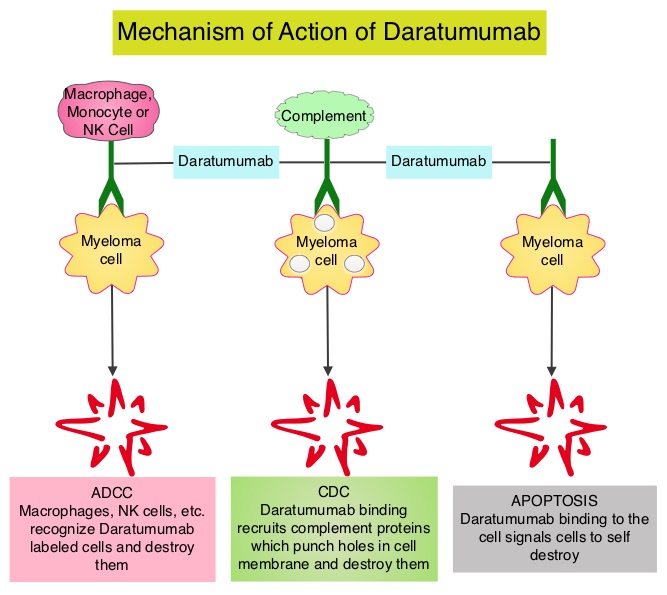
DARZALEX® is a human IgG1 antibody that targets CD38, a transmembrane glycoprotein abundantly expressed on malignant plasma cells and with low levels of expression on normal lymphoid and myeloid cells. DARZALEX® exerts its cytotoxic effect on myeloma cells by multiple mechanisms, including Antibody Dependent Cellular Cytotoxicity (ADCC), Complement Mediated Cytotoxicity and direct apoptosis. Additionally, DARZALEX® may have a role in immunomodulation by depleting CD38-positive regulator Immune suppressor cells, and thereby expanding T cells, in patients responding to therapy. The FDA approved DARZALEX® in November 2015 as monotherapy for Myeloma patients who had received at least three prior lines of therapy including a Proteasome Inhibitor (PI) and an Immunomodulatory agent or who are double refractory to a PI and an Immunomodulatory agent. In November 2016, DARZALEX® was approved in combination with REVLIMID® and Dexamethasone, or VELCADE® (Bortezomib) and Dexamethasone, for the treatment of patients with Multiple Myeloma who have received at least one prior therapy. POMALYST® (Pomalidomide) is a novel, oral, immunomodulatory drug which is far more potent than THALOMID® (Thalidomide) and REVLIMID®, and has been shown to be active in REVLIMID® and VELCADE® refractory patients.

This new FDA approval was based on data from the phase Ib (MMY1001, EQUULEUS) study of DARZALEX® in combination with POMALYST® and Dexamethasone in relapsed or refractory Multiple Myeloma. This open-label study included 103 patients with Multiple Myeloma who had received prior treatment with a Proteasome Inhibitor and an Immunomodulatory agent. Treatment consisted of DARZALEX® 16 mg/kg IV on days 1, 8, 15, and 22 of a 28 day cycle for 8 weeks during cycles 1 and 2, every 2 weeks (on days 1 and 15) for 16 weeks (cycles 3 thru 6), and every 4 weeks thereafter until disease progression. POMALYST® 4 mg PO was administered daily for 21 days along with Dexamethasone 40 mg weekly (20 mg for patients over 75 years of age). The median patient age was 64 years and patients had received a median of 4 prior lines of therapy. About 75% of the patients had prior Autologous Stem Cell Transplant, 90% of patients were refractory to REVLIMID®, 70% were refractory to VELCADE®, and 64% were refractory to both agents.

The Overall Response Rate in this study was 59% with Very Good Partial Response (VGPR) noted in 28% of patients. Complete Response was achieved in 6% of patients and stringent Complete Response was achieved in 8% of patients. The median time to response was 1 month and the median duration of response was 13.6 months. The most common toxicities were infusion reactions, nausea, vomiting, diarrhea, fatigue, fever, upper respiratory tract infection, muscle spasms, cough and dyspnea. The most common grade 3/4 toxicities were cytopenias including lymphopenia.

It was concluded that DARZALEX® in combination with POMALYST® and Dexamethasone is a new combination therapy, with significant clinical benefit, for patients who relapse or become resistant to Proteasome Inhibitors and Immunomodulatory agents. This combination may be a viable option for patients who progress on a combination of REVLIMID®, VELCADE® and Dexamethasone (RVD) regimen, which is often given as first line therapy. A Study of JNJ-54767414 (HuMax CD38) (Anti-CD38 Monoclonal Antibody) in Combination With Backbone Treatments for the Treatment of Patients With Multiple Myeloma. ClinicalTrials.gov Identifier: NCT01998971 https://www.accessdata.fda.gov/drugsatfda_docs/appletter/2017/761036orig1s005ltr.pdf.
IMBRUVICA® (Ibrutinib)

The FDA on August 2, 2017 approved IMBRUVICA® for the treatment of adult patients with chronic Graft Versus Host Disease (cGVHD), after failure of one or more lines of systemic therapy. This is the first FDA-approved therapy for the treatment of cGVHD. IMBRUVICA® is a product of Pharmacyclics LLC.

IDHIFA® (Enasidenib)

The FDA on August 1, 2017 granted regular approval to IDHIFA®, for the treatment of adult patients with relapsed or refractory Acute Myeloid Leukemia with an Isocitrate DeHydrogenase-2 (IDH2) mutation, as detected by an FDA-approved test. IDHIFA® is a product of Celgene Corp.

OPDIVO® (Nivolumab)

The FDA on August 1, 2017 granted accelerated approval to OPDIVO®, for the treatment of patients 12 years and older with MisMatch Repair deficient (dMMR) and MicroSatellite Instability High (MSI-H) metastatic ColoRectal Cancer, that has progressed following treatment with a Fluoropyrimidine, Oxaliplatin, and Irinotecan. OPDIVO® is a product of Bristol-Myers Squibb Company.

Antiemetics American Society of Clinical Oncology Clinical Practice Guideline Update (Part II)

SUMMARY: Chemotherapy Induced Nausea and Vomiting (CINV) is quite common and occurs in about 80% of patients receiving chemotherapy. The following (Part II) is a continuation of the ASCO Antiemetics Clinical Practice Guideline Update.

KEY RECOMMENDATIONS (ctd) – PART II

Adult Patients

Breakthrough nausea and vomiting

(No change) For patients with breakthrough nausea or vomiting, clinicians should re-evaluate emetic risk, disease status, concurrent illnesses, and medications, and ascertain that the best regimen is being administered for the emetic risk.

(Updated) Adult patients who experience nausea or vomiting despite optimal prophylaxis, and who did not receive Olanzapine prophylactically, should be offered Olanzapine in addition to continuing the standard antiemetic regimen.

(Updated) Adult patients who experience nausea or vomiting despite optimal prophylaxis, and who have already received Olanzapine, may be offered a drug of a different class—for example, an NK1 receptor antagonist, Lorazepam or Alprazolam, a dopamine receptor antagonist, Dronabinol, or Nabilone—in addition to continuing the standard antiemetic regimen.

Anticipatory nausea and vomiting

(Reworded for clarity) All patients should receive the most active antiemetic regimen that is appropriate for the antineoplastic agents being administered. Clinicians should use such regimens with initial antineoplastic treatment, rather than assessing the patient’s emetic response with less effective antiemetic treatment. If a patient experiences anticipatory emesis, clinicians may offer behavioral therapy with systematic desensitization.

KEY RECOMMENDATIONS

High emetic risk Radiation Therapy

(Updated) Adult patients who are treated with high-emetic-risk radiation therapy should be offered a two-drug combination of a 5-HT3 receptor antagonist and Dexamethasone before each fraction and on the day after each fraction if Radiation Therapy is not planned for that day.

Moderate-emetic-risk radiation therapy

(Reworded for clarity) Adult patients who are treated with moderate-emetic-risk Radiation Therapy should be offered a 5-HT3 receptor antagonist before each fraction, with or without Dexamethasone before the first five fractions. Low-emetic-risk radiation therapy

(Updated) Adult patients who are treated with Radiation Therapy to the brain should be offered rescue Dexamethasone therapy. Patients who are treated with Radiation Therapy to the head and neck, thorax, or pelvis should be offered rescue therapy with a 5-HT3 receptor antagonist, Dexamethasone, or a Dopamine receptor antagonist.

Minimal-emetic-risk radiation therapy

(Updated) Adult patients who are treated with minimal-emetic-risk radiation therapy should be offered rescue therapy with a 5-HT3 receptor antagonist, Dexamethasone, or a Dopamine receptor antagonist.

Concurrent radiation and antineoplastic agent therapy

(Updated) Adult patients who are treated with concurrent radiation and antineoplastic agents should receive antiemetic therapy that is appropriate for the emetic risk level of antineoplastic agents, unless the risk level of the radiation therapy is higher. During periods when prophylactic antiemetic therapy for antineoplastic agents has ended and ongoing radiation therapy would normally be managed with its own prophylactic therapy, patients should receive prophylactic therapy that is appropriate for the emetic risk of the radiation therapy until the next period of antineoplastic therapy, rather than receiving rescue therapy for antineoplastic agents as needed.

Pediatric Patients

High-emetic-risk antineoplastic agents

(Updated) Pediatric patients who are treated with high-emetic-risk antineoplastic agents should be offered a three-drug combination of a 5-HT3receptor antagonist, Dexamethasone, and Aprepitant.

(New) Pediatric patients who are treated with high-emetic-risk antineoplastic agents who are unable to receive Aprepitant should be offered a two-drug combination of a 5-HT3 receptor antagonist and Dexamethasone.

(New) Pediatric patients who are treated with high-emetic-risk antineoplastic agents who are unable to receive Dexamethasone should be offered a two-drug combination of Palonosetron and Aprepitant.

Moderate-emetic-risk antineoplastic agents

(Reworded for clarity) Pediatric patients who are treated with moderate-emetic-risk antineoplastic agents should be offered a two-drug combination of a 5-HT3receptor antagonist and Dexamethasone.

(New) Pediatric patients who are treated with moderate-emetic-risk antineoplastic agents who are unable to receive Dexamethasone should be offered a two-drug combination of a 5-HT3 receptor antagonist and Aprepitant.

Low-emetic-risk antineoplastic agents

(New) Pediatric patients who are treated with low-emetic-risk antineoplastic agents should be offered Ondansetron or Granisetron.

Minimal emetic risk antineoplastic agents

(New) Pediatric patients who are treated with minimal-emetic-risk antineoplastic agents should not be offered routine antiemetic prophylaxis.

Antiemetics: American Society of Clinical Oncology Clinical Practice Guideline Update. Hesketh PJ, Kris MG, Basch E, et al. DOI: 10.1200/JCO.2017.74.4789 Journal of Clinical Oncology – published online before print July 31, 2017

Antiemetics American Society of Clinical Oncology Clinical Practice Guideline Update

SUMMARY: The ASCO guideline for Antiemetics in oncology was updated by the ASCO Expert Panel following a systematic review of 41publications from November 2009 thru June 2016. The recommendations in this guideline are most definitive for adults who are treated with single-day IV chemotherapy. This topic has been divided into Part I and Part II for easy reading. Part II is continued in the second article of this e NewsLetter.

Guideline Question: What are the most effective strategies for preventing or managing nausea and vomiting due to antineoplastic agents or radiation therapy?

Target Population: Adults and children who receive antineoplastic agents and adults who undergo radiation therapy for cancer.

Target Audience: Medical and Radiation Oncologists, Oncology Nurses, Nurse Practitioners, Physician Assistants, Oncology Pharmacists, and Patients with cancer

KEY RECOMMENDATIONS – PART I

Adult Patients

High-emetic-risk antineoplastic agents

(Updated) Adult patients who are treated with Cisplatin and other high-emetic-risk single agents should be offered a four-drug combination of a Neurokinin 1 (NK1) receptor antagonist, a Serotonin (5-HT3) receptor antagonist, Dexamethasone, and Olanzapine. Dexamethasone and Olanzapine should be continued on days 2 to 4.

(Updated) Adult patients who are treated with an Anthracycline combined with Cyclophosphamide should be offered a four-drug combination of an NK1 receptor antagonist, a 5-HT3 receptor antagonist, Dexamethasone, and Olanzapine. Olanzapine should be continued on days 2 to 4.

Moderate-emetic-risk antineoplastic agents

(Updated) Adult patients who are treated with Carboplatin AUC 4 or more should be offered a three-drug combination of an NK1 receptor antagonist, a 5-HT3 receptor antagonist, and Dexamethasone.

(Updated) Adult patients who are treated with moderate-emetic-risk antineoplastic agents, excluding Carboplatin AUC 4 or more, should be offered a two-drug combination of a 5-HT3 receptor antagonist (day 1) and Dexamethasone (day 1).

(Updated) Adult patients who are treated with Cyclophosphamide, Doxorubicin, Oxaliplatin, and other moderate-emetic-risk antineoplastic agents that are known to cause delayed nausea and vomiting may be offered Dexamethasone on days 2 to 3.

Low-emetic-risk antineoplastic agents

(Updated) Adult patients who are treated with low-emetic-risk antineoplastic agents should be offered a single dose of a 5-HT3 receptor antagonist or a single 8-mg dose of Dexamethasone before antineoplastic treatment.

Minimal-emetic-risk antineoplastic agents

(Reworded for clarity) Adult patients who are treated with minimal-emetic-risk antineoplastic agents should not be offered routine antiemetic prophylaxis.

Antineoplastic combinations

(Reworded for clarity) Adult patients who are treated with antineoplastic combinations should be offered antiemetics that are appropriate for the component antineoplastic agent of greatest emetic risk.

Adjunctive drugs

(Updated) Lorazepam is a useful adjunct to antiemetic drugs, but is not recommended as a single-agent antiemetic.

Cannabinoids

(New) Evidence remains insufficient for a recommendation regarding treatment with medical marijuana for the prevention of nausea and vomiting in patients with cancer who receive chemotherapy or radiation therapy. Evidence is also insufficient for a recommendation regarding the use of medical marijuana in place of the tested and US FDA-approved cannabinoids, Dronabinol and Nabilone, for the treatment of nausea and vomiting caused by chemotherapy or radiation therapy.

Complementary and alternative therapies

(Reworded for clarity) Evidence remains insufficient for a recommendation for or against the use of ginger, acupuncture/acupressure, and other complementary or alternative therapies for the prevention of nausea and vomiting in patients with cancer.

High-dose chemotherapy with stem cell or bone marrow transplantation

(Updated) Adult patients who are treated with high-dose chemotherapy and stem cell or bone marrow transplantation should be offered a three-drug combination of an NK1 receptor antagonist, a 5-HT3 receptor antagonist, and Dexamethasone.

Multiday antineoplastic therapy

(Reworded for clarity) Adult patients who are treated with multiday antineoplastic agents should be offered antiemetics before treatment that are appropriate for the emetic risk of the antineoplastic agent administered on each day of the antineoplastic treatment and for 2 days after the completion of the antineoplastic regimen.

(Strengthened) Adult patients who are treated with 4- or 5-day Cisplatin regimens should be offered a three-drug combination of an NK1 receptor antagonist, a 5-HT3 receptor antagonist, and Dexamethasone.

Continued….. in Article 2 of this e NewsLetter

Antiemetics: American Society of Clinical Oncology Clinical Practice Guideline Update. Hesketh PJ, Kris MG, Basch E, et al. DOI: 10.1200/JCO.2017.74.4789 Journal of Clinical Oncology – published online before print July 31, 2017

FDA Approves RYDAPT® for FLT3-Mutated Acute Myeloid Leukemia

The FDA on April 28, 2017 approved RYDAPT® (Midostaurin), a multikinase inhibitor, for the treatment of adult patients with newly diagnosed Acute Myeloid Leukemia (AML), who are FLT3 mutation-positive (FLT3+), as detected by an FDA-approved test, in combination with standard Cytarabine and Daunorubicin induction and Cytarabine consolidation. Activating mutations in the FLT3 receptor is the most common genetic abnormality in AML and is detected in approximately 30% of the patients. RYDAPT® along with chemotherapy significantly improved Overall Survival and represents a new standard of care for FLT3-mutated AML patients.

FDA Approves NERLYNX® for Adjuvant Treatment of HER2 Positive Breast Cancer

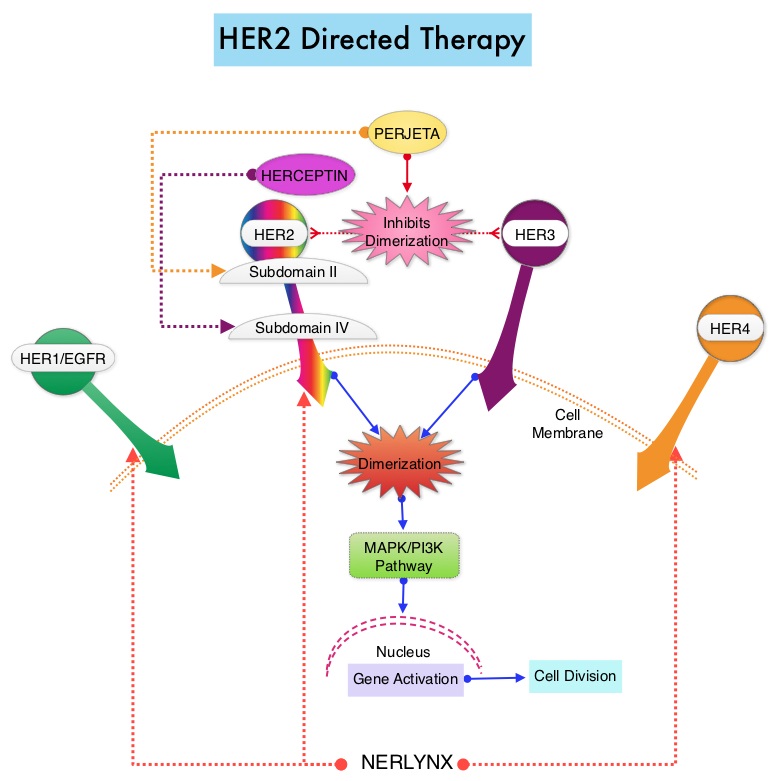
SUMMARY: The FDA on July 17, 2017 approved NERLYNX® (Neratinib) for the extended adjuvant treatment of adult patients with early stage HER2-overexpressed/amplified breast cancer, to follow adjuvant Trastuzumab (HERCEPTIN®)-based therapy. Breast cancer is the most common cancer among women in the US and about 1 in 8 women (12%) will develop invasive breast cancer during their lifetime. Approximately, 255,180 new cases of invasive breast cancer will be diagnosed in 2017 and over 41,070 women will die of the disease. The HER or erbB family of receptors consist of HER1, HER2, HER3 and HER4. Approximately 15%-20% of invasive breast cancers overexpress HER2/neu oncogene, which is a negative predictor of outcomes without systemic therapy. HERCEPTIN® (Trastuzumab) is a humanized monoclonal antibody targeting HER2 and adjuvant chemotherapy given along with HERCEPTIN® reduces the risk of disease recurrence and death, among patients with HER2-positive, early breast cancer. Nonetheless, approximately 25% of patients will develop recurrent disease within 10 years following this adjuvant intervention. Extending the duration of adjuvant HERCEPTIN® therapy or adding TYKERB® (Lapatinib), a Tyrosine Kinase Inhibitor that targets HER1 and HER2, has not improved outcomes.

NERLYNX® is a potent, irreversible, oral Tyrosine Kinase Inhibitor, of HER1, HER2 and HER4 (pan-HER inhibitor). NERLYNX® interacts with the catalytic domain of HER1, HER2, and HER4 and blocks their downstream signaling pathways, resulting in decreased cell proliferation and increased cell death. Clinical data has suggested that NERLYNX® has significant activity in suppressing HER-mediated tumor growth and is able to overcome tumor escape mechanisms experienced with current HER2-targeted and chemotherapeutic agents. It has been well known that hormone receptor positive breast cancer patients, who are also HER2-positive, have relative resistance to hormone therapy. Preclinical models had suggested that the addition of NERLYNX® could improve responses in ER positive, HER2-positive breast cancer patients. Further, NERLYNX® has clinical activity in patients with HER2-positive metastatic breast cancer.

The approval of NERLYNX® was based on ExteNET trial, which is a multicentre, randomized, double-blind, placebo-controlled, phase III study, in which the efficacy and safety of 12 months of NERLYNX® after HERCEPTIN®-based adjuvant therapy was evaluated, in patients with early stage HER2-positive breast cancer. Patients with early stage HER2-positive breast cancer (N=2,840), and within two years of completing adjuvant HERCEPTIN®, were randomized in a 1:1 ratio to receive either oral NERLYNX® 240 mg per day (N=1420) or placebo (N=1420), for one year. Patients were stratified by hormone receptor status, nodal status (0, 1-3, or 4 or more), and HERCEPTIN® adjuvant regimen (sequentially versus concurrently with chemotherapy). The Primary endpoint was invasive Disease Free Survival (iDFS), defined as the time between the randomization date to the first occurrence of invasive recurrence (local/regional, ipsilateral or contralateral breast cancer), distant recurrence, or death from any cause, within two years of follow up. The median follow up was 2 years.

In the updated analysis, the two year iDFS was 94.2% in patients treated with NERLYNX® compared with 91.9% in those receiving placebo (HR 0.66; P=0.008). Patients with ER positive breast cancer were noted to have greater benefit. The most common grade 3-4 adverse events associated with NERLYNX® were diarrhea, vomiting and nausea. Patients can experience diarrhea early, in the first 2 or 3 days and this can be alleviated using antidiarrheal prophylaxis with Loperamide, initiated with the first dose of NERLYNX® and continued for the first 2 months of treatment and as needed thereafter.

It was concluded that NERLYNX® when given for 12 months after chemotherapy and HERCEPTIN®-based adjuvant therapy, to women with HER2-positive breast cancer, significantly improved 2-year invasive Disease Free Survival. Longer follow up will hopefully address if there is an Overall Survival benefit with this treatment intervention. NERLYNX® is the first TKI approved by the FDA, shown to reduce the risk for disease recurrence, in patients with early stage HER2-positive breast cancer. Neratinib after trastuzumab-based adjuvant therapy in patients with HER2-positive breast cancer (ExteNET): a multicentre, randomised, double-blind, placebo-controlled, phase 3 trial Chan A, Delaloge S, Holmes FA, et al. The Lancet Oncology 2016; 17:367- 377

Maintenance Treatment with REVLIMID® Improves Progression Free Survival in Diffuse Large B-Cell Lymphoma

SUMMARY: The American Cancer Society estimates that in 2017, about 72,240 people will be diagnosed with Non Hodgkin Lymphoma (NHL) in the United States and about 20,140 individuals will die of this disease. Diffuse Large B-Cell Lymphoma (DLBCL) is the most common of the aggressive Non-Hodgkin lymphoma’s in the United States, and the incidence has steadily increased 3 to 4% each year. The etiology of Diffuse Large B-Cell Lymphoma is unknown. Contributing risk factors include immunosuppression (AIDS, transplantation setting, autoimmune diseases), ultraviolet radiation, pesticides, hair dyes, and diet. DLBCL is a neoplasm of large B cells and the most common chromosome abnormality involves alterations of the BCL-6 gene at the 3q27 locus, which is critical for germinal center formation. Two major molecular subtypes of DLBCL arising from different genetic mechanisms have been identified, using gene expression profiling: Germinal Center B-cell-like (GCB) and Activated B-Cell-like (ABC). Patients in the GCB subgroup have a higher five year survival rate, independent of clinical IPI risk score whereas patients in the ABC subgroup have a significantly worse outcome. Regardless, R-CHOP regimen (RITUXAN®-Rituximab, Cyclophosphamide, Doxorubicin, Vincristine, and Prednisone), given every 21 days, for 6 cycles, delivered with curative intent, is the current standard of care for patients of all ages, with newly diagnosed DLBCL, regardless of molecular subtype. Approximately 30-40% of patients experience disease progression or relapse, during the first 2 years and attempts to improve on R-CHOP regimen have not been successful. Maintenance treatment strategy following R-CHOP, to better control the disease, delay disease progression and improve long term survival, have included Autologous Stem Cell Transplantation, maintenance treatment with agents such as oral protein kinase inhibitor Enzastaurin and Everolimus. None of these interventions have been successful.

REVLIMID® (Lenalidomide) is an oral immunomodulatory agent (IMiD) with activity in lymphoid malignancies, primarily through immune modulation (repair T-cell immune synapse dysfunction and Natural Killer cell/T-cell effector augmentation). It additionally has antiproliferative effects. REVLIMID® was shown to have significant activity in relapsed DLBCL when given alone or along with RITUXAN®.

The REMARC study is an international, multicenter, double-blind, randomized, placebo-controlled phase III trial which compared REVLIMID® as maintenance therapy with placebo, in elderly patients with DLBCL, who achieved a Complete Response (CR) or Partial Response (PR) to R-CHOP induction treatment. A total of 650 patients who had CR or PR after 6-8 cycles of R-CHOP were randomly assigned in a 1:1 ratio to receive oral REVLIMID® maintenance 25 mg daily or placebo, for 21 days of every 28-day cycle, for 24 months. The median age was 68 years and approximately 90% of the patients had stage III-IV disease. The Primary end point was Progression Free Survival (PFS) and Secondary end points included safety, the percentage of patients who converted from PR to CR, Event Free Survival and Overall Survival (OS).

With a median follow up of 39 months, median PFS was not reached in the REVLIMID® group compared to 58.9 months in the placebo group (HR=0.70; P=0.013) favoring REVLIMID®. This PFS benefit with REVLIMID® maintenance was seen in all predefined subgroups (all age groups, all IPI scores, molecular subtypes, CR versus PR after R-CHOP, Positive versus Negative PET status at the time of randomization). The Overall Survival however was similar between the treatment groups after a longer median follow up of 52 months (P=0.26). The most common grade 3 or 4 toxcities associated with REVLIMID® maintenance were neutropenia and cutaneous reactions.

It was concluded that maintenance treatment with REVLIMID® for 24 months, after obtaining a CR or PR to R-CHOP, significantly prolonged Progression Free Survival in elderly patients with Diffuse Large B-Cell Lymphoma. This is the first randomized study showing a PFS benefit with an immunomodulatory agent as maintenance therapy, in this patient population. Lenalidomide Maintenance Compared With Placebo in Responding Elderly Patients With Diffuse Large B-Cell Lymphoma Treated With First-Line Rituximab Plus Cyclophosphamide, Doxorubicin, Vincristine, and Prednisone. Thieblemont C, Tilly H, Gomes da Silva M, et al. DOI: 10.1200/JCO.2017.72.6984 Journal of Clinical Oncology – published online before print April 20, 2017