
SUMMARY: The American Cancer Society estimates that in 2015, about 71,850 people will be diagnosed with Non Hodgkin Lymphoma (NHL) in the United States and about 19,800 individuals will die of this disease. Indolent Non Hodgkin Lymphomas are mature B cell lymphoproliferative disorders and include Follicular Lymphoma, Nodal Marginal Zone Lymphoma (NMZL), Extranodal Marginal Zone Lymphoma (ENMZL) of Mucosa-Associated Lymphoid Tissue (MALT) lymphoma, Splenic Marginal Zone Lymphoma (SMZL), LymphoPlasmacytic Lymphoma (LPL) and Small Lymphocytic Lymphoma (SLL). Follicular Lymphoma is the most indolent form and second most common form of all NHLs and they are a heterogeneous group of lymphoproliferative malignancies. Approximately 20% of all NHLs are Follicular Lymphomas. Advanced stage indolent NHL are not curable and as such prolonging Progression Free Survival (PFS) and Overall Survival (OS) while maintaining quality of life (QoL), has been the goals of treatment intervention. Asymptomatic patients with indolent NHL are generally considered candidates for “watch and wait” approach, whereas those with B symptoms (fever, night sweats, and weight loss), painful lymphadenopathy/splenomegaly, organ compromise and cytopenias are generally considered candidates for therapy.
GAZYVA® (Obinutuzumab) is glycoengineered, fully humanized, third generation, type II anti-CD20 antibody (IgG1 monoclonal antibody) that selectivity binds to the extracellular domain of the CD20 antigen on malignant human B cells. By virtue of binding affinity of the glycoengineered Fc portion of GAZYVA® to Fcγ receptor III on innate immune effector cells such as natural killer cells, macrophages and neutrophils, Antibody-Dependent Cell-mediated Cytotoxicity (ADCC) and Antibody-Dependent Cellular phagocytosis is significantly enhanced, whereas it induces very little Complement-Dependent Cytotoxicity. This is in contrast to RITUXAN® (Rituximab), which is a first generation type I, chimeric anti-CD20 targeted monoclonal antibody that kills lymphoma cells primarily by Complement-Dependent Cytotoxicity and also ADCC.
GADOLIN is a pivotal multicenter, open-label phase III, study in which TREANDA® (Bendamustine) alone was compared with TREANDA® plus GAZYVA® followed by GAZYVA®, in patients with indolent NHL (iNHL), refractory to RITUXAN®. Four hundred and thirteen (N=413) RITUXAN® refractory iNHL were randomized and patients in the control arm received TREANDA® 120 mg/m2 IV on days 1 and 2 every 28 days for a total of 6 cycles. Patients in the experimental arm received TREANDA® 90 mg/m2 IV on days 1 and 2 every 28 days for 6 cycles and GAZYVA® 1000mg IV days 1,8 and 15 every 28 days of cycle 1 and on day 1 of cycles 2-6. In patients with non-progressive disease in the experimental arm, GAZYVA® was continued (maintenance) every 2 months for up to 2 years. Both treatment groups were well balanced and the median age was 63 years, with a median of two prior lines of therapy. More than 90% of patients in each treatment group were refractory to their previous therapy and between 76% and 81% were double-refractory to both RITUXAN® and an alkylating agent. The Primary end point was Progression Free Survival (PFS) and Secondary end points included Overall Survival and Response Rate.
The study was unblinded at the time of planned interim analysis and had to be halted early, upon recommendations from the Independent Data Monitoring Committee, as the primary end point was reached. The median Progression Free Survival was 29 months with GAZYVA®/ TREANDA® plus maintenance GAZYVA® versus 14 months with TREANDA® monotherapy and no maintenance (HR=0.52; P<0.001). This meant a 45% reduction in the rate of disease progression. There was however no difference in the Response Rates between the treatment groups and the best Overall Response Rate up to 12 months from start of treatment was, 76.6% in the TREANDA® alone group and 78.6% in the TREANDA® plus GAZYVA® group. Median Overall Survival has not yet been reached in either arm and longer follow up is needed. The combination experimental group experienced more grade 3 adverse events such as infusion related reactions and neutropenia whereas the TREANDA® alone group experienced more thrombocytopenia, anemia and pneumonia. The authors concluded that GAZYVA® in combination with TREANDA® is superior to TREANDA® alone, in patients with RITUXAN® refractory indolent Non Hodgkin Lymphoma, with a significant improvement in Progression Free survival. The lack of difference in the Response Rate begs the question, if the improvement in PFS was predominantly contributed by the continuous maintenance treatment with GAZYVA®. GADOLIN: Primary results from a phase III study of obinutuzumab plus bendamustine compared with bendamustine alone in patients with rituximab-refractory indolent non-Hodgkin lymphoma. Sehn LH, Chua NS, Mayer J, et al. J Clin Oncol 33, 2015 (suppl; abstr LBA8502)
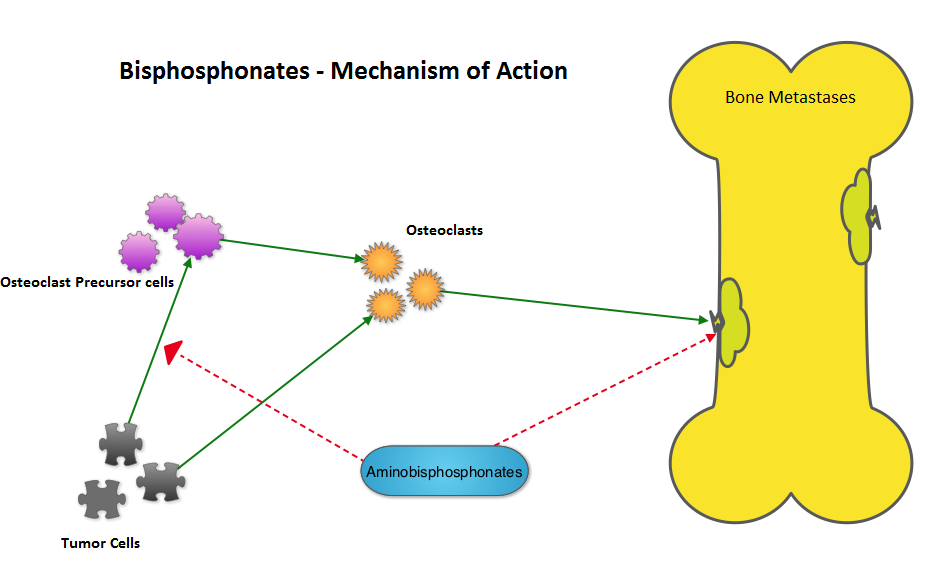
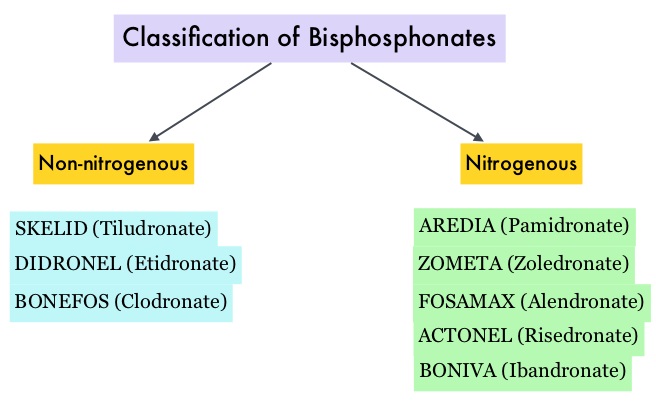 Bisphosphonates can also reduce bone pain and may improve Quality of life. Intravenous bisphosphonates, Pamidronate (AREDIA®) and Zoledronic acid (ZOMETA®) have been approved in the US for the treatment of bone metastases. Amino-bisphosphonate, ZOMETA® has however largely replaced AREDIA®, because of its superior efficacy. Both AREDIA® and ZOMETA® are administered IV every 3 to 4 weeks during the first year, following diagnoses of bone metastases. However, the optimal treatment schedule following this initial phase of treatment has remained unclear. Further, renal toxicity, long bone fractures and OsteoNecrosis of the Jaw (ONJ) have been identified as potential problems with bisphosphonate use.
 The primary endpoint was incidence of any Skeletal Related Event (SRE) and secondary endpoints included skeletal morbidity rates, performance status, pain using the Brief Pain Inventory and incidences of ONJ and renal dysfunction. Both treatment groups were well matched. Patients in this trial were stratified by disease and analyses by disease was pre-planned. It was noted that for the primary endpoint, there was no significant difference between the two treatment groups with 29% of patients in both treatment groups experiencing at least one SRE (P=0.79). With regards to secondary endpoints, there were still no significant differences between the two treatment groups, including renal dysfunction and ONJ. The authors pointed out that toxicities such as ONJ and renal dysfunction are more likely to occur after 2 years of treatment.
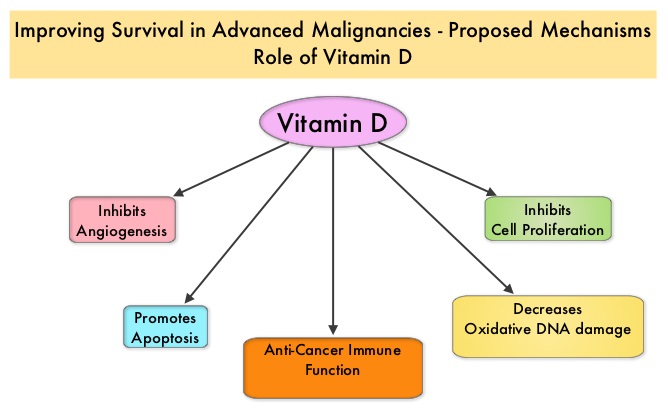 The beneficial effects of Vitamin D in malignancies has been attributed to its antiproliferative and antiangiogenic properties, as well as its effects on cell differentiation, promotion of apoptosis and its ability to decreases oxidative DNA damage. Further, macrophages play an important role in the human body’s response to therapy with monoclonal antibodies, an integral part of Follicular Lymphoma therapies and low serum Vitamin D levels may interfere with macrophage function and this may explain poor outcomes in some Follicular Lymphoma patients with low Vitamin D levels
 They include ZYTIGA® (Abiraterone) and XTANDI® (Enzalutamide). ZYTIGA® inhibits CYP 17A1 enzyme thus decreasing androgen biosynthesis and depletes adrenal and intratumoral androgens. XTANDI® competes with Testosterone and Dihydrotestosterone and avidly binds to the Androgen Receptor (AR), thereby inhibiting AR signaling and in addition inhibits translocation of the AR into the nucleus and thus inhibits the transcriptional activities of the AR. There is presently very little guidance with regards to the sequencing of these two oral agents after progression on TAXOTERE®, in patients with metastatic CRPC. ZYTIGA® was approved initially by the FDA in April 2011, for use in combination with prednisone for the treatment of patients with metastatic CRPC, who had received prior chemotherapy containing TAXOTERE®. Treatment with ZYTIGA® resulted in a 35% reduction in the risk of death and a 36% increase in median Overall Survival (OS) compared with placebo. Subsequently, XTANDI® was approved by the FDA on August 31, 2012 for the treatment of patients with metastatic CRPC who had previously received TAXOTERE®. XTANDI® improved median OS and reduced the risk of death by 37% when compared to placebo. Even though these two anti-androgen therapies improved OS in metastatic CRPC patients previously treated with TAXOTERE®, the proper sequence of administration of these two agents after TAXOTERE® failure, has remained unclear. At least 2 published studies have shown that the use of ZYTIGA® as third line therapy after progression on TAXOTERE® and XTANDI® resulted in inferior outcomes.
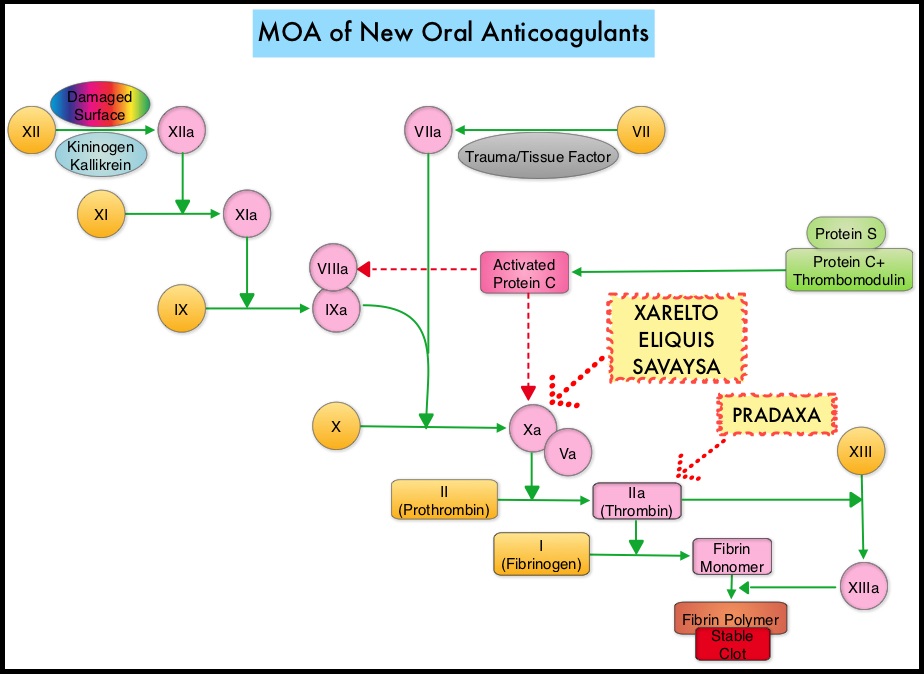 The half life of these agents can however be prolonged in those with renal insufficiency. In several clinical studies, these New Oral Anticoagulants have been shown to reduce the rate of major bleeding by 28% and the rates of intracranial and fatal hemorrhage by 50%, when compared to COUMADIN®. Unlike bleeding caused by COUMADIN®, which can be reversed using Vitamin K or Fresh Frozen Plasma, there are no specific agents presently available, for reversing bleeding caused by the New Oral Anticoagulants or for stopping the anticoagulant effects of these drugs, in patients who need urgent s