Expanding systemic treatment options in neuroendocrine tumors

Insights from the Phase 3 CABINET trial of CABOMETYX® (cabozantinib) including lung and thymic NET

Written by Munveer Bhangoo, MD
Sponsored by Exelixis, Inc.

Neuroendocrine tumors (NETs) are often characterized as a diverse category of diseases that often have widely differing clinical behavior and outcomes.  This behavior is at least in part a reflection of the fact that neuroendocrine cells are scattered through the body. Tumors evolving from neuroendocrine cells vary considerably in terms of location, biological aggressiveness, hormone status, and somatostatin receptor status.1 Taken together, patients with this disease exhibit highly variable clinical outcomes.2  Furthermore, the varied clinical and pathologic features of NETs impact the landscape of clinical trials in this space, with a longstanding need for trials to include a population representative of the disease.3,4

Metastatic neuroendocrine tumors have historically represented an unmet need, particularly for patients experiencing disease progression. In March 2025, the FDA approval of cabozantinib (CABOMETYX®) for the treatment of adult and pediatric patients 12 years of age and older with previously treated, unresectable, locally advanced or metastatic, well-differentiated pancreatic neuroendocrine tumors (pNET) or extrapancreatic neuroendocrine tumors (epNET) marked a meaningful advancement in addressing this gap.3,5  As the only FDA-approved option for patients with previously treated NET, regardless of primary site, tumor grade, SSTR expression, or functional disease, CABOMETYX offers an approved treatment option for patients whose disease progresses on an initial therapy.5-11

Let’s review the pivotal trial data from CABINET, a Phase 3 trial enrolling a heterogeneous population with both pancreatic and extrapancreatic NET, which spanned gastrointestinal, lung, thymus, and unknown and other sites of origin.3

CABINET trial design

CABINET was a randomized (2:1), double-blind, placebo-controlled, Phase 3, National Cancer Institute-sponsored trial of CABOMETYX vs placebo in advanced NET patients previously treated with ≥1 FDA-approved systemic therapy, not including an SSA. CABINET enrolled 2 independent cohorts that evaluated patients with pNET (N=99) or epNET (N=199). The starting dose for CABOMETYX was 60 mg, administered orally once daily. The primary endpoint was PFS; ORR and OS were secondary endpoints.3,5
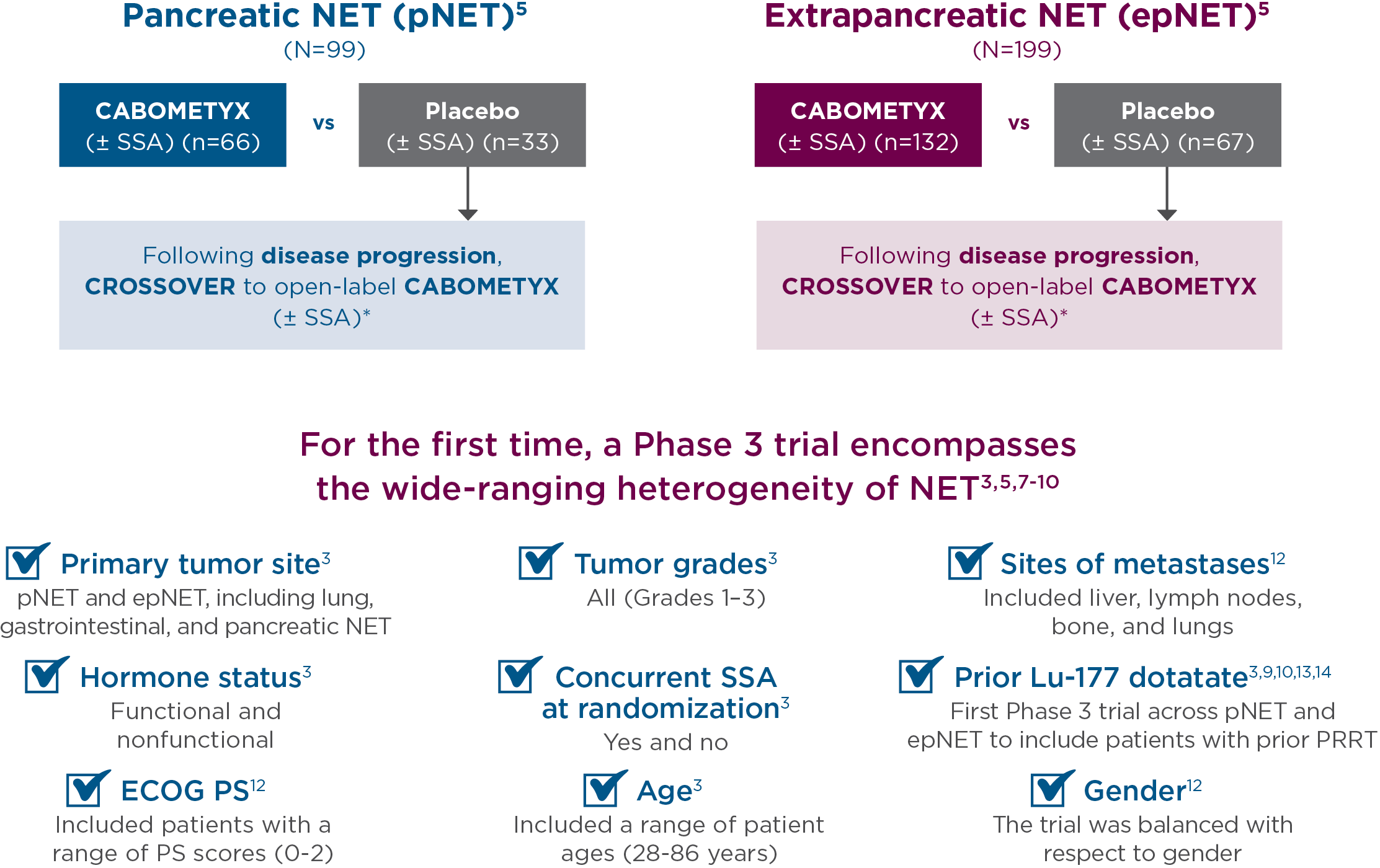
 

Study-Design-Exelixis-NET

*Unblinding and crossover to open-label CABOMETYX allowed after confirmation of progressive disease by real-time central radiology review.5


Primary efficacy results in CABINET

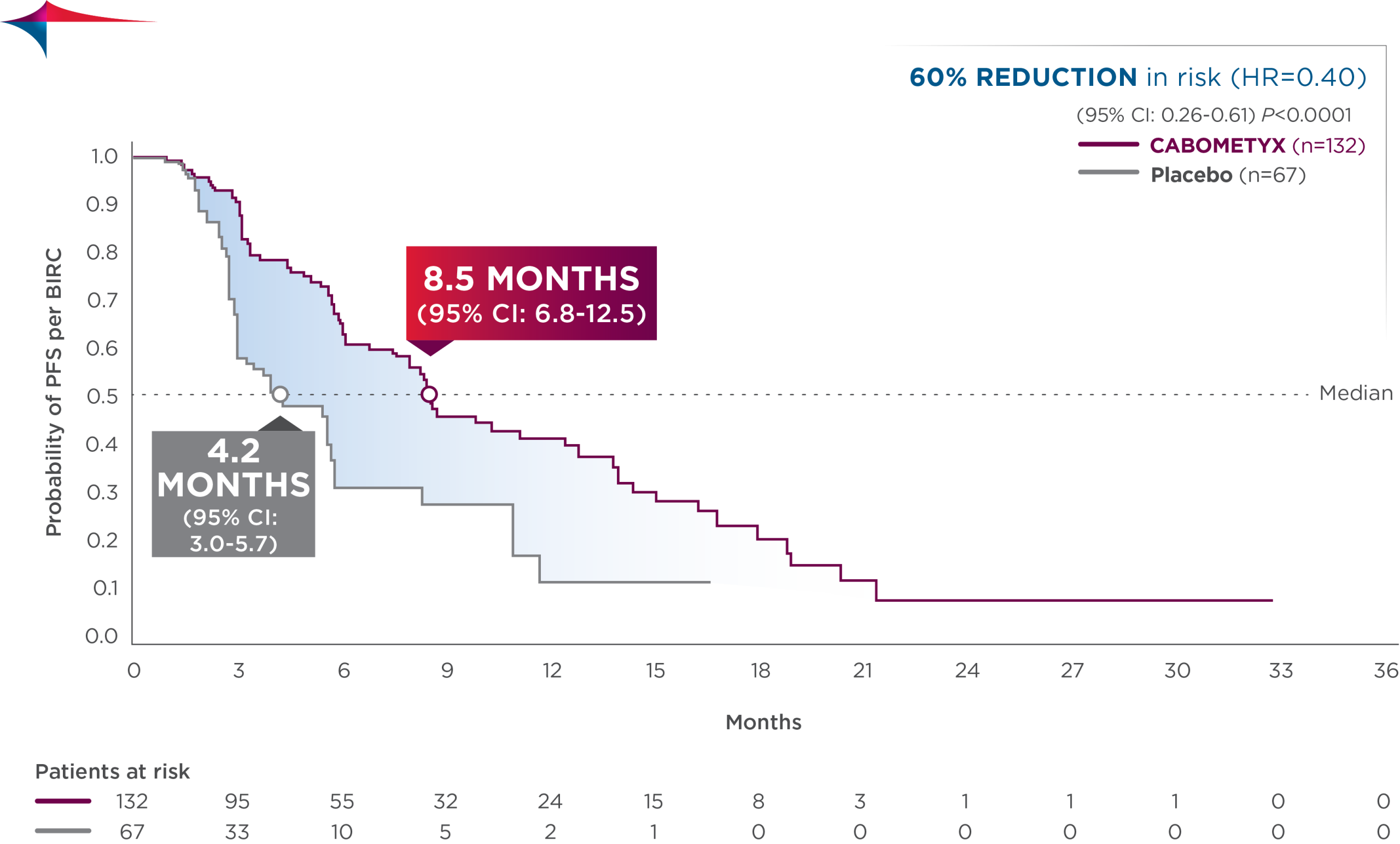
CABOMETYX quadrupled median PFS in pNET and doubled median PFS in epNET5

  • pNET: median PFS was 13.8 months (95% CI: 8.9-17.0; n=66) vs 3.3 months with placebo (95% CI: 2.8-5.7; n=33); HR=0.22 (95% CI: 0.12-0.41); P<0.0001
  • epNET: median PFS was 8.5 months (95% CI: 6.8-12.5; n=132) vs 4.2 months with placebo (95% CI: 3.0-5.7; n=67); HR=0.40 (95% CI: 0.26-0.61); P<0.0001
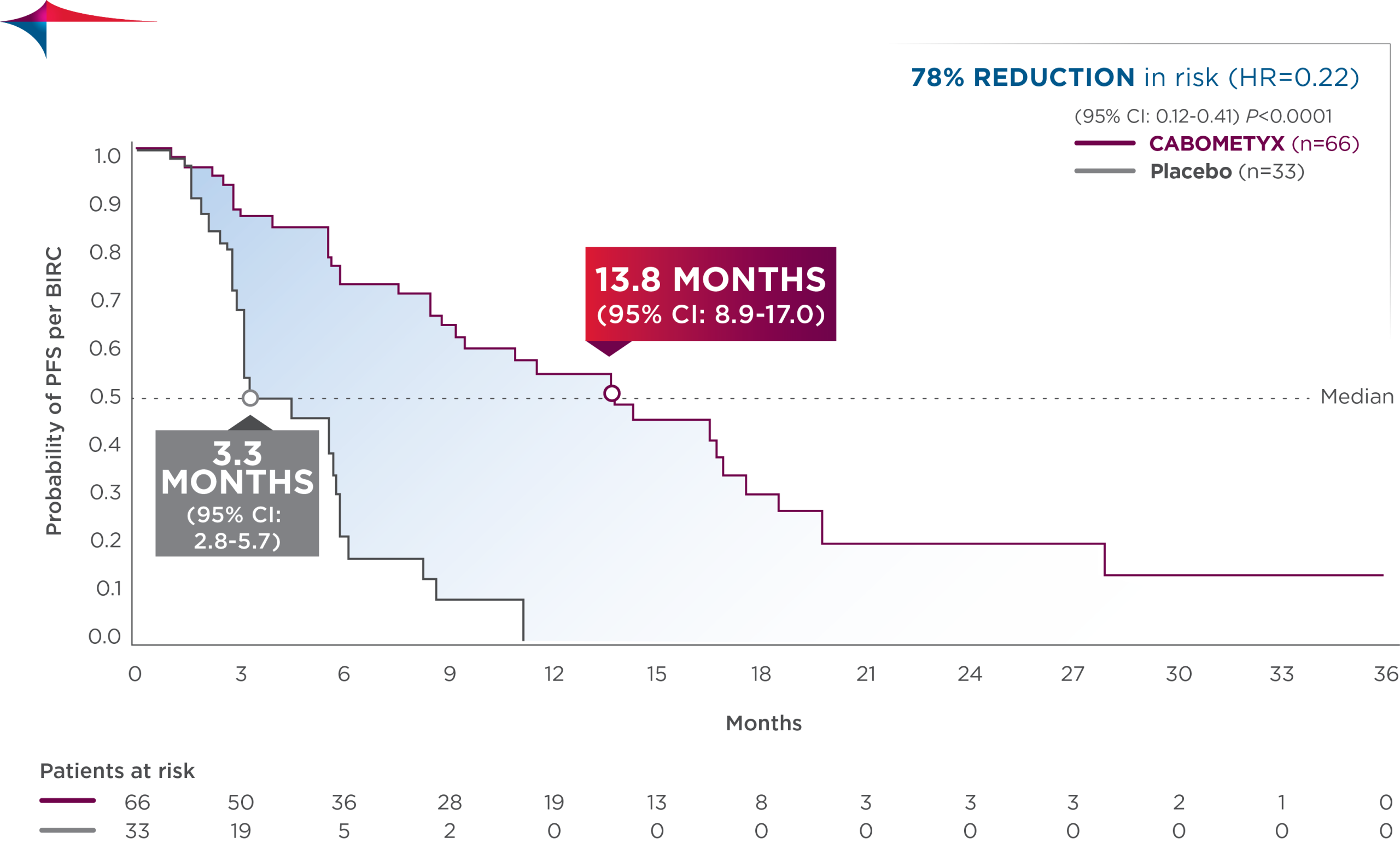
pNET-PFS-CABOMETYX


epNET-PFS-CABOMETYX


Exploratory subgroup analysis: PFS results in patients with lung/thymus site origin15

  • In the lung /thymus subgroup, median PFS was 8.2 months (95% CI: 6.0-NE; n=33) vs 2.7 months (95% CI: 1.9-NE; n=16) with placebo; HR=0.19 (95% CI: 0.06-0.54)
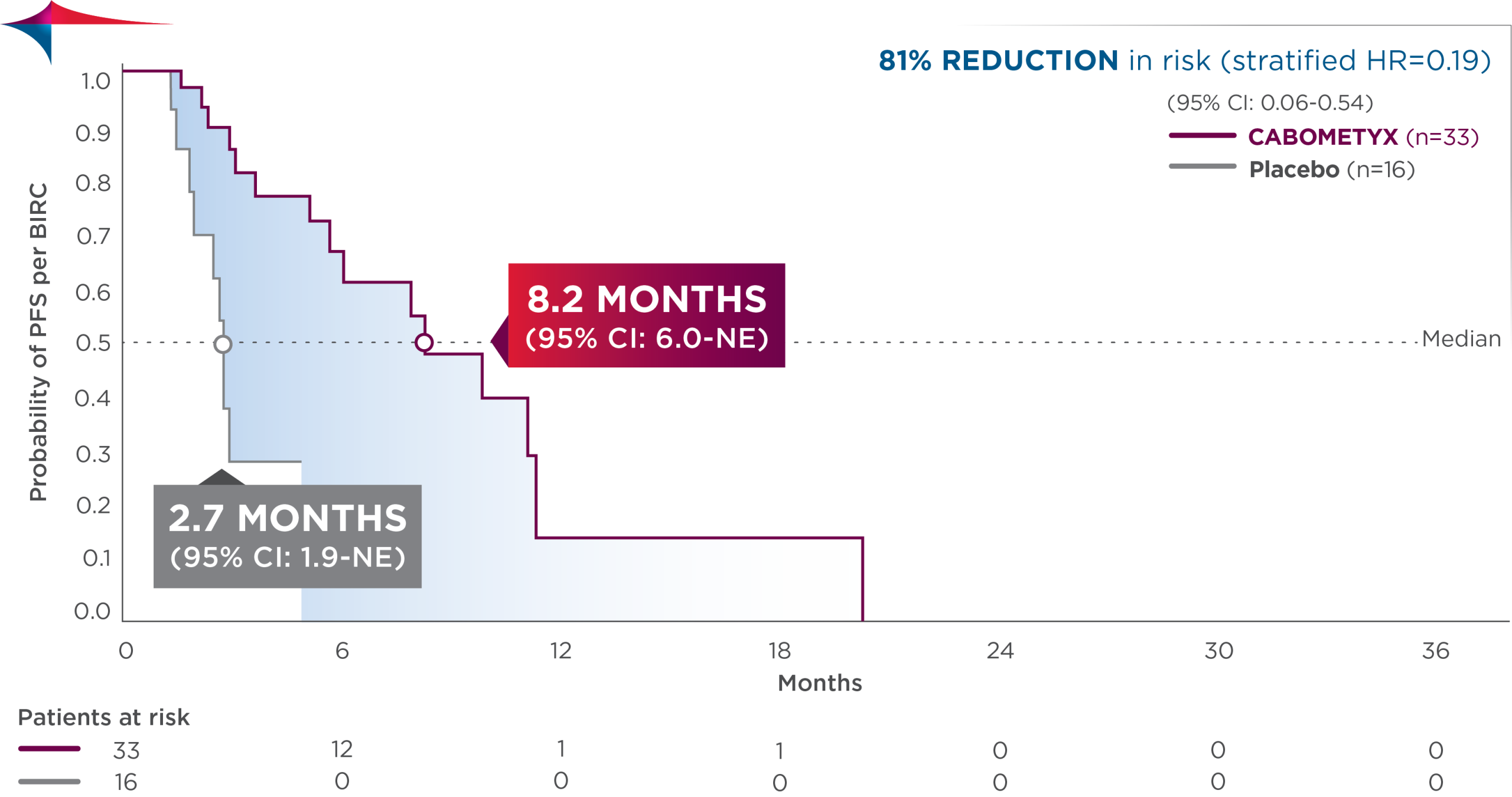
Lung-Thymus-Subgroup-PFS-CABOMETYX


Observed outcomes should be interpreted with caution because of the relatively small subgroup size. Subgroups were not powered to show differences between treatment arms, and results should be considered hypothesis generating.

CABINET safety results

The safety profile observed in CABINET was consistent with the known CABOMETYX safety profile, and no new safety signals were identified in the trial.3
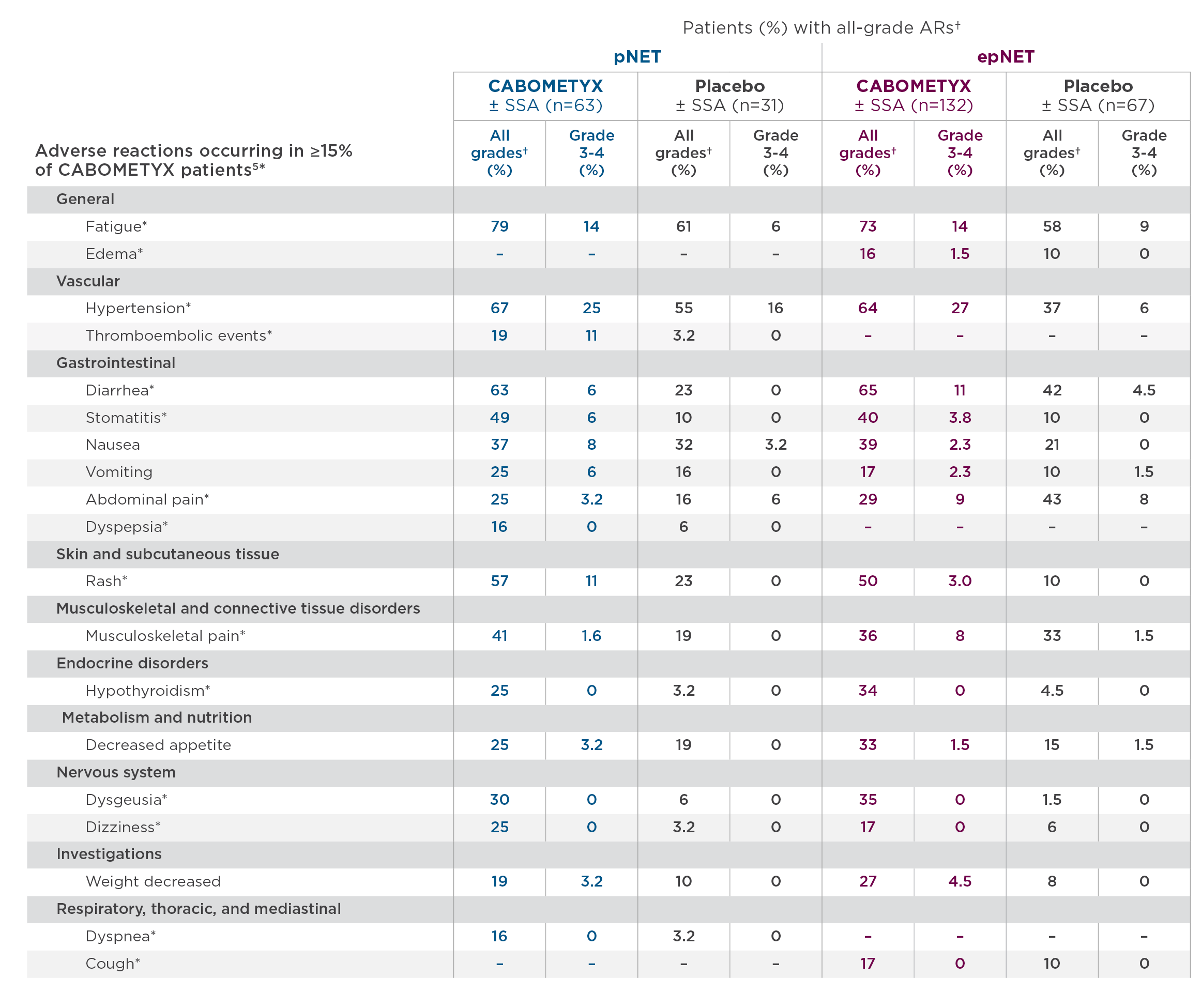
AE-CABOMETYX

  • Commonly occurring treatment-related Grade 3 and 4 adverse events in the lung/thymus subgroup included fatigue, hypertension, diarrhea, and PPE15

*These ARs are grouped terms.5 For details, please see full Prescribing Information.
NCI CTCAE Version 5.0.

CABOMETYX dosing for NET

The recommended starting dose of CABOMETYX for adult and pediatric patients 12 years of age and older and ≥40 kg is 60 mg once daily until disease progression or unacceptable toxicity (with dose reductions to 40 mg and 20 mg once daily). The recommended starting dose for pediatric patients 12 years of age and older and <40 kg is 40 mg (with dose reductions to 20 mg daily and 20 mg every other day). If previously receiving lowest dose, resume at same dose. If lowest dose not tolerated, discontinue CABOMETYX. The median average daily dose of CABOMETYX treatment was 41 mg in the pNET cohort and 43 mg in the epNET cohort.5

It is important to note that the overall efficacy results of the CABINET trial were achieved in the context of dose modifications.16

  • pNET: AR-related dose reductions occurred in 49% of patients receiving CABOMETYX vs 16% with placebo. Discontinuation due to ARs occurred in 19% of patients receiving CABOMETYX vs 10% with placebo
  • epNET: AR-related dose reductions occurred in 38% of patients receiving CABOMETYX vs 6% with placebo. Discontinuation due to ARs occurred in 28% of patients receiving CABOMETYX vs 19% receiving placebo

In summary, based on the CABINET data:

Cabozantinib became the first systemic therapy indicated for previously treated NETs regardless of origin based on the landmark Phase 3 CABINET trial.3,5,7-11 Furthermore, the broad eligibility criteria for CABINET allowed for the inclusion of patients irrespective of functional status or expression of somatostatin receptors.3

Taken together, the approval of cabozantinib represents an important advancement in the management of previously treated patients with advanced NETs across diverse sites of origin, including those with lung and thymic origin.3,5,17


Dr Bhangoo received a fee for participating in the development of this article, and his comments reflect his opinions and are not intended to constitute medical advice for individual patients

AR=adverse reaction; CI=confidence interval; DCR=disease control rate; ECOG PS=Eastern Cooperative Oncology Group performance status; epNET=extrapancreatic neuroendocrine tumor; HR=hazard ratio; NET=neuroendocrine tumor; ORR=overall response rate; OS=overall survival; NE=not estimable; PET=positron emission tomography; PFS=progression-free survival; pNET=pancreatic neuroendocrine tumor; PPE=palmar-plantar erythrodysesthesia; PRRT=peptide receptor radionuclide therapy.

INDICATIONS

CABOMETYX® (cabozantinib) is indicated for the treatment of adult and pediatric patients 12 years of age and older with previously treated, unresectable, locally advanced or metastatic, well-differentiated pancreatic neuroendocrine tumors (pNET).

CABOMETYX is indicated for the treatment of adult and pediatric patients 12 years of age and older with previously treated, unresectable, locally advanced or metastatic, well-differentiated extrapancreatic neuroendocrine tumors (epNET).

IMPORTANT SAFETY INFORMATION

WARNINGS AND PRECAUTIONS

Hemorrhage: CABOMETYX can cause severe and fatal hemorrhages. The incidence of Grade 3-5 hemorrhagic events was 5% in CABOMETYX patients in RCC, HCC, and DTC studies. Discontinue CABOMETYX for Grade 3-4 hemorrhage and before surgery. Do not administer to patients who have a recent history of hemorrhage, including hemoptysis, hematemesis, or melena.

Perforations and Fistulas: Fistulas, including fatal cases, and gastrointestinal (GI) perforations, including fatal cases, each occurred in 1% of CABOMETYX patients. Monitor for signs and symptoms, and discontinue CABOMETYX in patients with Grade 4 fistulas or GI perforation.

Thromboembolic Events: CABOMETYX can cause arterial or venous thromboembolic events. Venous thromboembolism occurred in 7% (including 4% pulmonary embolism) and arterial thromboembolism in 2% of CABOMETYX patients. Fatal thrombotic events have occurred. Discontinue CABOMETYX in patients who develop an acute myocardial infarction or serious arterial or venous thromboembolic events.

Hypertension and Hypertensive Crisis: CABOMETYX can cause hypertension, including hypertensive crisis. Hypertension was reported in 37% (16% Grade 3 and <1% Grade 4) of CABOMETYX patients. In CABINET (n=195), hypertension occurred in 65% (26% Grade 3) of CABOMETYX patients. Do not initiate CABOMETYX in patients with uncontrolled hypertension. Monitor blood pressure regularly during CABOMETYX treatment. Withhold CABOMETYX for hypertension that is not adequately controlled; when controlled, resume at a reduced dose. Permanently discontinue CABOMETYX for severe hypertension that cannot be controlled with antihypertensive therapy or for hypertensive crisis.

Cardiac Failure: CABOMETYX can cause severe and fatal cardiac failure. Cardiac failure occurred in 0.5% of patients treated with CABOMETYX as a single agent, including fatal cardiac failure in 0.1% of patients. Consider baseline and periodic evaluations of left ventricular ejection fraction. Monitor for signs and symptoms of cardiovascular events. Withhold and resume at a reduced dose upon recovery or permanently discontinue depending on the severity.

Diarrhea: CABOMETYX can cause diarrhea and it occurred in 62% (10% Grade 3) of treated patients. Monitor and manage patients using antidiarrheals as indicated. Withhold CABOMETYX until improvement to ≤ Grade 1; resume at a reduced dose.

Palmar-Plantar Erythrodysesthesia (PPE): CABOMETYX can cause PPE and it occurred in 45% of treated patients (13% Grade 3). Withhold CABOMETYX until PPE resolves or decreases to Grade 1 and resume at a reduced dose for intolerable Grade 2 PPE or Grade 3 PPE.

Proteinuria: Proteinuria was observed in 8% of CABOMETYX patients. Monitor urine protein regularly during CABOMETYX treatment. For Grade 2 or 3 proteinuria, withhold CABOMETYX until improvement to ≤ Grade 1 proteinuria; resume CABOMETYX at a reduced dose. Discontinue CABOMETYX in patients who develop nephrotic syndrome.

Osteonecrosis of the Jaw (ONJ): CABOMETYX can cause ONJ and it occurred in <1% of treated patients. Perform an oral examination prior to CABOMETYX initiation and periodically during treatment. Advise patients regarding good oral hygiene practices. Withhold CABOMETYX for at least 3 weeks prior to scheduled dental surgery or invasive dental procedures. Withhold CABOMETYX for development of ONJ until complete resolution; resume at a reduced dose.

Impaired Wound Healing: CABOMETYX can cause impaired wound healing. Withhold CABOMETYX for at least 3 weeks prior to elective surgery. Do not administer for at least 2 weeks after major surgery and until adequate wound healing. The safety of resumption of CABOMETYX after resolution of wound healing complications has not been established.

Reversible Posterior Leukoencephalopathy Syndrome (RPLS): CABOMETYX can cause RPLS. Perform evaluation for RPLS and diagnose by characteristic finding on MRI any patient presenting with seizures, headache, visual disturbances, confusion, or altered mental function. Discontinue CABOMETYX in patients who develop RPLS.

Thyroid Dysfunction: CABOMETYX can cause thyroid dysfunction, primarily hypothyroidism, and it occurred in 19% of treated patients (0.4% Grade 3). Assess for signs of thyroid dysfunction prior to the initiation of CABOMETYX and monitor for signs and symptoms during treatment.

Hypocalcemia: CABOMETYX can cause hypocalcemia, with the highest incidence in DTC patients. Based on the safety population, hypocalcemia occurred in 13% of CABOMETYX patients (2% Grade 3 and 1% Grade 4). Monitor blood calcium levels and replace calcium as necessary during treatment. Withhold and resume CABOMETYX at a reduced dose upon recovery or permanently discontinue CABOMETYX depending on severity.

Embryo-Fetal Toxicity: CABOMETYX can cause fetal harm. Advise pregnant women of the potential risk to a fetus and advise females of reproductive potential to use effective contraception during treatment with CABOMETYX and for 4 months after the last dose.

ADVERSE REACTIONS The most common (≥20%) adverse reactions are: CABOMETYX as a single agent: diarrhea, fatigue, PPE, decreased appetite, hypertension, nausea, vomiting, weight decreased, and constipation.

DRUG INTERACTIONS

Strong CYP3A4 Inhibitors: If coadministration with strong CYP3A4 inhibitors cannot be avoided, reduce the CABOMETYX dosage. Avoid grapefruit or grapefruit juice.

Strong or Moderate CYP3A4 Inducers: If coadministration with strong or moderate CYP3A4 inducers cannot be avoided, increase the CABOMETYX dosage. Avoid St. John’s wort.

USE IN SPECIFIC POPULATIONS

Lactation: Advise women not to breastfeed during CABOMETYX treatment and for 4 months after the final dose.

Hepatic Impairment: In patients with moderate hepatic impairment, reduce the CABOMETYX dosage. Avoid CABOMETYX in patients with severe hepatic impairment.

Pediatric Use: Physeal widening has been observed in children with open growth plates when treated with CABOMETYX. Physeal and longitudinal growth monitoring is recommended in children (12 years and older) with open growth plates. Consider interrupting or discontinuing CABOMETYX if abnormalities occur. The safety and effectiveness of CABOMETYX in pediatric patients less than 12 years of age have not been established.

Please see accompanying full Prescribing Information by clicking here.

You are encouraged to report negative side effects of prescription drugs to the FDA. Visit www.FDA.gov/medwatch or call 1-800-FDA-1088.

References:
1.
Sultana Q, Kar J, Verma A, et al. A comprehensive review on neuroendocrine neoplasms: presentation, pathophysiology and management. J Clin Med. 2023;12(15):5138
2. Dasari A, Wallace K, Halperin DM, et al. Epidemiology of neuroendocrine neoplasms in the US. JAMA Netw Open. 2025;8(6):e2515798. doi:10.1001/jamanetworkopen.2025.15798.
3. Chan JA, Geyer S, Zemla T, et al. Phase 3 trial of cabozantinib to treat advanced neuroendocrine tumors. N Engl J Med. 2024; Published online September 16, 2024. doi:10.1056/NEJMoa2403991.
4. Yang K, Li J, Cheng Y, Bai C. Evolving landscape of clinical trials in gastroenteropancreatic neuroendocrine neoplasms in the past two decades. Endocr Connect. 2023;12(4): e220441. doi:10.1530/EC-22-0441.
5. CABOMETYX® (cabozantinib) Prescribing Information. Exelixis, Inc.
6. Bidani K, Marinovic AG, Moond V, Harne P, Broder A, Thosani N. Treatment of pancreatic neuroendocrine tumors: beyond traditional surgery and targeted therapy. J Clin Med. 2025;14(10):3389. doi:10.3390/jcm14103389.
7. LUTATHERA® (lutetium Lu-177 dotatate) Prescribing Information. Novartis Pharmaceuticals Corporation.
8. AFINITOR® (everolimus) Prescribing Information. Novartis Pharmaceuticals Corporation.
9. SUTENT® (sunitinib malate) Prescribing Information. Pfizer, Inc.
10. SOMATULINE® DEPOT (lanreotide) Prescribing Information. Ipsen Pharma Biotech.
11. SANDOSTATIN® LAR DEPOT (octreotide acetate) Prescribing Information. Novartis Pharmaceuticals Corporation.
12. Chan JA, Geyer S, Zemla T, et al. Phase 3 trial of cabozantinib in previously treated advanced neuroendocrine tumors [supplementary appendix]. N Engl J Med. 2024; Published online September 16, 2024. doi:10.1056/ NEJMoa2403991.
13. US Food and Drug Administration. FDA approves new treatment for certain digestive tract cancers. January 26, 2018. Accessed September 5, 2024. https://www.fda.gov/news-events/press-announcements/fda-approves-new-treatment-certain-digestive-tract-cancers. 14. Yao JC, Shah MH, Ito T, et al. Everolimus for advanced pancreatic neuroendocrine tumors. N Engl J Med. 2011;364(6):514-523.
15. Wolin EM, Zemla T, Strosberg JR, et al. Efficacy and safety of cabozantinib for advanced lung and thymus neuroendocrine tumors after progression on prior therapy: subgroup analysis of phase 3 CABINET trial (Alliance A021602). Poster presented at European Society for Medical Oncology Congress; October 17-21, 2025.
16. Data on file. Exelixis, Inc.
17. Oronsky N, Ma PC, Morgensztern D, Carter CA. Nothing but NET: a review of neuroendocrine tumors and carcinomas. Neoplasia. 2017;19(12):991-1002.

©2026 Exelixis, Inc.      CA‐3900     04/26

FDA Approves Next Generation Vepdegestrant for ER-positive, HER2-negative, ESR1-Mutated Advanced Breast Cancer

SUMMARY: The FDA on May 1, 2026, approved Vepdegestrant (VEPPANU®), a heterobifunctional protein degrader, for adults with Estrogen Receptor (ER)-positive, Human Epidermal growth factor Receptor 2 (HER2)-negative, ESR1-mutated advanced or metastatic breast cancer, as detected by an FDA-authorized test, with disease progression following at least one line of endocrine therapy. FDA also approved the Guardant360 CDx as a companion diagnostic device to identify patients with breast cancer with ESR1 mutations for treatment with Vepdegestrant.

Breast cancer is the most common cancer among women in the US and about 1 in 8 women (12%) will develop invasive breast cancer during their lifetime. It is estimated that in the US, approximately 316,950 new cases of female breast cancer will be diagnosed in 2025, and about 42,170 women will die of the disease, largely due to metastatic recurrence.

Background and Clinical Unmet Need
Approximately 70% of breast tumors express Estrogen Receptors and/or Progesterone Receptors. The most common subtype of metastatic breast cancer is Hormone Receptor-positive (HR-positive), HER2-negative breast cancer (65% of all metastatic breast tumors), and these patients are often treated with anti-estrogen therapy as first line treatment. However, resistance to hormonal therapy occurs in a majority of the patients, with a median Overall Survival (OS) of 36 months. With the development of Cyclin Dependent Kinases (CDK) 4/6 inhibitors, endocrine therapy plus a CDK4/6 inhibitor is the mainstay, for the management of ER+/HER2-negative metastatic breast cancer, as first line therapy. Even with this therapeutic combination, most patients will eventually experience disease progression, with up to 50% of patients acquiring ESR1 (Estrogen Receptor gene alpha) mutations after exposure to prior endocrine therapy in combination with CDK4/6 inhibitors. These mutations enable constitutive activation of the estrogen receptor, rendering tumors less responsive to traditional endocrine agents. Although Selective Estrogen Receptor Degraders (SERDs) such as Fulvestrant and Elacestrant are often used in this setting, their clinical activity is modest and limited by pharmacokinetic and mechanistic constraints, especially in heavily pretreated, endocrine-resistant disease.

A Novel Approach: Vepdegestrant and the PROTAC Platform
Vepdegestrant represents a first-in-class, oral PROteolysis TArgeting Chimera (PROTAC) designed to degrade the ER through direct engagement of the ubiquitin-proteasome system. Unlike traditional SERDs, which bind to and inactivate the ER before relying on indirect degradation pathways, Vepdegestrant forms a ternary complex between the ER and an E3 ubiquitin ligase. This results in efficient and targeted ubiquitination and subsequent degradation of the ER protein. Early-phase trials demonstrated that Vepdegestrant was well tolerated and exhibited promising antitumor activity in patients with heavily pretreated ER+/HER2-negative advanced breast cancer. This laid the foundation for VERITAC-2, the first Phase 3 study evaluating a PROTAC agent in oncology.

VERITAC-2: Study Design and Patient Population
Study Overview:

VERITAC-2 is a global, randomized Phase 3 trial comparing oral Vepdegestrant 200 mg once-daily continuously with Fulvestrant 500 mg intramuscularly days 1 and 15 of cycle 1 and day 1 of subsequent cycles, in postmenopausal women and men with ER+/HER2-negative advanced breast cancer, previously treated with a CDK4/6 inhibitor plus endocrine therapy. An additional line of endocrine therapy was permitted. However, patients previously exposed to SERDs or chemotherapy in the metastatic setting were excluded. A total of 624 patients (median age 60 years; 43%; N=270 with ESR1mutation tumors) were randomized 1:1 to receive Vepdegestrant (N=313) or Fulvestrant (N=311). Approximately 80% were postmenopausal, and 20% had received two prior lines of therapy in the advanced setting. Patients were stratified by ESR1 mutation status and presence of visceral disease. ESR1 mutational status was determined by blood circulating tumor DeoxyriboNucleic Acid (ctDNA) using central or local testing.

The Primary endpoint was Progression-Free Survival (PFS) as assessed by Blinded Independent Central Review (BICR), first in the ESR1mutations subgroup and then in the overall population contingent on statistical assumptions. Secondary endpoints included Overall Survival (OS), Objective Response Rate (ORR), Clinical Benefit Rate (CBR), and Safety.

Key Efficacy Findings

In the ESR1-Mutant Population:

  • Median PFS: 5.0 months with Vepdegestrant vs 2.1 months with Fulvestrant
  • Hazard Ratio: 0.57 (95% CI, 0.42–0.77); P=0.0001
  • 6-Month PFS Rate: 45.2% with Vepdegestrant vs 22.7% with Fulvestrant
  • Objective Response Rate: 18.6% vs 4.0% (P=0.001)
  • Clinical Benefit Rate: 42.1% vs 20.2% (P<0.001)

There was a 43% relative reduction in the risk of disease progression or death with Vepdegestrant compared with Fulvestrant. These results represent a statistically significant and clinically meaningful improvement in PFS and response outcomes among ESR1mutated patients, reinforcing the hypothesis that targeted ER degradation via PROTAC technology can overcome a key mechanism of endocrine resistance.

In the Overall Population:

  • Median PFS: 3.7 months (Vepdegestrant) vs 3.6 months (Fulvestrant)
  • HR: 0.83 (95% CI, 0.68–1.02); P=0.07

Although trends favored Vepdegestrant, the PFS difference in the unselected population did not reach statistical significance, underscoring the critical role of ESR1 mutation status as a biomarker of response to this agent.

Safety and Tolerability
Vepdegestrant was generally well tolerated, with most Adverse Events (AEs) being Grade 1 or 2. Grade 3 or more Treatment-Emergent AEs occurred in 23.4% receiving Vepdegestrant versus 17.6% with Fulvestrant. The most toxicities with Vepdegestrant were fatigue, elevated ALT/AST, nausea, vomiting and diarrhea. Discontinuation due to AEs occurred in only 2.9% of patients receiving Vepdegestrant. Importantly, gastrointestinal side effects, often limiting with oral SERDs, were infrequent and generally low-grade, reflecting the favorable tolerability of this novel agent.

Clinical Implications and Future Directions
The VERITAC-2 trial offers a landmark clinical validation for PROTACs in oncology. For patients with ER+/HER2-negative advanced breast cancer harboring ESR1 mutations, Vepdegestrant offers a statistically significant and clinically relevant advantage in Progression-Free Survival over Fulvestrant. The favorable safety profile, oral dosing convenience, and mechanistic novelty support its development as a next-generation standard of care in this biomarker-defined subgroup.

Although benefit was not observed in the all-comer population, the compelling results in ESR1mutated disease position Vepdegestrant as a precision endocrine therapy option that could reshape the treatment landscape. Ongoing investigations will clarify its role in earlier lines of therapy and in combination strategies, including with targeted or immunotherapeutic agents.

Conclusion
Vepdegestrant has emerged as a promising, targeted therapy for patients with ESR1-mutated ER+/HER2-negative advanced breast cancer who have progressed on prior CDK4/6 inhibitor plus endocrine therapy. As the first PROTAC to reach Phase 3, its success in VERITAC-2 signals the clinical viability of targeted protein degradation platforms in hormone receptor–driven malignancies.

Vepdegestrant, a PROTAC Estrogen Receptor Degrader, in Advanced Breast Cancer. Campone M, De Laurentiis M, Jhaveri K, et al. for the VERITAC-2 Study Group. N Engl J Med. 2025;393:556-568.

Advanced Gastroesophageal Cancer: ASCO Guideline Update

SUMMARY:  Gastroesophageal cancers, including gastric, esophageal, and gastroesophageal junction (GEJ) malignancies are among the most common gastrointestinal cancers worldwide. The American Cancer Society estimates that in the US, about 31,510 new cases of Gastric cancer and 22,530 new cases of esophagus cancer will be diagnosed in 2026, and about 10,740  and 16,290 people respectively, will die of the disease.

The burden of disease varies geographically, with gastric cancer occurring more frequently in East Asian populations, while adenocarcinoma of the gastroesophageal junction has shown a rising incidence in Western countries. Squamous cell carcinoma remains the predominant histologic subtype of esophageal cancer globally, although adenocarcinoma is increasingly common in North America and Europe.

One of the major clinical challenges associated with gastroesophageal cancers is that early-stage disease is frequently asymptomatic. As a result, many patients present with unresectable locally advanced or metastatic disease at the time of diagnosis, contributing to persistently poor long-term survival outcomes. Despite advances in multimodal therapy, the overall 5-year survival rate for advanced gastroesophageal cancer remains low.

The rapidly evolving treatment landscape for advanced gastroesophageal cancer has increasingly emphasized biomarker-driven therapy. In 2023, the American Society of Clinical Oncology published guideline recommendations for first-line treatment strategies based on biomarkers such as PD-L1 and HER2 expression, while also addressing the use of targeted agents and immunotherapy in later treatment lines. More recent updates have incorporated emerging evidence from phase III randomized controlled trials evaluating novel immunotherapeutic combinations, targeted therapies, and precision oncology approaches. These updates also highlight the importance of comprehensive biomarker testing and shared decision-making, particularly for patients whose tumors demonstrate multiple actionable biomarkers.

To support these recommendations, ASCO convened an Expert Panel that conducted a systematic review of contemporary evidence in advanced gastroesophageal malignancies. The updated guideline incorporated findings from multiple newly published and updated Phase III clinical trials involving patients with unresectable locally advanced, recurrent, or metastatic disease. Collectively, these studies reflect the continued transition toward individualized treatment strategies aimed at improving survival outcomes and quality of life for patients with advanced gastroesophageal cancer.

Mandatory Biomarker Testing

1.1. Testing to determine the presence of predictive biomarkers PD-L1, dMMR/MSI-H, CLDN18.2, and HER2 in gastroesophageal adenocarcinoma is recommended, and PD-L1 and dMMR/MSI-H status should be tested for ESCC. Clinicians should consider broad-based NGS testing, which includes pan-tumor biomarkers. The results of predictive biomarker testing should be available as soon as possible to inform treatment decision making.

First-Line Therapy

pMMR/MSS HER2-negative gastric/GEJ and esophageal adenocarcinoma

2.1. For patients with pMMR/MSS HER2-negative gastric/GEJ or esophageal adenocarcinoma with PD-L1 expression ≥1 and absence of CLDN18.2 expression, first-line therapy with fluoropyrimidine and platinum-based chemotherapy in combination with immunotherapy may be recommended.

Qualifying statements for Recommendation 2.1:
Immunotherapy benefit has shown a positive association with higher PD-L1 expression (eg, greater benefit with PD-L1 expression ≥10). Not all possible PD-L1 cutoff scores have been assessed. Therefore, the optimal PD-L1 cutoff score balancing benefits and harms is unknown.
Recommended immunotherapy agents include Pembrolizumab, Nivolumab, or Tislelizumab. These agents are considered to have similar efficacy. Selection of a specific agent should be based on dosing schedule, cost considerations, toxicity, and method of administration.
Taking into account the clinical situation, clinicians should avoid withholding the start of chemotherapy while awaiting biomarker testing results.

2.2. For patients with pMMR/MSS HER2-negative gastric/GEJ adenocarcinoma with PD-L1 expression <1 and positive CLDN18.2 expression, fluoropyrimidine and platinum-based chemotherapy combined with Zolbetuximab should be offered.

2.3. For patients with pMMR/MSS HER2-negative gastric/GEJ adenocarcinoma with PD-L1 expression ≥1, and CLDN18.2 expression positivity, fluoropyrimidine and platinum-based chemotherapy combined with immunotherapy or Zolbetuximab may be offered on a case-by-case basis.

Qualifying statement for Recommendation 2.3:
Choice of therapy should take into consideration degree of PD-L1 expression, toxicity profile, burden of symptoms, and anticipated improvement in symptoms associated with response to treatment, patient comorbidities, and prior medical and treatment history.

2.4. For patients with pMMR/MSS HER2-negative gastroesophageal adenocarcinoma, PD-L1 expression <1, and absence of CLDN18.2 expression, first-line therapy with fluoropyrimidine and platinum-based chemotherapy should be offered.

pMMR/MSS HER2-positive gastric/GEJ adenocarcinoma

3.1. For patients with pMMR/MSS HER2-positive gastric/GEJ adenocarcinoma with PD-L1 expression ≥1, Pembrolizumab plus Trastuzumab should be offered, in combination with fluoropyrimidine- and Oxaliplatin-based chemotherapy.

3.2. For patients with pMMR/MSS HER2-positive gastric/GEJ adenocarcinoma with PD-L1 expression <1, Trastuzumab should be offered in combination with fluoropyrimidine and Oxaliplatin-based chemotherapy.

dMMR/MSI-H gastric/GEJ or esophageal adenocarcinoma or ESCC

4.1. Immunotherapy in combination with fluoropyrimidine and Oxaliplatin-based chemotherapy may be offered.

4.2. Immunotherapy alone is an additional treatment option that may be offered on a case-by-case basis.

ESCC that is locally advanced unresectable and not amenable to definitive chemoradiation, advanced or metastatic

5.1. For patients with pMMR/MSS ESCC and PD-L1 expression ≥1, first-line therapy with immunotherapy in combination with fluoropyrimidine and platinum-based chemotherapy or Nivolumab plus Ipilimumab may be offered.

Qualifying statement for Recommendation 5.1:
Immunotherapy benefit has shown a positive association with higher PD-L1 expression (ie, greater benefit with PD-L1 expression ≥10). Not all possible PD-L1 cutoff scores have been assessed. Therefore, the optimal PD-L1 cutoff score balancing benefits and harms is unknown.

5.2. For patients with pMMR/MSS ESCC with PD-L1 expression <1, first-line therapy with fluoropyrimidine and platinum-based chemotherapy may be offered.

Qualifying statement for Recommendations 2.1 to 5.2:
Chemotherapy alone may be offered to patients who express predictive biomarkers but are not considered candidates for targeted therapy or immunotherapy.

Second or Third Line Therapy

pMMR/MSS HER2-negative gastric/GEJ adenocarcinoma

6.1. For patients with pMMR/MSS advanced gastroesophageal adenocarcinoma whose disease has progressed after first-line therapy, Ramucirumab plus Paclitaxel may be offered.

Qualifying statements for Recommendation 6.1:
Ramucirumab plus FOLFIRI may be an option for patients who have previously been treated with Docetaxel or experienced neurotoxicity with first-line treatment.
Although outside the scope of this review, for patients with gastric or GEJ adenocarcinoma, Trifluridine and Tipiracil may be offered after progression on second-line therapy.
Note for Recommendation 6.1:
CLDN18.2 inhibitor Zolbetuximab has not been studied as second-line therapy for previously treated patients with gastroesophageal adenocarcinoma and is therefore not recommended for this patient population.

pMMR/MSS HER2-positive gastric/GEJ adenocarcinoma

6.2. For HER2-positive patients with gastric/GEJ adenocarcinoma and progressive disease after first-line therapy, Trastuzumab Deruxtecan should be offered.

Note for Recommendation 6.2:
Repeat tumor testing after progression on Trastuzumab is recommended to ensure that the tumor maintains HER2 expression after progression on first-line HER2-directed therapy.

ESCC

6.3. For patients with ESCC whose disease has progressed after first-line combination chemotherapy without immunotherapy and with PD-L1 ≥1, Nivolumab or Tislelizumab may be offered, and for patients with PD-L1 ≥10, Pembrolizumab may be offered.

Note to Recommendation 6.3:
This is expected to be a rare circumstance as patients who are candidates for immunotherapy should receive it as first-line therapy.

Immunotherapy and Targeted Therapy for Advanced Gastroesophageal Cancer: ASCO Guideline Update. Shah MA, Kennedy EB, Deighton D, et al. J Clin Oncol. 2026; 44:1145-1165.

Emerging Real-World Evidence Positions GLP-1 Receptor Agonists in Colorectal Cancer Prevention

SUMMARY: Colorectal cancer (CRC) is the third most common cancer diagnosed in both men and women in the United States. The American Cancer Society estimates that approximately 158,850 new cases of CRC will be diagnosed in the United States in 2026 and about 55,230 patients will die of the disease. Colorectal cancer is a heterogeneous disease classified by its genetics, and even though the diagnosis of CRC in the US is dropping among people 65 years and older, the incidence has been rising in the younger age groups, with 12% of CRC cases diagnosed in people under age 50.

Background: Rethinking Chemoprevention in CRC

Colorectal cancer (CRC) remains a leading cause of cancer-related morbidity and mortality worldwide, underscoring the need for effective prevention strategies. Historically, low-dose Aspirin has been investigated for its potential chemopreventive effects, largely due to its anti-inflammatory properties. However, its clinical utility has been tempered by modest benefit and clinically significant risks, particularly gastrointestinal bleeding and ulceration. As a result, Aspirin is no longer broadly recommended for CRC prevention in average-risk populations.

In parallel, Glucagon-Like Peptide-1 Receptor Agonists (GLP-1RAs), now widely prescribed for type 2 diabetes and obesity, have emerged as potential anticancer agents. Preclinical evidence suggests these drugs may inhibit colorectal carcinogenesis through anti-inflammatory and anti-proliferative effects, including downregulation of the PI3K/Akt/mTOR signaling pathway. Despite this mechanistic rationale, real-world comparative data have been lacking, until now.

Study Design and Methods                       

A large-scale retrospective analysis leveraging the TriNetX network, encompassing data from approximately 150 million patients across 106 healthcare organizations, offers new insight into this evolving landscape. In this study, 281,656 patients were propensity score-matched to compare GLP-1RA users with Aspirin users (140,828 per cohort), balancing demographics, comorbidities, and key confounders. The cohorts were broadly similar, with a mean age of 58 years and a predominance of female participants (69%). The Primary endpoint was CRC incidence.

Key Findings

GLP-1 receptor agonists were associated with a meaningful reduction in colorectal cancer incidence compared with Aspirin.

Over a median follow-up of approximately 5.9 years for GLP-1RA users and 4.8 years for Aspirin users, GLP-1RA therapy was associated with a statistically significant reduction in CRC incidence. Specifically, CRC occurred in 0.13% of GLP-1RA users compared with 0.176% of Aspirin users, translating to a 26% relative risk reduction. These findings were consistent across sensitivity analyses at 12 and 36 months, as well as across multiple subgroups, including variations in age, BMI, and glycemic status.

Notably, the observed benefit extended to younger populations and individuals without obesity or diabetes, suggesting potential effects beyond metabolic modulation. Among individual agents, Semaglutide demonstrated a statistically significant association with reduced CRC risk, while Liraglutide and Dulaglutide also showed signals of benefit in secondary analyses.

In contrast, no significant risk reduction was observed among patients with tobacco use or established atherosclerotic disease. Tirzapeptide and Exenetide did not show the same significance in this study and these findings raise important questions regarding potential heterogeneity within the class.

Safety Profile

The safety comparison revealed distinct differences between the two cohorts. From a safety perspective, GLP-1RA use was associated with fewer serious adverse events such as gastrointestinal bleeding, stomach ulcers, and acute kidney injury compared with Aspirin. As expected, gastrointestinal symptoms, including nausea, vomiting, abdominal pain, and diarrhea, were more frequently reported with GLP-1RAs, though these were generally manageable.

Clinical Interpretation

Despite the relative risk reduction, the absolute benefit at the individual level remains modest, with a number needed to treat (NNT) of approximately 2,198 to prevent one case of CRC. However, this must be interpreted within a broader population context. With millions of individuals currently prescribed GLP-1RAs for metabolic indications, even small individual risk reductions could translate into meaningful public health impact.

This study represents the first large, real-world, head-to-head comparison of GLP-1 receptor agonists and Aspirin for primary CRC prevention. The findings underscore a potential paradigm shift, positioning GLP-1RAs as agents that may extend beyond metabolic disease management into the realm of cancer prevention.

While these results are compelling, they remain hypothesis-generating. Prospective randomized clinical trials will be essential to validate causality, clarify agent-specific effects, and define optimal patient populations. Nonetheless, the convergence of metabolic and oncologic benefits highlights an emerging opportunity to rethink prevention strategies in colorectal cancer.

Key Takeaways for Oncology Practice

  • GLP-1 receptor agonists were associated with a 26% relative reduction in CRC incidence compared with Aspirin
  • Benefits were consistent across multiple patient subgroups and timepoints
  • Semaglutide emerged as the most robust individual agent in this analysis
  • GLP-1RAs demonstrated a more favorable safety profile, particularly regarding bleeding risk
  • Absolute risk reduction is small, but population-level implications may be significant

GLP-1 receptor agonist vs aspirin for primary prevention of colorectal cancer: Evidence from a real-world head-to-head comparison. Jones C, Obomanu E, Neely A, et al. J Clin Oncol 44(suppl 2; abstr 18), 2026.

Breakthrough Results from the CARTITUDE-4 Trial: A Major Step Forward in Multiple Myeloma Treatment

SUMMARY: Multiple Myeloma (MM) is a clonal disorder of plasma cells in the bone marrow and the American Cancer Society estimates that in the United States, 36,000 new cases will be diagnosed in 2026, and 10,850 patients are expected to die of the disease. Multiple Myeloma is a disease of the elderly, with a median age at diagnosis of 69 years and characterized by intrinsic clonal heterogeneity. Almost all patients eventually will relapse, and patients with a high-risk cytogenetic profile, extramedullary disease or refractory disease have the worst outcomes.

Modern therapies,including Proteasome Inhibitors, Immunomodulatory drugs, and anti-CD38 antibodies, have extended survival to nearly a decade. However, patients whose disease becomes resistant to these treatments face poor outcomes with a median survival of less than 1 year. There is a critical need for novel, effective therapies with new mechanisms of action

B-cell Maturation Antigen (BCMA) is a member of the Tumor Necrosis Factor superfamily of proteins. It is a transmembrane signaling protein primarily expressed by malignant and normal plasma cells and some mature B cells. BCMA is involved in JNK and NF-kB signaling pathways that induce B-cell development and autoimmune responses.

CAR T-Cell Therapy & BCMA Targeting

Anti-BCMA CAR T-Cell Therapy is a type of immunotherapy and consists of T cells collected from the patient’s blood in a leukapheresis procedure. These T cells are then stimulated by treating with interleukin 2 (IL-2) and anti-CD3 antibodies in vitro, so that they will actively proliferate and expand to large numbers. These T cells are then genetically engineered to produce special receptors on their surface called Chimeric Antigen Receptors (CAR), by transducing with a gene encoding the engineered CAR, via a retroviral vector such as lentiviral vector. These reprogrammed cytotoxic T cells with the Chimeric Antigen Receptors on their surface are now able to recognize a specific antigen such as BCMA on tumor cells. These genetically engineered and reprogrammed CAR T-cells are grown in the lab and are then infused into the patient. These cells in turn proliferate in the patient’s body and the engineered receptor on the cell surface help recognize and kill cancer cells that expresses that specific antigen such as BCMA. The patient undergoes lymphodepletion chemotherapy with Fludarabine and Cytoxan prior to the introduction of the engineered CAR T-cells to upregulate cytokine production and promote the expansion of the engineered CAR T-cells.

Ciltacabtagene autoleucel (Cilta-cel; CARVYKTI®), a B-cell maturation antigen (BCMA)-directed CAR T-cell therapy indicated for the treatment of patients with relapsed or refractory multiple myeloma who have received at least 1 prior line of therapy, including a proteasome inhibitor and an immunomodulatory agent, and are refractory to Lenalidomide.

 CARTITUDE-4 Study

CARTITUDE-4 is an ongoing open-label, multicenter, randomized Phase III trial conducted to compare Cilta-cel with the physician’s choice of either of two highly effective standard-of-care therapies, in patients with Lenalidomide-refractory multiple myeloma after one to three lines of therapy. In this study a total of 419 eligible patients (N=419) were randomly assigned in a 1:1 ratio to receive either one of the standard-of-care physicians choice of PVd-Pomalidomide, Bortezomib, and Dexamethasone, DPd-Daratumumab, Pomalidomide, and Dexamethasone (N=211) or a single infusion of Cilta-cel administered after the physician’s choice of bridging therapy with PVd or DPd (N=208). In the standard-of-care group, DPd was administered in 28-day cycles and PVd in 21-day cycles until disease progression. Patients in the Cilta-cel group underwent apheresis, followed by at least one bridging therapy cycle, with the number of cycles based on patient clinical status and Cilta-cel manufacturing time, and lymphodepletion with Cyclophosphamide 300 mg/m2 IV and Fludarabine 30 mg/m2 IV daily for 3 days. Patients then received a single Cilta-cel infusion at a target dose of 0.75X10⁶ CAR-positive T cells/kg of body weight 5-7 days after the initiation of lymphodepletion. The median age was 61 yrs, median time from diagnosis was 3.2 years, about 60% of patients had high risk cytogenetic abnormalities and all patients had received 1-3 previous lines of treatment. In the Cilta-cel group, 14.4% had triple-class drug resistance and 24.0% had resistance to anti-CD38 antibody. The Primary outcome was Progression Free Survival and Secondary outcomes sequentially tested included Complete Response (CR) or better, Overall Response Rate (ORR), Minimal Residual Disease (MRD) negativity, and Overall Survival (OS).

In the first interim analysis, a single Cilta-cel infusion resulted in a lower risk of disease progression or death, as well as rapid and deep responses, compared to standard therapies in Lenalidomide-refractory patients with multiple myeloma who had received one to three previous therapies

The researchers in this publication reported a prespecified second interim analysis of OS and an updated analysis of PFS in the intention-to-treat population. New data from the CARTITUDE-4 study highlight the significant clinical benefits of Cilta-cel in patients with Lenalidomide-refractory multiple myeloma who have received one to three prior lines of therapy.

Key Efficacy Findings

With a median follow-up of nearly 34 months patients receiving Cilta-cel experienced substantially longer disease control. Median PFS was not reached, compared with 11.8 months for those on standard therapy, representing a 71% reduction in the risk of progression or death.

Overall Survival outcomes also favored Cilta-cel. While median OS was not reached in either group, treatment with Cilta-cel led to a 45% reduction in the risk of death, a statistically significant improvement.

At 30 months, approximately 59% of Cilta-cel patients were alive and progression-free vs 26% with standard care. Around 66% remained treatment-free after a single infusion.

Cilta-cel achieved higher rates of sustained MRD negativity, indicating deeper and more durable responses.

Safety Overview

Safety outcomes were evaluated in 208 patients per group. Grade 3 Adverse Events (AEs) were 14% with Cilta-cel versus 37% with standard of care and Grade 4 AEs were 75% with Cilta-cel versus 56% with standard of care and was most commonly neutropenia in both groups. Treatment-Related Deaths was 3% with Cilta-cel and 2% with standard therapy. Most were linked to infections.

Why This Matters

CARTITUDE-4 is the first Phase 3 trial to demonstrate a significant Overall Survival benefit with CAR T-cell therapy in multiple myeloma. These findings reinforce the potential of Cilta-cel as an earlier-line treatment option. Even as newer therapies continue to emerge, Cilta-cel shows competitive, and in many cases superior outcomes, including notably higher MRD-negative response rates compared with other modern regimens.

Cilta-cel in lenalidomide-refractory multiple myeloma (CARTITUDE-4): an updated analysis including overall survival from an open-label, multicentre, randomised, phase 3 trial. Einsele H, San-Miguel J, Dhakal B et al. The Lancet Oncology, 2026;27:254-268

Reconsidering Menopausal Hormone Therapy in BRCA1/2 Carriers: Emerging Evidence Challenges Longstanding Concerns

SUMMARY: Breast cancer is the most common cancer among women in the US and about 1 in 8 women (12%) will develop invasive breast cancer during their lifetime. It is estimated that in the US, approximately 321,910 new cases of female breast cancer will be diagnosed in 2026, and about 42,140 women will die of the disease, largely due to metastatic recurrence.

The tumor suppressor genes such as BRCA1 and BRCA2 help repair damaged DNA and thus play an important role in maintaining cellular genetic integrity, failing which these genetic aberrations can result in malignancies. Mutations in BRCA1 and BRCA2 account for about 20 to 25 percent of hereditary breast cancers and about 5 to 10 percent of all breast cancers. These mutations can be inherited from either of the parents and a child has a 50 percent chance of inheriting this mutation, and the deleterious effects of the mutations are seen even when a second copy of the gene in an individual is normal. Women with germline BRCA1 or BRCA2 mutations face markedly elevated lifetime risks of breast cancer, estimated at up to 70%. More than half of these cancers occur before the age of 50, underscoring the importance of informed counseling regarding risk-modifying exposures. 

For much of the latter half of the 20th century, Hormone Replacement Therapy (HRT) was widely prescribed to alleviate menopausal symptoms and protect against long-term complications such as osteoporosis. This practice shifted dramatically in 2002, when the Women’s Health Initiative reported increased risks of cardiovascular events and breast cancer associated with hormone therapy in older, postmenopausal women. In the aftermath, both patients and clinicians largely retreated from Menopausal Hormone Therapy (MHT), and its use declined sharply.

While those findings reshaped care in the general population, their applicability to women with hereditary cancer predisposition, particularly carriers of pathogenic BRCA1 or BRCA2 variants, has remained uncertain. These women face markedly elevated risks of ovarian and fallopian tube cancers and are therefore advised to undergo risk-reducing bilateral salpingo-oophorectomy at relatively young ages. The procedure is effective for cancer prevention but induces abrupt surgical menopause, often decades earlier than natural menopause, with well-documented short- and long-term consequences including vasomotor symptoms, sexual dysfunction, bone loss, and adverse cardiovascular and cognitive effects.

Menopausal Hormone Therapy (MHT) is the most effective intervention for mitigating these outcomes of early menopause. However, concerns that hormone exposure could further increase breast cancer risk in BRCA carriers have led to substantial hesitation, misinformation, and, in many cases, prolonged untreated symptoms. Researchers have emphasized, recommending premenopausal oophorectomy without offering a safe strategy to manage its consequences creates an untenable clinical dilemma.

Study Design: Emulating a Trial in a High-Risk Population

To address this evidence gap, investigators conducted the largest prospective matched analysis to date examining MHT use and breast cancer risk in BRCA1 and BRCA2 carriers. Using data from a longitudinal cohort, the study sought to emulate a randomized clinical trial by carefully matching women who initiated MHT after menopause, predominantly surgical menopause, to those who did not.

Eligible participants had no prior cancer history, no bilateral mastectomy, and had entered menopause. A total of 676 matched pairs were created, matched one-to-one by gene mutation (BRCA1 or BRCA2), year of birth, and age at menopause. Participants ranged in age from 22 to 76 years, with a mean age of 43.8 years. MHT formulations initiated after menopause included estrogen-only therapy, combined estrogen–progestogen therapy, progestogen alone, tibolone, and conjugated equine estrogen plus bazedoxifene. Cox proportional hazards models were used to estimate breast cancer risk.

Results: No Signal of Increased Breast Cancer Risk

After a mean follow-up of 5.6 years from the date of first MHT use, breast cancer incidence was significantly lower among women who used MHT compared with their matched, unexposed counterparts. Incident breast cancer occurred in 12.9% of MHT users versus 18.9% of non-users (P = 0.002).

Notably, estrogen-only therapy was associated with a substantial reduction in breast cancer risk, corresponding to a 63% relative decrease compared with non-users (HR=0·37; 95%: CI 0·24-0·57). In contrast, no increased or decreased risk was observed with combined estrogen–progestogen therapy, progestogen monotherapy, or tibolone. Among the 43 women who received conjugated equine estrogen plus bazedoxifene, no breast cancer diagnoses were reported during follow-up, an exploratory finding that warrants further investigation. Importantly, risk estimates were consistent across BRCA1 and BRCA2 carriers, underscoring the relevance of these findings across mutation subtypes.

Clinical Implications

These data provide critical reassurance for clinicians managing young women with hereditary breast and ovarian cancer syndromes. In contrast to earlier studies conducted in the general population, MHT use in BRCA1/2 carriers was not associated with an increased risk of breast cancer, regardless of formulation. Estrogen-only regimens, in particular, appeared protective, although causality cannot be inferred.

While limitations include a relatively modest follow-up duration and small numbers in certain subgroups, this prospective analysis offers the strongest evidence to date supporting the safety of MHT in this high-risk population. The findings reinforce the need for individualized, evidence-based counseling that balances cancer risk reduction with quality-of-life preservation.

Moving Forward

As MHT formulations continue to evolve, ongoing research will be essential to refine risk stratification and optimize menopause management strategies in BRCA mutation carriers. For now, these results support a personalized approach to MHT use in women experiencing surgical or natural menopause after risk-reducing oophorectomy, provided there are no contraindications. For many patients, informed use of MHT may offer not only symptom relief, but also a path toward improved long-term health and wellbeing without compromising breast cancer risk.

Menopausal Hormone Therapy and the Risk of Breast Cancer in Women with a Pathogenic Variant in BRCA1 or BRCA2. Kotsopoulos J, Seca M, Gronwald J, et al. J Natl Cancer Inst. 2025 Dec 17:djaf363. doi: 10.1093/jnci/djaf363. Epub ahead of print. PMID: 41403285.

Final Overall Survival Results from the EMBARK trial: Practice-Changing Evidence in High-Risk Biochemical Recurrence

SUMMARY: Prostate cancer is the most common cancer in American men with the exclusion of skin cancer, and 1 in 9 men will be diagnosed with Prostate cancer during their lifetime. It is estimated that in the United States, about 333,830 new cases of Prostate cancer will be diagnosed in 2026 and 36,320 men will die of the disease. Androgen Deprivation Therapy (ADT) or testosterone suppression has been the cornerstone of treatment of advanced Prostate cancer, and is the first treatment intervention.

The major source of PSA (Prostate Specific Antigen) is the prostate gland, and the PSA levels are therefore undetectable within 6 weeks after Radical Prostatectomy. Similarly, following radiation therapy there is a gradual decline in PSA, before reaching a post treatment nadir. A detectable PSA level after Radical Prostatectomy, or a rising PSA level following radiation therapy, is considered PSA failure or biochemical recurrence. Approximately 35% of the patients with prostate cancer will experience PSA only relapse within 10 years of their primary treatment, and a third of these patients will develop documented metastatic disease within 8 years following PSA only relapse. Rising PSA is therefore a sign of recurrent disease. Patients with biochemically relapsed prostate cancer following local therapy, and a short PSA doubling time, are at risk for distant metastases.

Enzalutamide (XTANDI®) is a potent oral Androgen Receptor Pathway Inhibitor with demonstrated efficacy in patients with both localized and advanced prostate cancer.

EMBARK is a randomized, double-blind, placebo-controlled, multi-national, Phase III trial, conducted to evaluate the efficacy and safety of Enzalutamide plus Leuprolide and Enzalutamide monotherapy, as compared with Leuprolide alone, in patients with non-metastatic Hormone/Castration-Sensitive Prostate Cancer (nmHSPC or nmCSPC) prostate cancer, who have had high-risk biochemical recurrence. In this study, a total of 1068 eligible patients were randomly assigned 1:1:1 to receive Enzalutamide at 160 mg orally once daily plus Leuprolide IM every 12 weeks (N=355), single agent Enzalutamide at 160 mg orally once daily (N=355) or Leuprolide alone (N=358). All patients had received prior definitive therapy with radical prostatectomy and/or radiotherapy with curative intent. High risk disease was defined as a PSA doubling time of 9 months or less and a PSA level of 2 ng/ml above nadir after radiation therapy, or 1 ng/ml or more after radical prostatectomy with or without postoperative radiation therapy. The baseline characteristics were well balanced among the treatment groups. The median age was 69 years, the median PSA doubling time was 4.9 months and the median PSA level was 5.2 ng/ml. The Primary end point was Metastasis-Free Survival (MFS), as assessed by Blinded Independent Central Review (BICR) in the combination group, as compared with the Leuprolide-alone group. MFS is defined as the duration of time in months between randomization and the earliest objective evidence of radiographic progression by central imaging or death due to any cause, whichever occurred first. Secondary end points included MFS in the Enzalutamide monotherapy group, as compared with the Leuprolide-alone group, Overall Survival (OS), Patient-Reported Outcomes and Safety.

At a median follow up 60.7 months, the 5 year MFS was 87.3% in the Enzalutamide combination group and 71.4% with Leuprolide alone (HR for metastasis or death 0.42; P<0.001). This represented a 58% lower risk of metastasis or death in the combination group than Leuprolide alone among patients with biochemically recurrent prostate cancer. At the time of this analysis, Overall Survival data were immature.

In this publication, the final Overall Survival (OS) analysis of the Phase 3 EMBARK trial provided compelling long-term evidence supporting intensified Androgen-Receptor Pathway Inhibition in patients with high-risk biochemical recurrence of prostate cancer and no evidence of metastasis on conventional imaging. At the time of this final analysis, 277 deaths had occurred: 73 in the combination arm, 111 in the Leuprolide-alone arm, and 93 in the Enzalutamide monotherapy arm. Median follow-up exceeded 93 months across all treatment groups, offering a robust long-term perspective on survival outcomes.

Overall Survival: Durable and Clinically Meaningful Benefit

The combination of Enzalutamide plus Leuprolide demonstrated a statistically and clinically significant improvement in OS compared with Leuprolide alone:

  • 8-year OS:
    • 78.9% (95% CI, 73.9–83.1) with combination therapy
    • 69.5% (95% CI, 64.0–74.3) with Leuprolide alone
  • Hazard ratio for death: 0.60 (95% CI, 0.44–0.80; P<0.001)

This 40% relative reduction in mortality risk translates into an absolute improvement of nearly 10% at 8 years, a notable achievement in a population historically managed with Androgen Deprivation Therapy (ADT) alone.

By contrast, Enzalutamide monotherapy did not significantly improve OS relative to Leuprolide alone:

  • 8-year OS: 73.1% (95% CI, 67.6–77.9)
  • Hazard ratio: 0.83 (95% CI, 0.63–1.10; P=0.19)

While monotherapy previously demonstrated improvements in key Secondary endpoints, including Metastasis-Free Survival, it did not confer a statistically significant survival advantage in this final OS analysis.

Descriptive updates of Secondary endpoints were consistent with earlier reports. Time to first use of new antineoplastic therapy and time to first symptomatic skeletal event continued to favor combination therapy.

Although fractures were numerically more frequent in the combination arm, this reflected a broader category of bone and joint injuries. Importantly, the time to first symptomatic skeletal event was prolonged with Enzalutamide plus Leuprolide compared with Leuprolide alone, suggesting lower clinically meaningful skeletal morbidity despite the higher overall reporting of fractures.

Safety Profile: No New Signals

The long-term safety data remained consistent with earlier analyses. No new safety signals emerged, and the adverse-event profile of Enzalutamide, whether used in combination or as monotherapy, aligned with prior experience in metastatic castration-resistant and metastatic castration-sensitive prostate cancer settings.

Clinical Context: Imaging Evolution and Treatment Implications

Interpretation of these results must consider the evolving imaging landscape. At the time of trial enrollment, staging relied on CT or MRI for soft-tissue assessment and radionuclide bone scans for osseous disease. With the increasing use of PSMA PET imaging, it is likely that a proportion of patients categorized as nonmetastatic in the trial may have harbored occult locoregional or oligometastatic disease detectable by more sensitive modalities. Nevertheless, the study reflects real-world practice standards at the time and provides a pragmatic framework for treatment decision-making in high-risk biochemical recurrence.

Treatment Suspension Strategy: A Unique Feature

An important protocol component was treatment suspension at week 37 for patients achieving undetectable PSA (<0.2 ng/mL), with reinitiation upon PSA rise to predefined thresholds. This strategy aimed to mitigate toxicity and preserve quality of life. Notably, the OS benefit of combination therapy was achieved despite these mandated treatment interruptions.

Future research should clarify:

  • Which patients may safely undergo treatment suspension,
  • Whether continuous therapy could further optimize outcomes in select populations,
  • And how molecular imaging findings should inform early intensification strategies.

Positioning in the Treatment Paradigm

The final OS data reinforce earlier MFS findings and establish Enzalutamide plus ADT as a preferred standard of care for patients with Castration-Sensitive Prostate Cancer and high-risk biochemical recurrence without conventional radiographic metastases.

Although Enzalutamide monotherapy remains a reasonable option, particularly for patients prioritizing preservation of sexual function based on patient-reported outcomes, shared decision-making remains essential, balancing efficacy, toxicity, and quality-of-life considerations.

Conclusion

With nearly eight years of follow-up, the EMBARK trial confirms that intensification of Androgen-Receptor Pathway Inhibition with Enzalutamide plus Leuprolide delivers a durable Overall Survival advantage in high-risk biochemical recurrence. These findings extend the survival benefits observed with Enzalutamide across earlier disease states and further reshape management strategies in this evolving therapeutic space.

Improved Survival with Enzalutamide in Biochemically Recurrent Prostate Cancer. Shore ND, Luz MA, Giorgi UD, et al. N Engl J Med 2026;394:563-575.

Reassessing the Role of Radiotherapy in Locally Advanced Rectal Cancer: Insights from the CONVERT Trial

SUMMARY: Colorectal cancer (CRC) is the third most common cancer diagnosed in both men and women in the United States. The American Cancer Society estimates that approximately 49,990 new cases of rectal cancer CRC will be diagnosed in the United States in 2026.

The management of Locally Advanced Rectal Cancer (LARC) has historically relied on a multimodality approach centered on neoadjuvant chemoradiotherapy (nCRT), followed by total mesorectal excision and adjuvant chemotherapy. While this paradigm has improved local control, it comes at the cost of treatment-related morbidity, particularly long-term bowel, urinary, and sexual dysfunction. As systemic therapies and surgical techniques have advanced, the necessity of routine radiotherapy, especially in biologically lower-risk disease, has come under increasing scrutiny.

In this context, neoadjuvant chemotherapy (nCT) has emerged as a potential strategy to reduce treatment burden without compromising oncologic outcomes. Total Neoadjuvant Therapy (TNT) has gained traction, supported by trials such as RAPIDO and PRODIGE 23, particularly for patients with high-risk features. However, as outcomes improve and local recurrence rates decline, the routine use of pelvic radiotherapy in all patients is increasingly being questioned, especially in those with more favorable disease biology.

CONVERT is a randomized, open-label, multicenter, Phase III study, designed to address this clinical gap by focusing specifically on patients with LARC and uninvolved mesorectal fascia (MRF), a subgroup with a more favorable risk profile for local recurrence. This study enrolled 663 patients, of whom 589 received protocol-directed therapy. Enrolled patients had LARC within 12 cm from the anal verge.  Patients were assigned to receive either Neoadjuvant chemotherapy (nCT) with 4 cycles of CAPOX chemotherapy alone (N=300), or nCRT which was standard CRT with Capecitabine concurrently (N=289). The Primary end point was 3-year LocoRegional Recurrence-Free Survival (LRRFS). Secondary end points included 3-year Disease-Free survival (DFS), 3-year Overall Survival (OS), and Safety.

At a median follow-up of 48 months, both treatment strategies achieved excellent local control.

  • 3-year LRRFS: 96.3% (nCT) vs 97.4% (nCRT)
  • 3-year DFS: 89.2% vs 87.9%
  • 3-year OS: 95.0% vs 94.1%

Although the study did not formally meet its predefined noninferiority margin, this was largely driven by unexpectedly low recurrence rates in both arms, reflecting advances in surgical technique and perioperative care.

Toxicity and Quality of Life: A Key Differentiator

nCT was associated with a significantly lower incidence of long-term grade 2–4 adverse events (16.0% vs 26.3%) and reduced rates of proctitis.

These findings highlight a critical trade-off: while oncologic outcomes appear comparable in selected patients, radiotherapy contributes substantially to long-term morbidity, further supporting a treatment de-escalation strategy in appropriately selected patients.

From a survivorship perspective, avoiding radiation may:

  • Reduce chronic bowel dysfunction and low anterior resection syndrome–like symptoms
  • Lower the risk of radiation dermatitis and pelvic fibrosis
  • Potentially decrease the risk of secondary malignancies
  • Preserve fertility and ovarian function in younger patients

Potential candidates for nCT alone:

  • MRF-negative tumors
  • cT2–T3 disease without extensive nodal burden
  • Patients prioritizing quality of life and toxicity reduction

Patients who likely still require radiotherapy:

  • MRF-involved disease
  • T4b tumors
  • High-risk nodal disease

Exploratory findings also suggest caution in:

  • Tumors located <5 cm from the anal verge, where local control may be more challenging

Taking a risk-adapted Approach:

  • High-risk disease → TNT including radiotherapy
  • Intermediate-risk → selective radiotherapy strategies
  • Lower-risk (MRF-negative) → potential chemotherapy-alone approaches

Limitations and Future Directions

Several considerations remain:

  • Open-label design and modified intention-to-treat population
  • Lack of molecular stratification (e.g., mismatch repair status)
  • Rapidly evolving standards, including immunotherapy for dMMR disease

Future studies will need to integrate molecular profiling, imaging, and patient preferences to refine treatment selection further.

Clinical Takeaways

  • nCT with CAPOX achieved comparable DFS and OS to nCRT in MRF-negative LARC
  • Noninferiority was not formally met, but outcomes were influenced by very low recurrence rates
  • Significantly reduced long-term toxicity supports a de-escalation approach
  • Findings are consistent with NCCN and ASCO guidance supporting selective omission of radiotherapy in carefully chosen patients

Conclusion: Toward a More Individualized Treatment Paradigm

The CONVERT trial adds important prospective evidence supporting the selective omission of radiotherapy in LARC. While not practice-changing in isolation, it strengthens a growing movement toward precision-based, risk-adapted care, balancing oncologic efficacy with long-term quality of life. As guidelines continue to evolve, the challenge will be to identify the right patient for the right treatment intensity, ensuring optimal outcomes without unnecessary toxicity.

Neoadjuvant Chemotherapy With CAPOX Versus Chemoradiation for Locally Advanced Rectal Cancer With Uninvolved Mesorectal Fascia (CONVERT): Final Results of a Phase III Trial. Mei W-J, Wang X-Z, Zhang X, et al. J Clin Oncol. 2026;44: 970-980.

New Treatment Guidelines for Multiple Myeloma

SUMMARY: Multiple Myeloma (MM) is a clonal disorder of plasma cells in the bone marrow and the American Cancer Society estimates that in the United States, 36,000 new cases will be diagnosed in 2026, and 10,850 patients are expected to die of the disease.

Recommendations on the treatment of multiple myeloma, was first published jointly by ASCO and Cancer Care Ontario in 2019. These two organizations jointly updated these recommendations to provide guidance, following the introduction of new therapies and review of 161 relevant randomized trials.

This clinical practice guideline update focused on four topics.

Smoldering Multiple Myeloma:
1.1. Patients with high-risk smoldering multiple myeloma may be offered active monitoring or Daratumumab (for up to 36 months). Lenalidomide is not routinely recommended.

Qualifying Statements for Recommendation 1.1:
In the AQUILA trial, high-risk smoldering multiple myeloma was defined as ≥10% clonal plasma cells in bone marrow and at least one of the following: (1) a serum M-protein level of at least 3 g/dl; (2) IgA smoldering multiple myeloma; (3) immunoparesis with reduced levels of two uninvolved immunoglobulin isotypes; (4) a ratio of involved FLCs to uninvolved FLCs (FLC ratio) in serum of 8 to <100; (5) a percentage of clonal plasma cells in bone marrow of more than 50% to <60%.
It should be noted that this definition differs from other contemporary criteria for high-risk smoldering multiple myeloma and that using the AQUILA definition of high-risk may classify some patients as high-risk who would not meet high-risk criteria in other classification systems. Therefore, careful discussion and consideration of individual patient factors is essential when evaluating management options.

1.2. Therapy is not recommended for patients with smoldering multiple myeloma who are not at high risk

1.3. Active multiple myeloma should be excluded using current diagnostic algorithms and procedures for smoldering multiple myeloma.


Transplant-Eligible MM: Evaluation of Eligibilty

2.1.1. Unless clearly ineligible, patients should be referred to a transplant center at time of diagnosis to determine transplant eligibility.

2.1.2. Eligibility for Autologous Stem Cell Transplantation (ASCT) should not be based solely on a patient’s chronological age or renal function. Instead, a comprehensive assessment of overall health, performance status, frailty, and comorbidities should guide the decision.

Transplant-Eligible MM: Initial Therapy
2.2.1. Transplant-eligible patients should be offered 4 months of induction therapy with either Daratumumab or Isatuximab, each in combination with Bortezomib, Lenalidomide, and Dexamethasone.

Qualifying Statement for Recommendation 2.2.1: In areas where Lenalidomide may be difficult to obtain, Thalidomide is a reasonable substitute in Daratumumab-containing regimens. At least four cycles of therapy should be considered the baseline, but patients can receive more cycles if they must wait for transplant.

2.2.2. For patients who received Daratumumab, Bortezomib, Lenalidomide, and Dexamethasone and planned to receive post-transplant consolidation, two cycles of Daratumumab, Bortezomib, Lenalidomide, and Dexamethasone can be offered following induction therapy and stem cell transplantation.

2.2.3. Carfilzomib can be used as a substitute for Bortezomib in the recommended induction and consolidation regimens, if toxicity is a concern.

Transplant-Eligible MM: Conditioning and Transplant
2.3.1. Up-front transplantation should be offered to all transplant-eligible patients.

2.3.2. Agents associated with stem-cell toxicity such as Melphalan should be avoided in patients who are potential candidates for ASCT.

2.3.3. Regardless of transplant intent, ample stem cells (sufficient for at least two ASCT) should be collected following 4-6 months of induction therapy to allow for potential stem cell transplants later.

2.3.4. High-dose Melphalan is the recommended conditioning regimen for ASCT.

Transplant-Eligible MM: Maintenance
2.4.1. Lenalidomide should be offered as maintenance therapy.

2.4.2. Carfilzomib or Daratumumab may be added to Lenalidomide with or without Dexamethasone.

Transplant-Eligible MM: Measurement of Response
2.5.1. Depth of response should be assessed with each cycle using IMWG criteria as a guideline. Frequency of assessment may be less frequent but at minimum every 3 months, once best response is attained or while receiving maintenance therapy.
MRD status may be valuable in assessing depth of response but should not be relied on as the sole measure.
Whole-body low-dose CT scan, FDG PET/CT and/or diffusion-weighted MRI are the recommended methods for assessing bone lesions at baseline and during surveillance.


Transplant-Ineligible MM: Therapy

3.1.1. A CD38-targeted monoclonal antibody (Daratumumab OR Isatuximab) in combination with Bortezomib, Lenalidomide, and Dexamethasone should be offered to transplant-ineligible patients who are not frail and can tolerate therapy.

3.1.2. Daratumumab, Lenalidomide, and Dexamethasone OR Bortezomib, Lenalidomide, and Dexamethasone are reasonable alternatives in transplant-ineligible patients who are not suitable candidates for quadruplet therapy

Transplant-Ineligible MM: Goals of Therapy and Measurement of Response
3.2.1.
The goal of initial therapy for transplant-ineligible patients should be achievement of the best quality and depth of response. Depth of response for all patients should be assessed per Recommendation 2.5.1 regardless of transplant eligibility.

3.2.2. Upon initiation of therapy, one should define patient-specific goals of therapy. Quality of life (including symptom management and tolerability of treatment) should be assessed at each visit to determine if the goals of therapy are being maintained/met, and this should influence the intensity and duration of treatment. The goals should be redefined periodically, based on response, symptoms, and quality of life.

3.2.3. Patients should be monitored closely with consideration of dose modifications based on levels of toxicity, neutropenia, fever/infection, tolerability of adverse effects, performance status, liver and kidney function, and in keeping with the goals of treatment.


Relapsed/Refractory MM: Therapy
4.1.
Treatment of biochemically relapsed myeloma should be individualized. Factors to consider include patient’s tolerance of prior treatment, rate of rise of myeloma markers, cytogenetic risk, presence of comorbid conditions (ie, renal insufficiency), frailty, and patient preference.

4.2. All relapsed patients with disease-related symptoms due to myeloma should be treated immediately.

4.3. Triplet therapy or T-cell redirecting therapies should be offered to eligible patients with relapsed/refractory multiple myeloma based on the following principles:
a) Whenever possible, patients should be offered treatment regimens that include agents that are different than those in their prior therapies.
b) Triplets should be offered to eligible patients.
c) CAR T-cell therapy should be offered to eligible patients. A thorough patient-centered discussion regarding the risks, benefits, and timing of CAR T-cell therapy is advised.
d) Patient preferences with respect to toxicity tolerance, dose and schedule convenience, and means of administration should be factored in with shared decision making when deciding between triplet or CAR T-cell therapy.
e) CAR T-cell therapy may not be appropriate for patients with rapidly progressive relapsed myeloma given the time required for CAR T-cell manufacturing. In this setting, an agent that is immediately available may be favored over CAR T-cell therapy.
f) If the patient is unable to receive triplet or CAR T-cell therapy (based on tolerability, frailty, access, etc), doublet therapy is reasonable.
g) Bispecific antibodies should be offered to eligible patients (including older and frail patients).
h) The optimal sequencing of therapy is an evolving consideration. In the context of a limited evidence base, sequencing decisions should be made based on patient factors, disease characteristics, mechanism of action, and prior treatment responses.
i) Patients for whom existing options have been exhausted or for whom the risks are likely to outweigh the benefits should be offered best supportive care and hospice referral.

4.4.1. ASCT, if not previously received, may be offered to transplant-eligible patients with relapsed multiple myeloma.

4.4.2. Repeat ASCT should not be offered in relapsed multiple myeloma unless the patient experienced a long remission (typically considered >4-5 years) from first transplant.

Treatment of Multiple Myeloma: ASCO–Ontario Health (Cancer Care Ontario) Living Guideline. Hicks LK,  Messersmith HJ, Hadidi SA, et al. J Clin Oncol. 2026;44:914-941.


FDA Approves OPDIVO® with Chemotherapy for Previously Untreated Hodgkin Lymphoma

SUMMARY: The FDA on March 20, 2026, approved Nivolumab (OPDIVO®) with Doxorubicin, Vinblastine, and Dacarbazine (AVD) for adult and pediatric patients 12 years and older with previously untreated, Stage III or IV classical Hodgkin lymphoma (cHL).

The American Cancer Society estimates that in the United States for 2026, about 8920 new cases of Hodgkin Lymphoma will be diagnosed, and about 1100 patients will die of the disease. Hodgkin Lymphoma is classified into two main groupsClassical Hodgkin Lymphomas and Nodular Lymphocyte Predominant type, by the World Health Organization. The Classical Hodgkin Lymphomas include Nodular sclerosing, Mixed cellularity, Lymphocyte rich, Lymphocyte depleted, subtypes and accounts for approximately 10% of all malignant lymphomas. Nodular sclerosis Hodgkin lymphoma histology, accounts for approximately 80% of Hodgkin Lymphoma cases in older children and adolescents in the United States. Classical Hodgkin Lymphoma is a malignancy of primarily B lymphocytes and is characterized by the presence of large mononucleated Hodgkin and giant multinucleated Reed-Sternberg (RS) cells collectively known as Hodgkin and Reed-Sternberg cells (HRS).

For patients with Hodgkin Lymphoma, the goal of first-line chemotherapy is cure. Advanced stage (Stage III-IV) Classical Hodgkin lymphoma has a cure rate of approximately 70-80% when treated in the first-line setting with a combination of Doxorubicin, Bleomycin, Vinblastine, and Dacarbazine (ABVD). This regimen which was developed more than 40 years ago is less expensive, easy to administer, is generally well tolerated and is often used in first line setting. Nonetheless, this regimen which contains Bleomycin can cause pulmonary toxicity, the incidence of which is higher in older patients and in those who receive consolidation radiotherapy to the thorax.

Brentuximab Vedotin (ADCETRIS®) is an Antibody-Drug Conjugate (ADC) that targets CD30, which is a surface antigen, expressed on Reed-Sternberg cells, in patients with Classical Hodgkin lymphoma. This ADC consists of an anti-CD30 monoclonal antibody linked to MonoMethyl Auristatin E (MMAE), an antimicrotubule agent. Upon binding to the CD30 molecule on the cancer cells, MMAE is released into the cancer cell, resulting in cell death. In the ECHELON-1 study, frontline treatment with Brentuximab Vedotin (BV) in combination with Doxorubicin, Vinblastine and Dacarbazine (AVD) resulted in a significant improvement both in Progression Free Survival as well as Overall Survival, after a median follow up of 6 years. However, frontline BV adds toxicity, and 7-20% of patients still develop Relapsed/Refractory Hodgkin Lymphoma.

The most common genetic abnormality in Nodular sclerosis subtype of Hodgkin lymphoma is the selective amplification of genes on the short arm of chromosome 9 (9p24.1) which includes JAK-2, with resulting increased expression of PD-1 ligands such as PDL1 and PDL2 on HRS cells, as well as increased JAK-STAT activity, essential for the proliferation and survival of Hodgkin Reed-Sternberg (HRS) cells.

Nivolumab (OPDIVO®) is a fully human, immunoglobulin G4 monoclonal antibody that binds to the PD-1 receptor and blocks its interaction with PD-L1 and PD-L2, thereby undoing PD-1 pathway-mediated inhibition of the immune response and unleashing the T cells.

SWOG S1826 was an open-label, randomized Phase III trial conducted to compare the combination of Nivolumab plus AVD, to Brentuximab Vedotin plus AVD, in adolescent and adult patients with previously untreated advanced-stage classical Hodgkin Lymphoma (cHL). In this study, 976 newly diagnosed Stage III or IV cHL patients (N=976) were randomly assigned 1:1 to receive either 6 cycles of Nivolumab at 240 mg IV on days 1 and 15 (N=489) or Brentuximab Vedotin 1.2 mg/kg IV on days 1 and 15 (N=487). Both treatment groups also received AVD (Doxorubicin, Vinblastine, Dacarbazine ) IV on days 1 and 15, and treatment was repeated every 28 days for 6 cycles in the absence of disease progression or unacceptable toxicity. Granulocyte-Colony Stimulating Factor (G-CSF) Pegfilgrastim SC on days 2 and 16, or Filgrastim SC on days 6-10 and 21-25 was optional in the Nivolumab group (N-AVD) but was required in the Brentuximab Vedotin group (BV-AVD). Approximately 54% in the N-AVD group received G-CSF compared to 95% in the BV-AVD group. After completion of cycle 6, patients could receive radiation therapy at the discretion of the treating physician, to metabolically active residual lesions noted on the end of treatment PET. Less than 1% of patients across both treatment groups had received radiotherapy. Patients were stratified by age, International Prognostic Score (IPS) and intent to use radiation therapy. The median age was 27 years, 24% of patients were less than 18 yrs, 76% were Caucasian, 55% were men, 64% had Stage IV disease and 32% had IPS of 4-7. The Primary endpoint was Progression Free Survival (PFS). Secondary endpoints included Overall Survival (OS), Event-Free Survival (EFS), Patient-Reported Outcomes (PROs), and Safety.

Sustained Progression-Free Survival Benefit at 3 Years

With a median follow-up of 3.1 years, updated data continue to reinforce the clinical advantage of N-AVD over BV-AVD in patients with advanced-stage classical Hodgkin lymphoma (cHL). The 3-year PFS rate reached 91% with N-AVD, compared with 82% with BV-AVD, translating to a 52% reduction in the risk of progression or death (HR 0.48; P< 0.0001).

Consistent Benefit Across Key Patient Subgroups

The PFS advantage with N-AVD was maintained irrespective of age, disease stage, or baseline risk, as defined by the International Prognostic Score (IPS):

  • Adolescents (12–17 years): 93% vs 82%
  • Adults (18–60 years): 91% vs 85%
  • Older patients (>60 years): 82% vs 58%
  • Stage III disease: 93% vs 86%
  • Stage IV disease: 89% vs 80%
  • IPS 0–3: 92% vs 84%
  • IPS 4–7: 87% vs 77%

Notably, outcomes in Stage IV disease with N-AVD approached those seen in Stage III, highlighting the regimen’s efficacy even in higher disease burden settings. These findings further support current guideline positioning of N-AVD as a preferred frontline treatment approach in advanced-stage disease.

Event-Free and Overall Survival Trends

Beyond PFS, N-AVD also demonstrated a statistically significant improvement in EFS (HR 0.56; P =0.0004). While OS data remain immature, an encouraging trend favoring N-AVD has emerged:

  • 3-year OS: 98% (N-AVD) vs 97% (BV-AVD)
  • Deaths observed: 8 vs 15, respectively

Longer follow-up will be essential to determine whether this early signal translates into a definitive survival advantage.

Safety Profile: Favorable and Manageable

No new safety signals were identified with extended follow-up, reinforcing the tolerability of the N-AVD regimen. Key safety observations include Lower incidence of second malignancies with N-AVD (1.2% vs 2.3%) with BV-AVD. Immune-related adverse events were generally infrequent and peripheral neuropathy was less frequent with N-AVD (7% vs 14%), reflecting reduced neurotoxicity compared with BV-containing therapy. Higher rates of grade ≥3 events occurred with N-AVD (48.4% vs 30.5%), but was not associated with increased infectious complications. G-CSF use was mandatory with BV-AVD but optional with N-AVD, influencing observed rates.

Unique Trial Design: Inclusion of Adolescent Patients

This study represents a landmark effort in Hodgkin lymphoma research, as it is the first large-scale trial to enroll both adolescents and adults in the frontline setting, and adolescents in this trial constituted the largest cohort in which a checkpoint inhibitor has been evaluated as part of initial therapy, providing important insights into younger patient populations.

Clinical Implications and Future Directions

These long-term results confirm that the integration of immune checkpoint blockade into frontline therapy yields durable disease control with a manageable safety profile.

Nivolumab plus AVD:

  • Provides sustained remission benefits
  • Demonstrates consistent efficacy across risk groups
  • Reduces certain long-term toxicities, including neuropathy and second cancers

Collectively, the data support N-AVD as a new standard of care for patients with advanced-stage cHL. Ongoing follow-up will further clarify Long-term overall survival outcomes, Late toxicities and Patient-reported outcomes

Key Takeaways

  • N-AVD significantly improves 3-year PFS vs BV-AVD (91% vs 82%)
  • Benefit is consistent across age, stage, and risk categories
  • EFS is significantly improved; OS data are trending positive
  • Safety profile is favorable, with reduced neuropathy and fewer second malignancies
  • Findings reinforce N-AVD as a preferred frontline regimen in advanced-stage cHL

3-year follow-up of the S1826 study confirms improved progression-free survival with nivolumab-AVD compared to brentuximab vedotin-AVD in advanced stage classic Hodgkin lymphoma. Herrera A, Leblanc M, Castellino S, et al. Blood (2025) 146 (Supplement 1):151. doi: 10.1182/blood-2025-151.