
SUMMARY: GILOTRIF® (Afatinib) is an oral, irreversible blocker of the ErbB family which includes EGFR (ErbB1), HER2 (ErbB2), ErbB3 and ErbB4. The approval of GILOTRIF® was based on a multi-center, international, open-label, randomized, phase III trial, in which 345 patients with Stage IIIB (wet)/IV lung adenocarcinoma, with tumors demonstrating Epidermal Growth Factor Receptor (EGFR) exon 19 deletions or exon 21 (L858R) substitution mutations, as detected by an FDA-approved test, were enrolled in a 2:1 ratio. Patients were randomized to receive GILOTRIF® 40 mg orally once daily (n=230) or ALIMTA® (Pemetrexed)/Cisplatin (n=115). Patients were stratified according to EGFR mutation status (exon 19 deletion vs. exon 21 L858R vs. ‘other’) and race (Asian vs. non-Asian). The primary endpoint was Progression Free Survival (PFS). The median PFS in the GILOTRIF® group was 11.1 months and 6.9 months in the chemotherapy group (HR= 0.58, P<0.001). In patients whose tumors demonstrated EGFR mutations, the median PFS was 13.6 months in the GILOTRIF® arm and 6.9 months in the chemotherapy arm (HR= 0.47, P<0.0001). Objective response rates were 50.4% and 19.1% in the GILOTRIF® and chemotherapy groups respectively. There was no statistically significant difference in overall survival between the two treatment groups. The most frequent adverse reactions in the GILOTRIF® group were skin rash, pruritus, stomatitis, diarrhea and decreased appetite. The authors concluded that GILOTRIF® is better than chemotherapy in the first line treatment of EGFR mutant Non Small Cell Lung Cancer patients. However, it remains to be seen if this agent is superior to TARCEVA® (Erlotinib) and IRESSA® (Gefitinib). Yang JC, Shuler M, Yamamoto N, et al. J Clin Oncol 2012;30(18,Suppl):abstract LBA 7500.
Author: RR
GILOTRIF® for EGFR mutation positive Lung Cancer
GILOTRIF® (Afatinib) is an oral, irreversible blocker of the ErbB family which includes EGFR (ErbB1), HER2 (ErbB2), ErbB3 and ErbB4. The FDA approved GILOTRIF® based on a multicenter, randomized phase III trial (LUX-Lung 3) in which GILOTRIF® trumped chemotherapy when administered to chemonaive patients with EGFR mutation positive Non Small Lung Cancer. We have yet another targeted oral agent besting chemotherapy. This is another milestone in the Lung Cancer treatment paradigm.
GILOTRIF® (Afatinib)
The FDA on July 12, 2013 approved the use of GILOTRIF® tablets for the first-line treatment of patients with metastatic Non-Small Cell Lung Cancer (NSCLC) whose tumors have Epidermal Growth Factor Receptor (EGFR) exon 19 deletions or exon 21 (L858R) substitution mutations as detected by an FDA-approved test. The FDA also approved THERASCREEN, a test provided by QIAGEN, for the detection of EGFR exon 19 deletions or exon 21 (L858R) substitution mutations. GILOTRIF® is a product of Boehringer Ingelheim Pharmaceuticals, Inc.
Oncofetal Gene SALL4 in Aggressive Hepatocellular Carcinoma
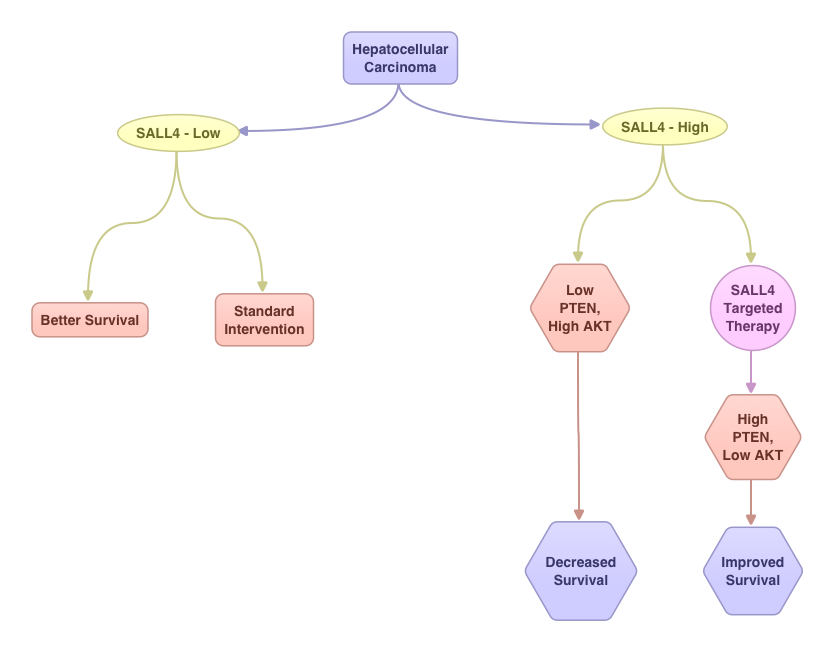
SUMMARY:Hepatocellular Carcinoma (HCC) originates from hepatocytes and is the sixth most common cancer and third leading cause of cancer related death worldwide. Chronic liver injury and cirrhosis have been implicated as important risk factors. This may result from infections with Hepatitis B and C, heavy alcohol consumption, exposure to Aflatoxin, a potent carcinogen produced by Aspergillus species and non alcoholic fatty liver disease (NAFLD) seen in patients with obesity and diabetes. The underlying liver disease contributing to tumorigenesis adds to the molecular complexity of HCC. The standard intervention for advanced stage HCC has been multi receptor Tyrosine Kinase Inhibitor, NEXAVAR® (Sorafenib). Alpha Feto Protein (AFP) is normally produced by the liver and yolk sac of a fetus during pregnancy and decreases soon after birth. AFP has been used as a serological test for HCC surveillance. In this study, the authors evaluated the role of SALL4, an oncofetal gene, which is expressed in the fetal liver but silenced in the adult liver. In HCC, SALL4 is re-expressed in the tumor tissue and may play an important role in hepatocarcinogenesis and may also portend poor outcomes. SALL4 may therefore serve as an important biomarker and molecular target. Targeting SALL4 could increase the expression of tumor suppressor gene PTEN and block the PI3K survival signaling pathway, by dephosphorylating AKT. The authors concluded that testing hepatic tumor tissue for SALL4 at the time of diagnosis may have prognostic value and may identify patient groups who are likely to benefit from SALL4 targeted therapy. Yong KJ, Gao C, Lim J, et al. N Engl J Med 2013; 368:2266-2276
REVLIMID® (Lenalidomide)
The FDA on June 5, 2013 approved REVLIMID® capsules for the treatment of patients with mantle cell lymphoma (MCL) whose disease has relapsed or progressed after two prior therapies, one of which included VELCADE® (Bortezomib). REVLIMID® is a product of Celgene Corporation.
XGEVA® (Denosumab)
XGEVA® (Denosumab): The FDA on June 13, 2013 approved the use of XGEVA® subcutaneous injection, for the treatment of adults and skeletally mature adolescents with giant cell tumor of bone that is unresectable or where surgical resection is likely to result in severe morbidity. XGEVA® is a product of Amgen Inc.
Advanced Melanoma – Bringing Bench Research to the Patient’s Bedside
Lambrolizumab (MK-3475) is a humanized anti–PD-1 monoclonal antibody that has demonstrated significant benefit for those patients with advanced Malignant Melanoma regardless of their prior therapy with anti-CTLA 4 antibody, YERVOY® (Ipilimumab). The programmed death 1 (PD-1) receptor is an inhibitory receptor expressed on activated T-cells in the tumor micro environment. The anti–PD-1 antibody by blocking the PD-1 receptor essentially unleashes the immune system to fight off cancer cells. This information published in the NEJM in June 2013 and presented at the 2013 ASCO annual meeting gives an additional option for patients with advanced Malignant Melanoma.
MEKINIST® (Trametinib)
MEKINIST® (Trametinib): The FDA on May 29, 2013 approved the use of MEKINIST® tablet for the treatment of patients with unresectable or metastatic melanoma with BRAF V600E or V600K mutation, as detected by an FDA-approved test. The FDA also approved the THxID BRAF assay (bioMerieux, Inc.) for detection of BRAF V600E and V600K mutations. MEKINIST® is not indicated for treatment of patients who had received prior BRAF inhibitor therapy. MEKINIST® is a product of GlaxoSmithKline, LLC.
TAFINLAR® (Dabrafenib)
TAFINLAR® (Dabrafenib): The FDA on May 29, 2013 approved the use of TAFINLAR® capsule for the treatment of patients with unresectable or metastatic melanoma with BRAF V600E mutation as detected by an FDA-approved test. TAFINLAR® is not indicated for the treatment of patients with wild-type BRAF melanoma because of the potential risk of tumor proliferation. The FDA also approved the THxID BRAF assay (bioMerieux, Inc.) for detection of BRAF V600E mutations. TAFINLAR® is a product of GlaxoSmithKline, LLC.
XOFIGO® (Radium Ra 223 dichloride)
XOFIGO® (Radium Ra 223 dichloride): The FDA on May 15, 2013 approved XOFIGO® Injection for the treatment of castration-resistant prostate cancer patients with symptomatic bone metastases and no known visceral metastatic disease. XOFIGO® is an alpha-particle emitting radiotherapeutic drug. It mimics calcium and forms complexes with hydroxyapatite at sites of increased bone turnover, as seen at metastatic lesions in the bone. XOFIGO® is a product of Bayer HealthCare Pharmaceuticals Inc.