Periprocedural Bridging Increases Bleeding Risk without Reduction in VTE Rates for Patients on Long Term Anticoagulants

SUMMARY: The Center for Disease Control and Prevention (CDC) estimates that approximately 1-2 per 1000 individuals develop Deep Vein Thrombosis (DVT)/Pulmonary Embolism (PE) each year in the United States, resulting in 60,000-100,000 deaths. Venous ThromboEmbolism (VTE) is the third leading cause of cardiovascular mortality, after myocardial infarction and stroke. It is estimated that in the US, more than 6 million patients are on chronic anticoagulation and approximately 250,000 patients need to temporarily interrupt their anticoagulant therapy annually, prior to an invasive procedure, to decrease the risk of excess periprocedural bleeding.

Despite a significant and rapid increase in the use of Direct Oral AntiCoagulants (DOACs) in the recent decade, Vitamin K Antagonists (VKAs) such as COUMADIN® (Warfarin) remain the most frequently prescribed anticoagulants in the US and worldwide. VKAs must be interrupted several days prior to a planned procedure to allow for regeneration of vitamin K-dependent coagulation factors (Factors II, X, VII and IX as well as protein C and S) and subsequent normalization of coagulation. Bridging with short-acting parenteral anticoagulants during the periprocedural period is often recommended for individuals at high thromboembolic risk. Previously published studies have shown a significantly higher incidence of major bleeding with bridging, with no difference in thromboembolic outcomes and further, current guidelines fail to identify patients with high-enough thromboembolic risk to justify periprocedural bridging. There is presently no randomized study that shows a clear benefit of periprocedural bridging for patients on long-term anticoagulants, whereas there are abundant data suggesting an increased bleeding risk with bridging.

In this publication, the authors performed a systematic review comparing recurrent VTE and bleeding outcomes, with and without periprocedural bridging, in order to better define risks and benefits of bridging in patients with previous VTE, requiring VKA interruption to undergo an elective invasive procedure. This systematic review involved searching the PubMed and Embase databases from inception to December 7, 2017 for randomized and nonrandomized studies and included adults with previous VTE requiring VKA interruption to undergo an elective procedure, and those that reported VTE or bleeding outcome. This analysis included 28 cohort studies, with 6915 procedures.

It was noted that the pooled incidence of recurrent VTE with bridging was 0.7% and 0.5% without bridging. The pooled incidence of any bleeding was 3.9% with bridging and 0.4% without bridging. In bridged patients at high thromboembolic risk, the pooled incidence for VTE was 0.8% for any bleeding.

The authors noted that this is the first study to systematically assess the risks and benefits of periprocedural bridging in the specific population of patients with previous VTE and they concluded that patients at low and moderate thromboembolic risk do not benefit from periprocedural bridging, and on the contrary, periprocedural bridging increases the risk of bleeding, compared with VKA interruption without bridging, without a significant difference in periprocedural VTE rates. Periprocedural Bridging in Patients with Venous Thromboembolism: A Systematic Review. Baumgartner C, Kouchkovsky I, Whitaker E, et al. The American Journal of Medicine 2019;132:722-732
INREBIC® (Fedratinib)

The FDA on August 16, 2019 approved INREBIC® for adults with intermediate-2 or high-risk Primary or Secondary (post-Polycythemia Vera or post-Essential Thrombocythemia) Myelofibrosis (MF). INREBIC® is a product of Impact Biomedicines, Inc.

ROZLYTREK® (Entrectinib)

The FDA on August 15, 2019 granted accelerated approval to ROZLYTREK® for adults and pediatric patients 12 years of age and older with solid tumors that have a Neurotrophic Tyrosine Receptor Kinase (NTRK) gene fusion without a known acquired resistance mutation, are metastatic or where surgical resection is likely to result in severe morbidity, and have progressed following treatment or have no satisfactory standard therapy. ROZLYTREK® is a product of Genentech Inc.

TURALIO® (Pexidartinib)

The FDA on August 2, 2019 approved TURALIO® capsules for adult patients with symptomatic Tenosynovial Giant Cell Tumor (TGCT) associated with severe morbidity or functional limitations and not amenable to improvement with surgery. TURALIO® is the first systemic therapy approved for patients with TGCT. TURALIO® is a product of Daiichi Sankyo, Inc.

KEYTRUDA® (Pembrolizumab)

The FDA on July 30, 2019 approved KEYTRUDA® for patients with recurrent, locally advanced or metastatic Squamous Cell Carcinoma of the Esophagus (ESCC), whose tumors express PD-L1 (Combined Positive Score-CPS of 10 or more), as determined by an FDA-approved test, with disease progression after one or more prior lines of systemic therapy. FDA also approved a new use for the PD-L1 IHC 22C3 pharmDx kit as a companion diagnostic device for selecting patients for the above indication. KEYTRUDA® is a product of Merck & Co., Inc.

Telomerase Inhibitor Imetelstat Provides Durable Transfusion Independence in Myelodysplastic Syndrome

SUMMARY: It is estimated that in the United States approximately 13,000 people are diagnosed with MyeloDysplastic Syndromes (MDS) each year. MyeloDysplastic Syndromes are a heterogenous group of stem cell disorders characterized by marrow failure resulting in cytopenias with associated cytogenetic abnormalities, and abnormal cellular maturation with morphologic changes in clonal cells. Majority of the individuals diagnosed with MDS are aged 65 years and older and die as a result of infection and/or bleeding, consequent to bone marrow failure. About a third of patients with MDS develop Acute Myeloid Leukemia (AML). Patients with low-risk MDS have an indolent disease course with a median survival of about 6 years with no therapeutic intervention. Patients with intermediate and higher-risk disease however have a shorter median survival even with treatment, with approximately a third of the patients progressing to AML within 3 years. The International Prognostic Scoring System (IPSS) for MDS has 4 risk groups based on Total Risk Score (Low, Intermediate-1, Intermediate-2 and High). The three prognostic factors scored to predict the course of the patient's disease include, percentage of blast cells in the bone marrow, type of chromosomal changes in the marrow cells and number of cytopenias (anemia, neutropenia or thrombocytopenia).

Management of patients with MDS includes supportive care with Erythropoiesis Stimulating Agents (ESAs), hypomethylating agents such as VIDAZA® (Azacitidine) and DACOGEN® (Decitabine), Immunomodulatory agents such as REVLIMID® (Lenalidomide), and Immunosuppressive agents such as AntiThymocyte Globulin (ATG) and Cyclosporine. Symptomatic patients with MDS are often treated with either VIDAZA® or DACOGEN® as these agents have been shown to improve survival in higher-risk MDS patients. It has remained unclear however, if one is better than the other.

Erythropoiesis Stimulating Agents (ESAs) are first-line therapy for anemia associated with lower-risk non-del(5q) MDS. ESAs such as Darbepoetin alfa and Epoetin alfa are re-engineered and recombinant DNA technology products of Erythropoietin (EPO), and they stimulate erythropoiesis by binding and activating the EPO receptor. There are however limited treatment options for RBC Transfusion Dependent (TD), Low Risk (IPSS Low/Int-1) MDS patients, who are Relapsed/Refractory to ESAs. There is therefore an unmet clinical need for safe and effective treatment options, to reduce the RBC transfusion burden in these patients. Imetelstat is a first-in-class Telomerase inhibitor that targets cells with short telomere length and active Telomerase, a feature often observed in some MDS patients across all stages of their disease. Higher Telomerase activity and shorter Telomeres in the blood cells of some patients with lower-risk MDS are known to predict for shorter overall survival.

IMerge is an ongoing global Phase II/III study of Imetelstat in RBC Transfusion Dependent patients with Low Risk-MDS (IPSS Low or Int-1). Previously reported data have demonstrated clinical benefit with Imetelstat in Low Risk-MDS patients inducing durable Transfusion Independence (Steensma et al ASH 2018 Abstr463). The authors now reported updated efficacy data in Low Risk, non-del(5q) MDS patients, Relapsed/Refractory to ESAs and Lenalidomide/HypoMethylating Agents naïve, from the open-label, single-arm Part 1 of IMerge study.

Part 1 of the IMerge study included patients with Low Risk MDS, who were heavily transfused (4 or more units /8wks), were Refractory or Relapsed on ESA or had serum EPO level of more than 500 mU/mL. This part of the study included 38 patients who were non-del(5q) and had not received either Lenalidomide/HypoMethylating Agents. Imetelstat was administered at 7.5 mg/kg IV every 4 weeks. The median patient age was 72 years, median baseline RBC transfusion burden was 8U/8weeks (range 4-14), 37% of the patients had IPSS Intermediate-1 risk score, 71% had WHO 2001 classification RARS (Refractory Anemia with Ringed Sideroblasts) or RCMD-RS (Refractory Cytopenia with Multilineage Dysplasia and Ringed Sideroblast) subtype and 32% with evaluable serum EPO levels had baseline level of more than 500 mU/mL. The Primary endpoint was 8-week Transfusion Independence rate. Secondary endpoints included 24-week Transfusion Independence rate, Safety, Duration of Transfusion Independence, and Hematologic Improvement rate. The median follow up was 12.1 months. The authors in this publication reported long-term efficacy, safety and biomarker data from these 38 patients.

Treatment with single-agent Imetelstat resulted in 8-week Transfusion Independence rate of 45% and the median Transfusion Independence duration was 8.5 months. Among those responding to Imetelstat, 59% remained transfusion free for over 24 weeks. The presence of Ring Sideroblasts or baseline serum EPO levels did not have an impact on 8-week Transfusion Independence rate. The 24-week Transfusion Independence rate was 26%. Erythroid Hematologic Improvement, defined as transfusion reduction by at least 4 units/8 weeks (IWG2006), was achieved in 68% of the patients. All patients (N=6) who had IPSS- Intermediate/poor cytogenetic risk achieved 8-week Transfusion Independence and 2 patients achieved partial cytogenetic response. Post treatment decrease in Telomerase (human Telomerase Reverse Transcriptase-hTERT) RNA level was observed in 73.5% of patients. Further, among patients with pre and post-treatment mutation analyses, six patients had SF3B1 mutations at baseline, and 2 patients who had a decrease in the mutation burden had longest Transfusion Independence duration on study. The most frequently reported adverse events were manageable and reversible grade 3 cytopenias.

It was concluded that treatment with single agent Imetelstat resulted in meaningful and durable Transfusion Independence, in Transfusion Dependent patients with non-del(5q) Lower-Risk MDS, who had relapsed or were refractory to ESA. Transfusion Independence was observed across different clinical subgroups, including patients with Intermediate and Poor cytogenetic risk, with a positive effect on malignant mutant clones. TREATMENT WITH IMETELSTAT PROVIDES DURABLE TRANSFUSION INDEPENDENCE (TI) IN HEAVILY TRANSFUSED NON-DEL(5Q) LOWER RISK MDS (LR-MDS) RELAPSED/REFRACTORY (R/R) TO ERYTHROPOIESIS STIMULATING AGENTS (ESAS). Fenaux P, Steensma DP, Eygen KV, et al. Presentation during European Hematology Association, Jun 15, 2019; 267420; S837

Adjuvant Treatment with PROLIA® Improves Disease Free Survival in Early Stage Breast Cancer

SUMMARY: Breast cancer is the most common cancer among women in the US and about 1 in 8 women (12%) will develop invasive breast cancer during their lifetime. About 268,600 new cases of female breast cancer will be diagnosed in 2019 and about 41,760 women will die of the disease. Approximately 75% of patients with breast cancer are hormone receptor positive (Estrogen Receptor/Progesterone Receptor positive) and this is a predictor of response to endocrine therapy. These patients are often treated with anti-estrogen therapy as first line treatment. In premenopausal woman, the ovary is the main source of estrogen production, whereas in postmenopausal women, the primary source of estrogen is the Aromatase enzyme mediated conversion of androstenedione and testosterone to estrone and estradiol in extragonadal/peripheral tissues. In postmenopausal women with hormone receptor-positive, early-stage breast cancer, treatment with adjuvant Aromatase Inhibitors is the standard of care.

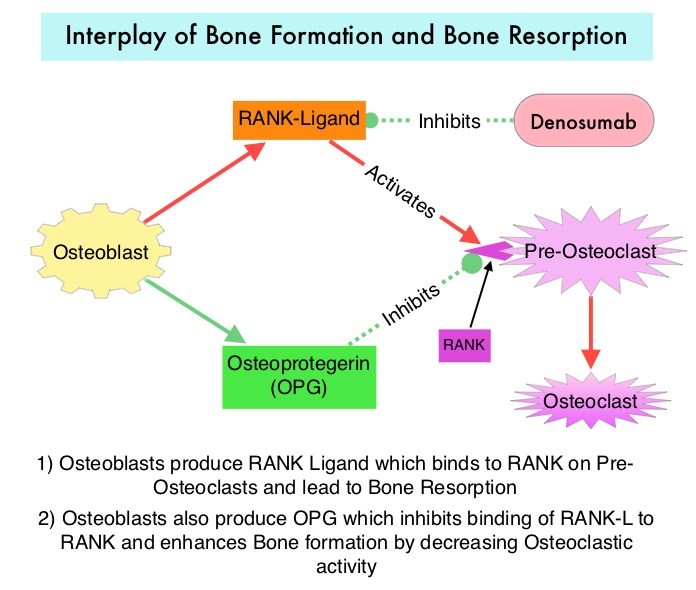
ARIMIDEX® (Anastrozole), FEMARA® (Letrozole) and AROMASIN® (Exemestane) are Aromatase Inhibitors that bind reversibly to the Aromatase enzyme and inhibit the conversion of androgens to estrogens in the extra-gonadal tissues. Aromatase Inhibitors however are associated with accelerated bone loss, leading to a decrease in Bone Mineral Density (BMD) and can thus cause osteopenia and osteoporosis, thereby increasing fracture risk.Interplay-of-Bone-Formation-and-Bone-Resorption

PROLIA® (Denosumab) is a monoclonal antibody that inhibits osteoclast formation, function and survival, by selectively targeting the RANK ligand. The RANK-RANK ligand system is an important mediator of signaling in the genesis of osteoclasts and bone resorption. Additionally, the RANK-RANK ligand system has been implicated in antitumor immunity and may have a role in suppressing tumor agenesis. It has been hypothesized that targeting RANK with anti-RANK inhibitor might reverse the immunosuppressive effect of the RANK-RANK ligand signaling pathway.

ABCSG-18 is a randomized, double-blind, placebo controlled, Phase III trial in which the authors evaluated the benefits of the anti-RANK ligand antibody PROLIA® on bone health, in postmenopausal patients, with early stage hormone receptor-positive breast cancer, treated with Aromatase Inhibitors. Of the 3425 patients enrolled in this study, 3420 patients were randomly assigned 1:1 to receive PROLIA® 60 mg (N=1711) or matching placebo (N=1709), subcutaneously every 6 months, during Aromatase Inhibitor therapy. Majority of the patients participating in this study had breast cancer with good prognosis and only 25% of the patients required adjuvant chemotherapy. Patient received a median of 7 doses of PROLIA®. The Primary endpoint was the time to first clinical fracture after randomization. The Secondary endpoint was Disease Free Survival (defined as time from randomization to first evidence of local or distant metastasis, contralateral breast cancer, secondary carcinoma, or death from any cause) in the intention-to-treat population. The Primary endpoint of the ABCSG-18 trial was met (The Lancet 2015;386:433-443) and the use of PROLIA® as an adjuvant to Aromatase Inhibitor therapy significantly delayed time to first clinical fracture, compared to Placebo (HR=0.50; P<0.0001). The authors in publication reported the Secondary endpoint of Disease Free Survival (DFS) outcomes from this study.

After a median follow-up of 73 months, there was a significant improvement in the Disease Free Survival among patients in the PROLIA® group compared to the placebo group (HR=0•82; P=0.026). In the PROLIA® group, the DFS was 89.2% at 5 years and 80.6% at 8 years of follow-up, compared with 87.3% at 5 years and 77.5% at 8 years in the placebo group. The total number of adverse events was similar in the PROLIA® and placebo groups and there were no reported cases of osteonecrosis of the jaw bone or atypical femoral fractures.

It was concluded that PROLIA® constitutes an effective and safe adjuvant treatment for patients with postmenopausal hormone receptor-positive early breast cancer receiving Aromatase Inhibitor therapy, with a Disease Free Survival benefit similar to bisphophonates, but with a better toxicity profile and convenient subcutaneous injections twice yearly. Adjuvant denosumab in postmenopausal patients with hormone receptor-positive breast cancer (ABCSG-18): disease-free survival results from a randomised, double-blind, placebo-controlled, phase 3 trial. Gnant M, Pfeiler G, Steger GG, et al. Lancet Oncol 2019;20:339-351

Association between Androgen Deprivation Therapy and Diagnosis of Alzheimer Disease or Dementia in Patients with Prostate Cancer

SUMMARY: Prostate cancer is the most common cancer in American men with the exclusion of skin cancer, and 1 in 9 men will be diagnosed with Prostate cancer during their lifetime. It is estimated that in the United States, about 174,650 new cases of Prostate cancer will be diagnosed in 2019 and 31,620 men will die of the disease. The development and progression of Prostate cancer is driven by androgens. Androgen Deprivation Therapy (ADT) or testosterone suppression has therefore been the cornerstone of treatment of advanced Prostate cancer and is the first treatment intervention. Androgen Deprivation Therapies have included bilateral orchiectomy or Gonadotropin Releasing Hormone (GnRH) analogues, with or without first generation Androgen Receptor (AR) inhibitors such as CASODEX® (Bicalutamide), NILANDRON® (Nilutamide) and EULEXIN® (Flutamide). The first-generation Androgen Receptor (AR) inhibitors act by binding to the Androgen Receptor (AR) and prevent the activation of the AR and subsequent up-regulation of androgen responsive genes. They may also accelerate the degradation of the AR. These agents have a range of pharmacologic activity from being pure anti-androgens to androgen agonists. The second-generation, anti-androgen agents include, ZYTIGA® (Abiraterone), XTANDI® (Enzalutamide) and ERLEADA® (Apalutamide). ZYTIGA® inhibits CYP17A1 enzyme and depletes adrenal and intratumoral androgens, thereby impairing AR signaling. XTANDI® and ERLEADA® compete with Testosterone and Dihydrotestosterone and avidly binds to the Androgen Receptor, thereby inhibiting AR signaling, and in addition inhibits translocation of the AR into the nucleus and thus inhibits the transcriptional activities of the AR.

Androgen Deprivation Therapy (ADT) is often recommended alone or as a part of multimodality therapy, as ADT reduces the likelihood of cancer progression and/or mortality, in high-risk localized, locally advanced, recurrent, or metastatic Prostate cancer. ADT however can be associated with side effects such as fatigue, loss of muscle mass, impotence, anemia, osteoporosis, depression, etc., which in turn can have a significant negative impact on an individual’s quality of life. ADT has also been associated with cognitive dysfunction and there has been conflicting evidence establishing an association between ADT use and diagnosis of Alzheimer disease or Dementia. It has been postulated that lower testosterone levels impair neuron growth and axonal regeneration, in addition to accumulation of abnormally folded β-amyloid protein. With the earlier introduction of ADT in the course of disease progression for patients with Prostate cancer, it is important to discuss the association between ADT and Dementia with patients, which in turn can improve shared decision making around the risks and benefits of ADT in Prostate cancer.

The present study was conducted to analyze the association between ADT exposure and diagnosis of Alzheimer disease or Dementia, among elderly men with Prostate cancer. The authors in this retrospective cohort study used data from the NCI’s Surveillance, Epidemiology, and End Results (SEER)-Medicare linked database, and the participants included 154,089 elderly men with newly diagnosed Prostate cancer, between 1996 and 2003. The analyses were conducted in 2018 and patients receiving ADT within 2 years of Prostate cancer diagnosis were identified. In this study, 62,330 men received ADT within 2 years of Prostate cancer diagnosis, and 91,759 men did not receive ADT. Mean follow up was 8.3 years, and survival analysis was used to determine association between ADT exposure and diagnosis of Alzheimer disease or Dementia.

The researchers noted that exposure to ADT, compared with no ADT exposure, was associated with a diagnosis of Alzheimer disease (13.1% vs 9.4%; HR=1.14; P<0.001) and Dementia (21.6% vs 15.8%; HR=1.20; P<0.001). There was a dose-response relationship and patients who received more than 8 doses of ADT were at a significantly higher hazard of diagnosis of both Alzheimer disease and Dementia, than those receiving fewer doses ADT.

The authors concluded that over a follow-up period of at least 10 years, ADT exposure among elderly patients with Prostate cancer was associated with subsequent diagnosis of Alzheimer disease or Dementia. They added that clinicians should carefully weigh the long-term risks and benefits of ADT, in patients with a prolonged life expectancy, and stratify patients based on Dementia risk, prior to ADT initiation. Association Between Androgen Deprivation Therapy Use and Diagnosis of Dementia in Men With Prostate Cancer. Jayadevappa R, Chhatre S, Malkowicz SB, et al. JAMA Netw Open. 2019;2(7):e196562. doi:10.1001/jamanetworkopen.2019.6562